
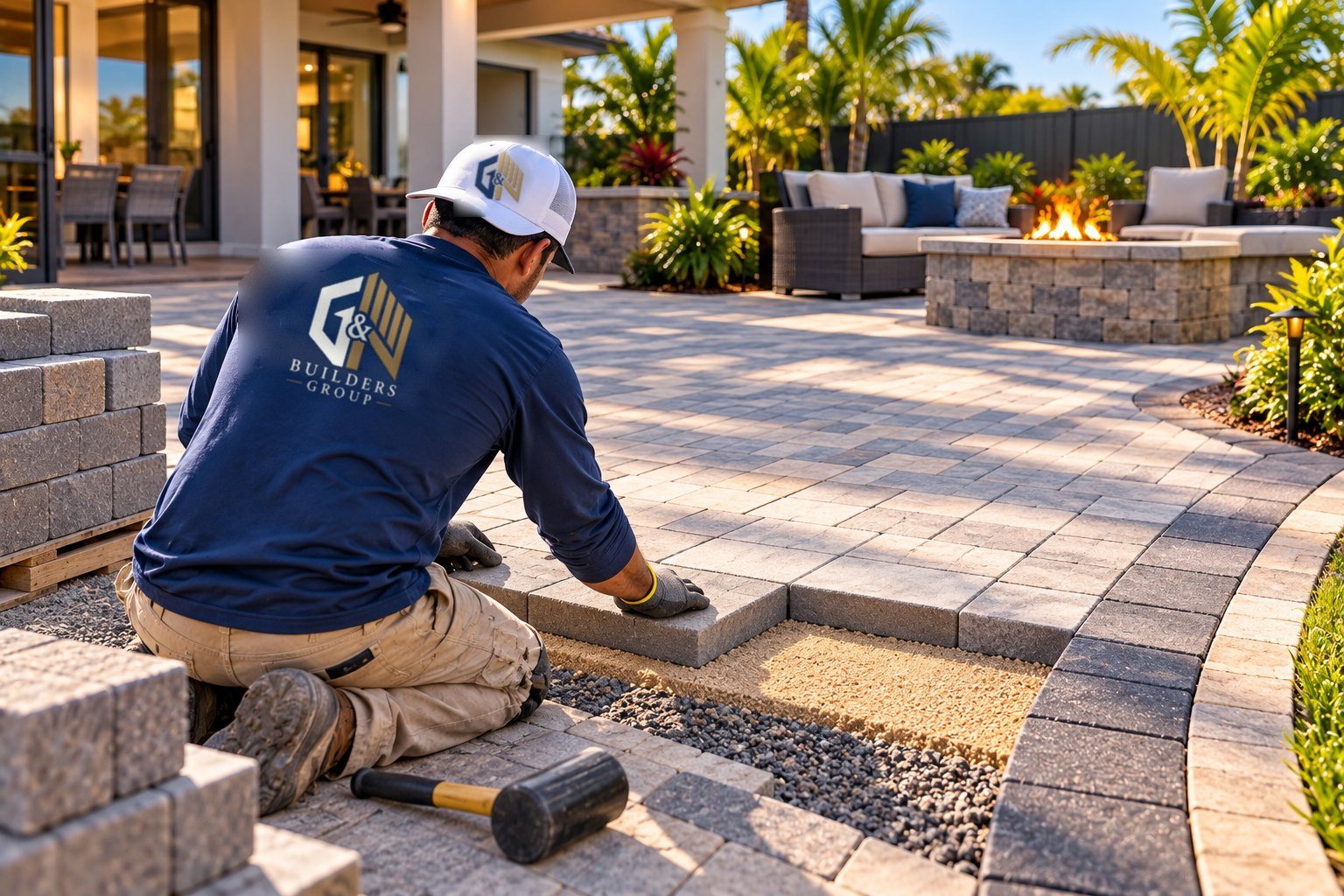
A paver patio is the one surface on a property that people walk on every day and only notice when it stops being flat. It does not fail at the surface. The pavers are concrete units rated well past anything a patio chair will ever do to them, so what moves is everything underneath, and it moves in the order it was built. A low spot that holds water after a rain, a joint that keeps opening, a border course that has crept an inch outward: those are reports from the base, filed about two years late. None of what follows is complicated. It is just that most of it is buried by the time anybody could check it, and the steps that get skipped are skipped because skipping them does not show that week.
The base carries the load, not the pavers
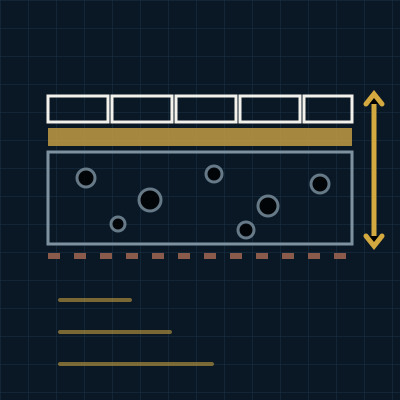
The paver is a wearing surface. The compacted aggregate base under it is the structure, and how thick that has to be comes from what is going on top. The published ICPI minimums run 4 in. of compacted base for a sidewalk or a patio, 6 in. for a residential driveway and 8 in. for a parking lot or a residential street — the same paver, three different builds. That is the whole reason a patio and a driveway are not the same job: the units look identical and what is holding them up is not. Build a patio section, park a truck on it, and it will tell you so inside a season.
Compaction is a number, not a feeling
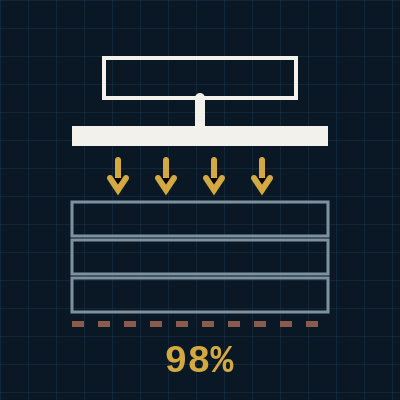
Ground that feels solid under a boot is not compacted ground. The ICPI tolerance guide asks for at least 98 percent standard Proctor density, which is a measurement, and the subgrade gets it before the base goes on — compacting a base over soft soil only presses the problem down a layer. The base then goes in lifts thin enough that the compactor actually reaches the bottom of each one, rather than in a single deep pour that ends up firm on top and loose underneath. This is the step that takes the longest and is the easiest to shorten, because a base nobody proved looks exactly like a base somebody did.
Bedding sand is a setting bed, not a leveling course
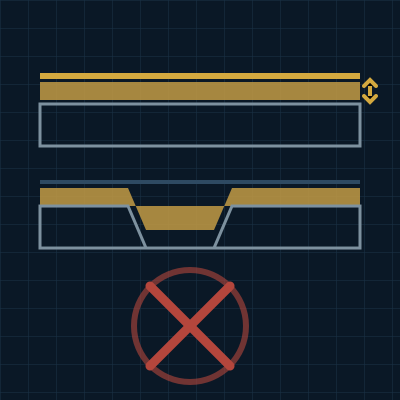
The sand over the base is there to seat the units, and it is screeded to a nominal 1 in. — three quarters of an inch is the minimum where the base is concrete or asphalt. It is washed concrete sand to ASTM C33 gradation, with ICPI adding a limit of 1 percent passing the No. 200 sieve, which is what the washing is for: fines hold water and fines move. And the rule that gets broken most often is written into the specifications in plain language — do not use the bedding sand to fill depressions in the base. A low spot packed with an extra two inches of sand is a low spot with a thick compressible layer inside it, and it comes back as the one part of the patio that holds a puddle.
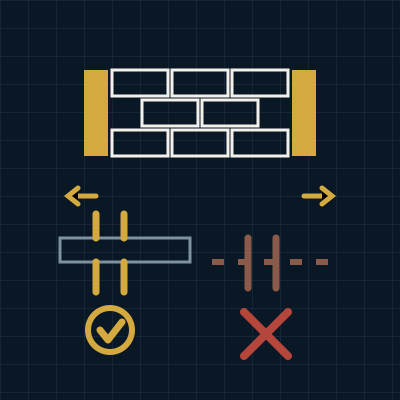
The edge restraint is what keeps the field locked
Interlock is the entire mechanism: the units hand load sideways to each other, so the field behaves like a flexible pavement instead of a few thousand loose blocks. The perimeter is where that can let go. An edge restraint — a soldier course set in concrete, or a manufactured restraint — holds the outside row from creeping, and ICPI Tech Spec 3 is specific about where its spikes go: into the compacted base course or a rigid base, never into soil. A restraint spiked into dirt moves with the dirt, and a patio that spreads at the edge opens every joint behind it.
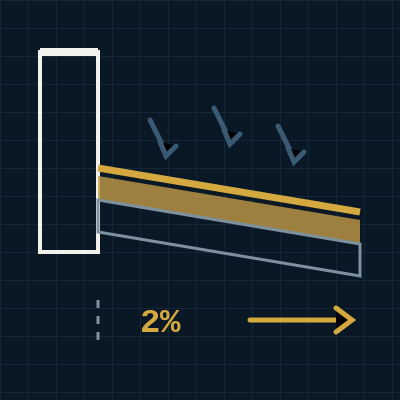
Water has to leave, and 2 percent is the floor
A paver patio is not waterproof and is not meant to be, but the water running across it and through it has to have somewhere to go. The ICPI minimum drainage slope is 2 percent — about a quarter inch per foot — and it is pitched away from the house, not toward the wall where the stucco and the base of the wall are the expensive part. That slope is built into the base and carried up through the sand and the pavers, so it is decided before the first unit is laid. Finding it afterward means lifting the field.
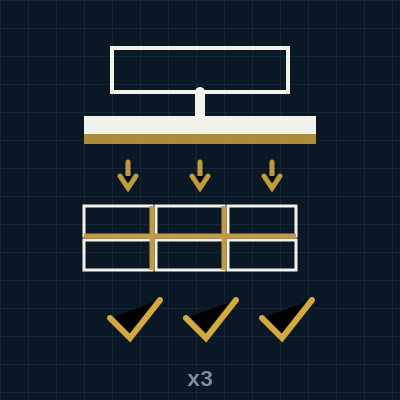
Joint sand, then compaction — in that order
Once the field is laid, the cuts are in and the restraints are set, the joints are swept full and the whole surface is compacted: at least three passes with a plate compactor, with a protective pad so the units are not scarred. That vibration is what seats the pavers into the bedding sand and drives the sand up into the joints, and until it happens the interlock does not exist. ICPI guidance keeps the joint fill within a quarter inch of the surface. It also means the joints get topped up once more after the first rains settle them, which is maintenance rather than a defect.
The one real advantage a paver surface has over poured concrete is that it is repairable in units: a section that has settled can be lifted, the base corrected and the same pavers reset, with no patch line and no color difference. That only works if the units are still sound and the build underneath was right everywhere else. A patio sinking in three places is not asking for three repairs — it is reporting on the base, and the base is what gets fixed.
← INSIGHTSSTART HERE
One form, one business day.
Describe the scope and we answer within one business day. Drawings and photos by email; emergencies by phone, 24/7.
Related service
Paver Patio and Hardscape Installation→