
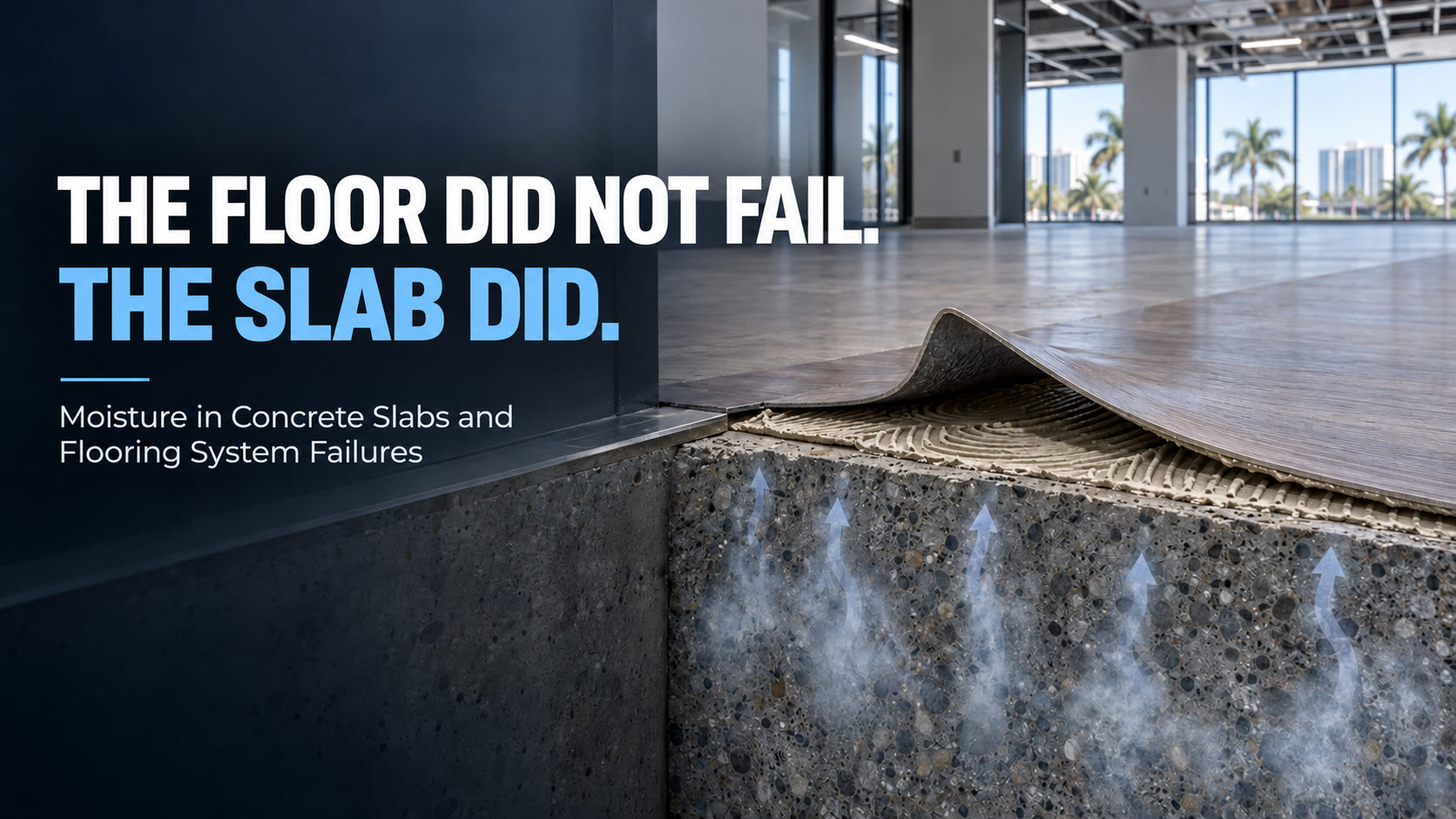
Tile that lifts, plank that curls at the seams, adhesive that never quite sets — the cause is usually not the flooring and not the installer. It is water still inside the slab, which looks dry on top for weeks before it is dry the whole way through. There is a published test for this, and it is not a hand on the concrete.
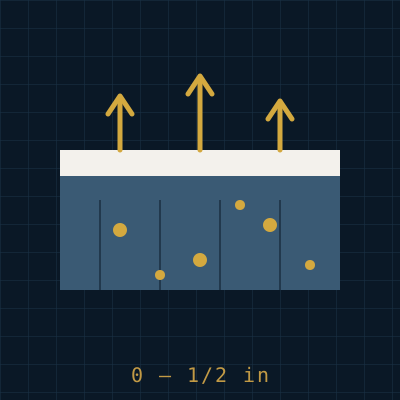
Dry on the surface is not dry
A slab with a roof over it dries from the top down, so the first half inch reports one thing and the core reports another. The moment flooring goes down, that surface stops drying and the moisture still below it moves up into the adhesive instead. That is why the failure shows up weeks after the job looked finished, not on the day it was installed.
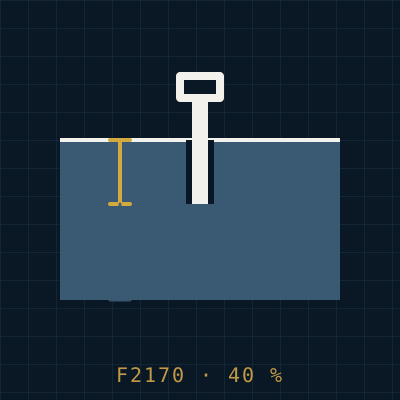
Measure inside the slab, not on it
ASTM F2170 is the relative humidity test: holes drilled into the slab, sleeves set, and probes left to equilibrate for 24 hours before anyone reads a number. The depth is specified — 40 % of the thickness for a slab that can only dry from the top, 20 % from each face when it can dry from both — because a reading taken at the wrong depth is not a cautious reading, it is the wrong one.
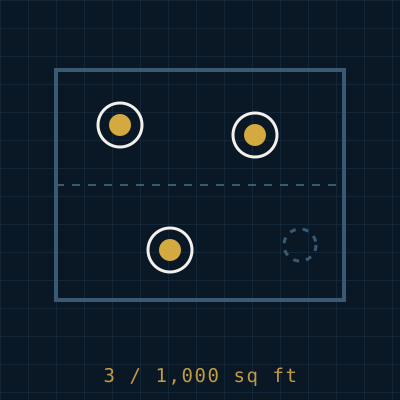
Three locations for the first 1,000 square feet
The same standard sets the sampling: three test locations in the first 1,000 square feet, and one more for every additional 1,000. One probe in the middle of a room says nothing about the slab along an exterior wall, or about the strip where a plumbing trench was cut and backfilled. Those are the places a floor comes up first.
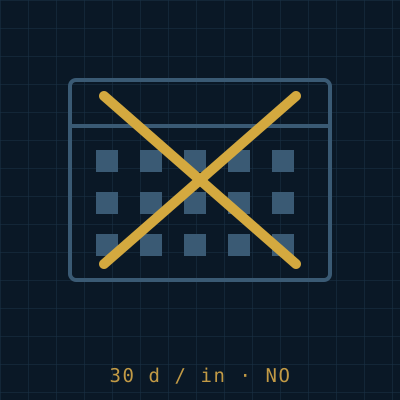
A calendar is not a moisture test
Thirty days per inch is a rule of thumb from an era of different mixes, and it assumes conditions almost no Florida job has: nothing raining on the slab, the building closed in, and the HVAC running at service temperature. Post-tensioned and lightweight slabs can sit well past it and still be wet. The calendar tells you when to test, not what the answer is.
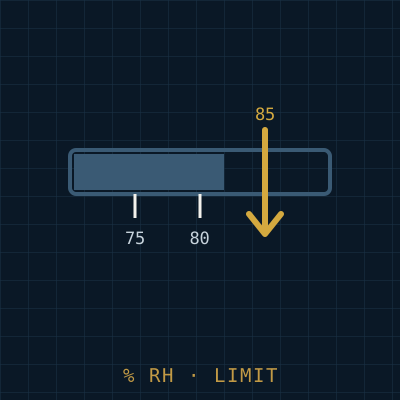
The limit belongs to the flooring manufacturer
Whatever number the manufacturer publishes — 75 %, 80 %, 85 % relative humidity — is the one that governs, and installing above it is what voids the warranty, which is usually the only warranty the owner actually holds. Where a calcium chloride test (ASTM F1869) is specified instead, it reads only the top half inch of the slab and is not valid on lightweight concrete.
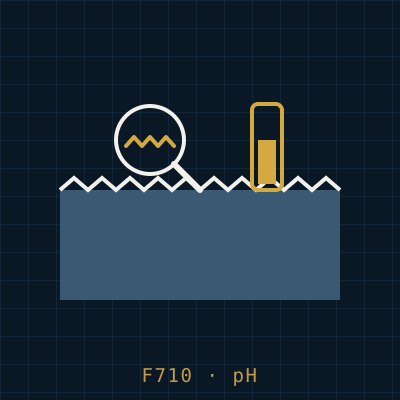
Preparation is part of the same question
ASTM F710 covers what a concrete floor has to be before anything is bonded to it: clean, sound, flat, and free of curing compounds, sealers and old adhesive — removed mechanically, not with solvent. It also covers alkalinity, because a high pH at the surface can break down an adhesive on its own. And on slab-on-grade, the real fix sits underneath: a vapor retarder to ASTM E1745, which is a decision made before the pour and cannot be made afterward.
None of this makes a job slower. The probes equilibrate while other trades keep working, and the test costs a fraction of pulling up a floor that has already been walked on. What it changes is who is holding the problem when the floor fails: a documented reading, taken before the adhesive went down, is the difference between a warranty claim and an argument.
← BLOGSTART HERE
One form, one business day.
Describe the scope and we answer within one business day. Drawings and photos by email; emergencies by phone, 24/7.
Related projects
Residential Renovations & Property Improvements→