CHALLENGE
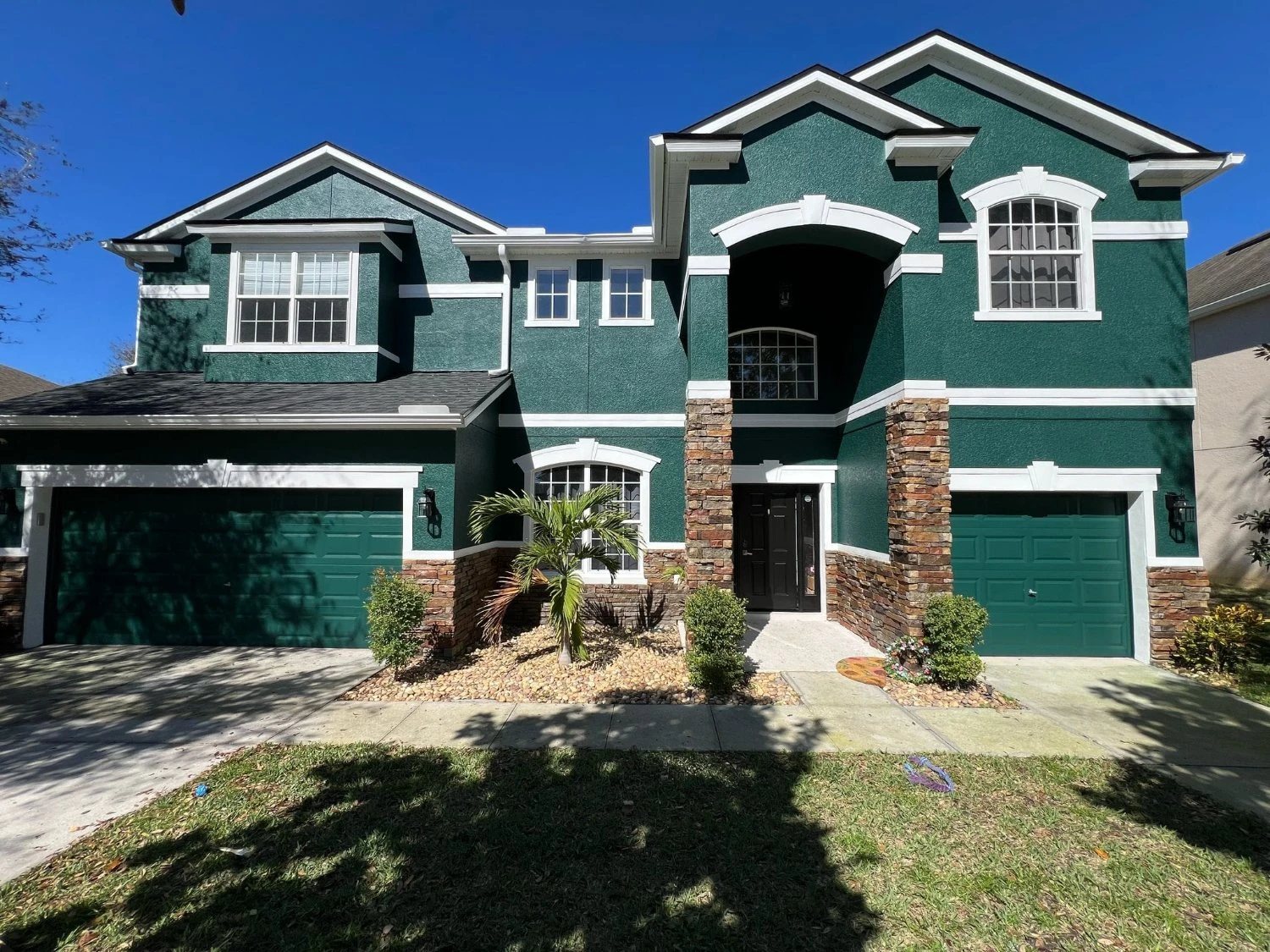
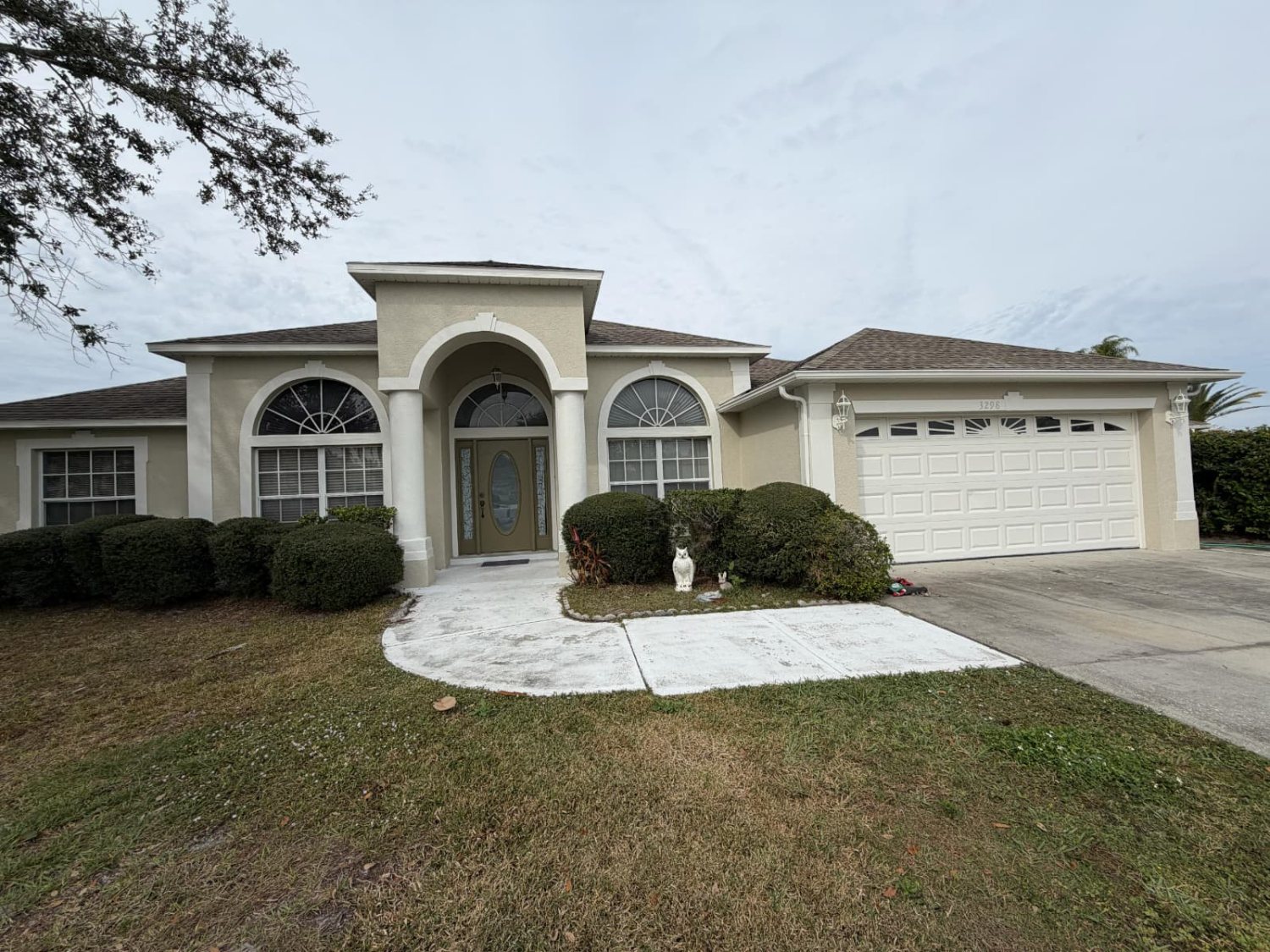
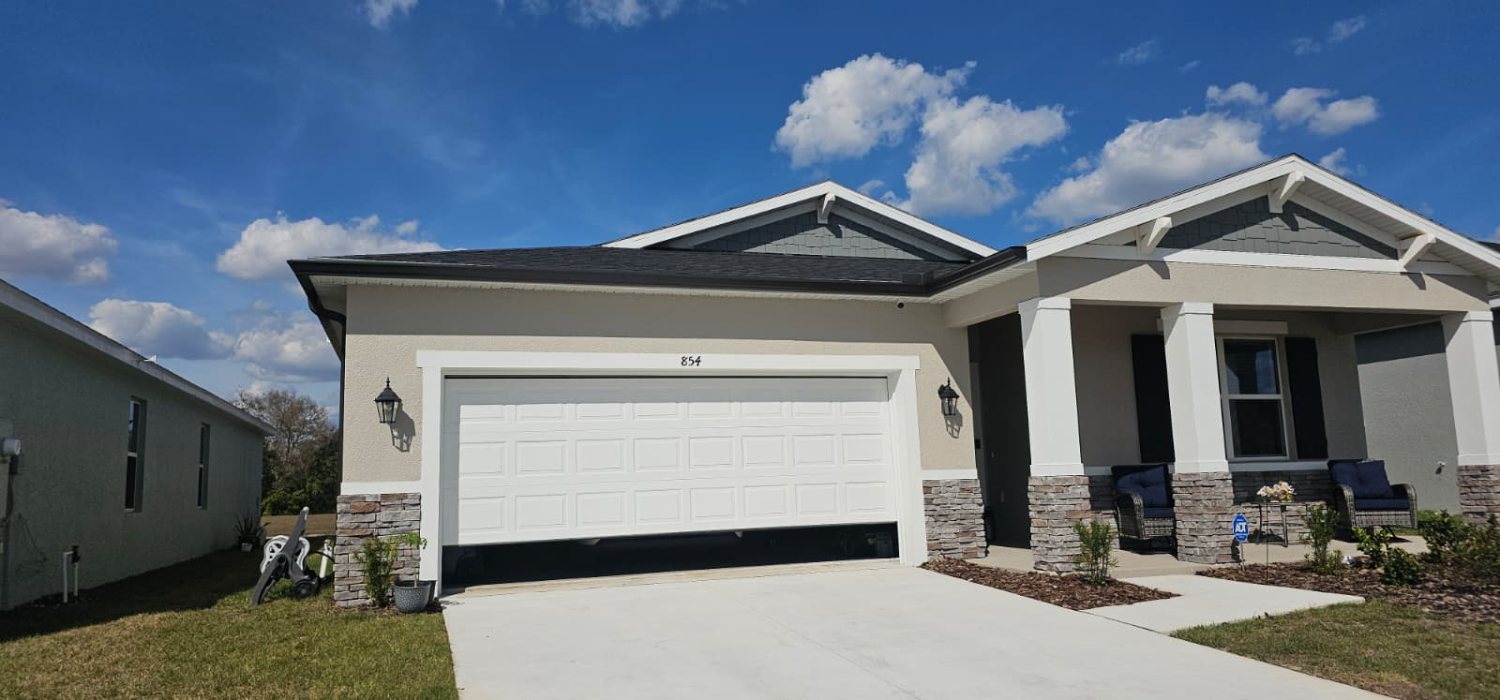
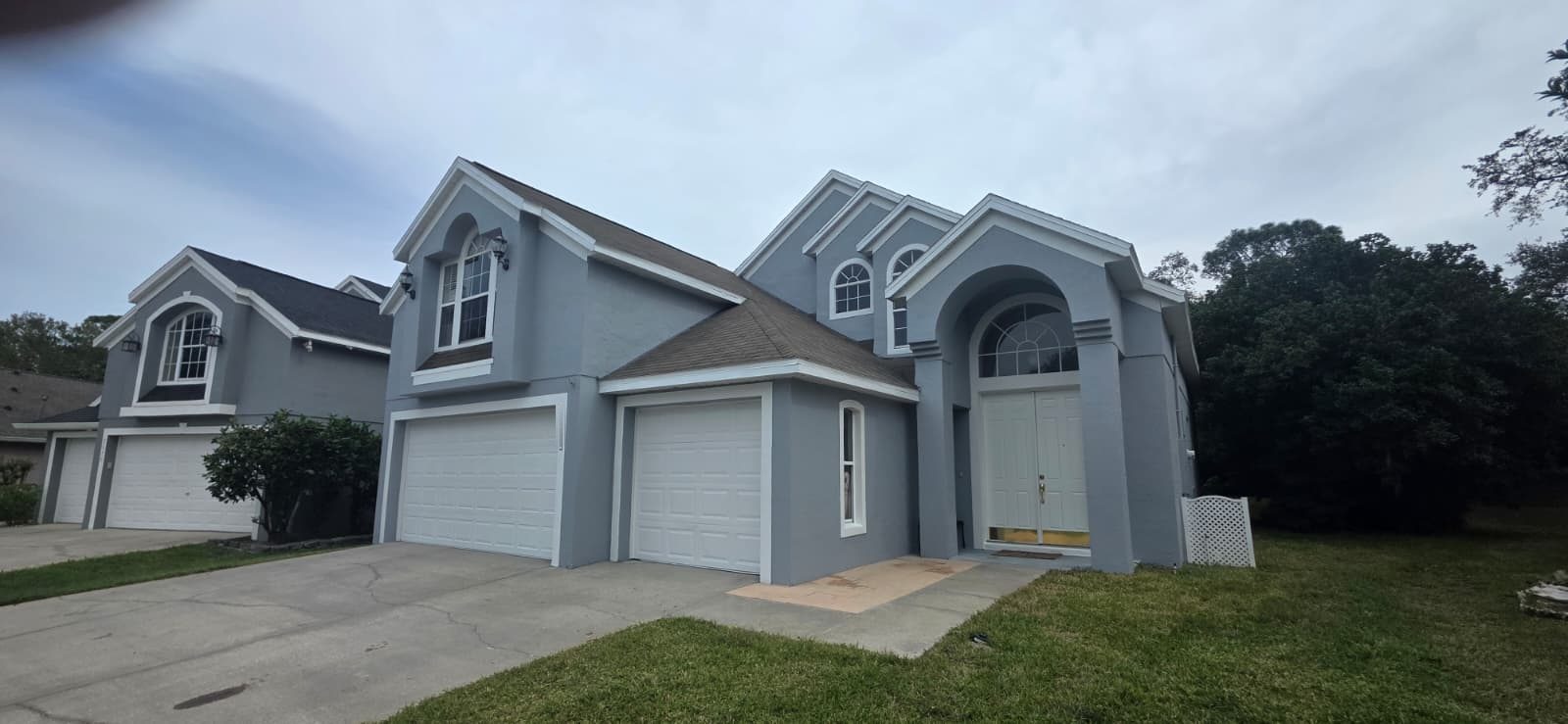
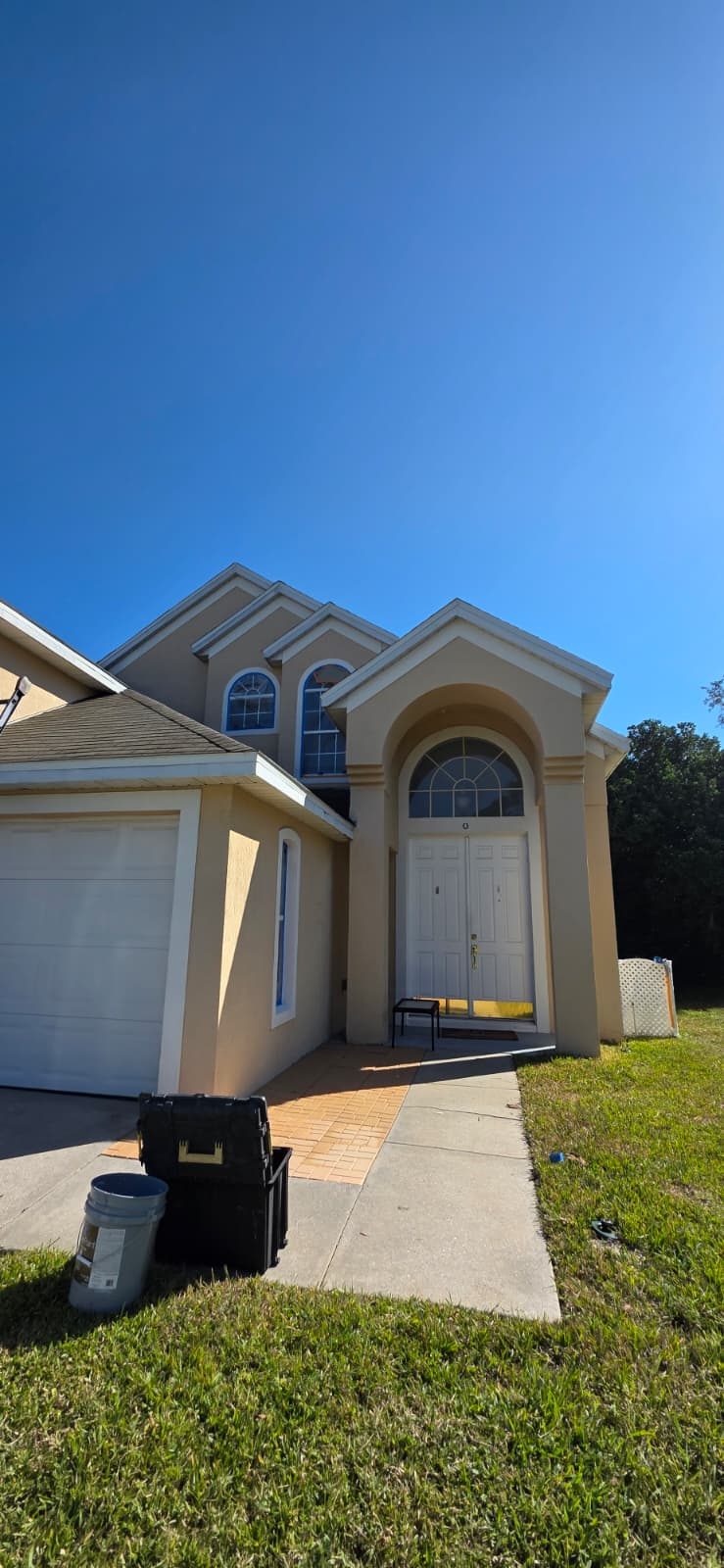
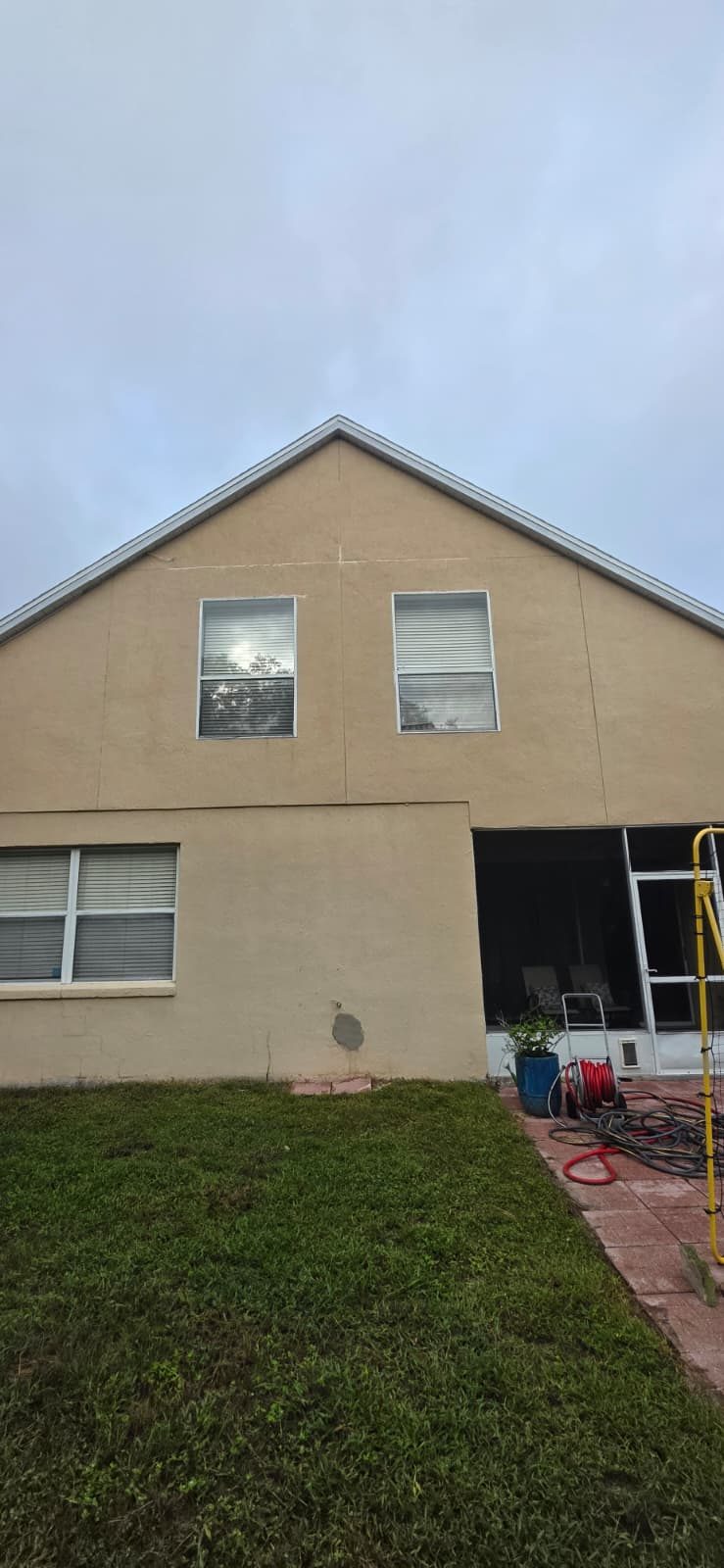
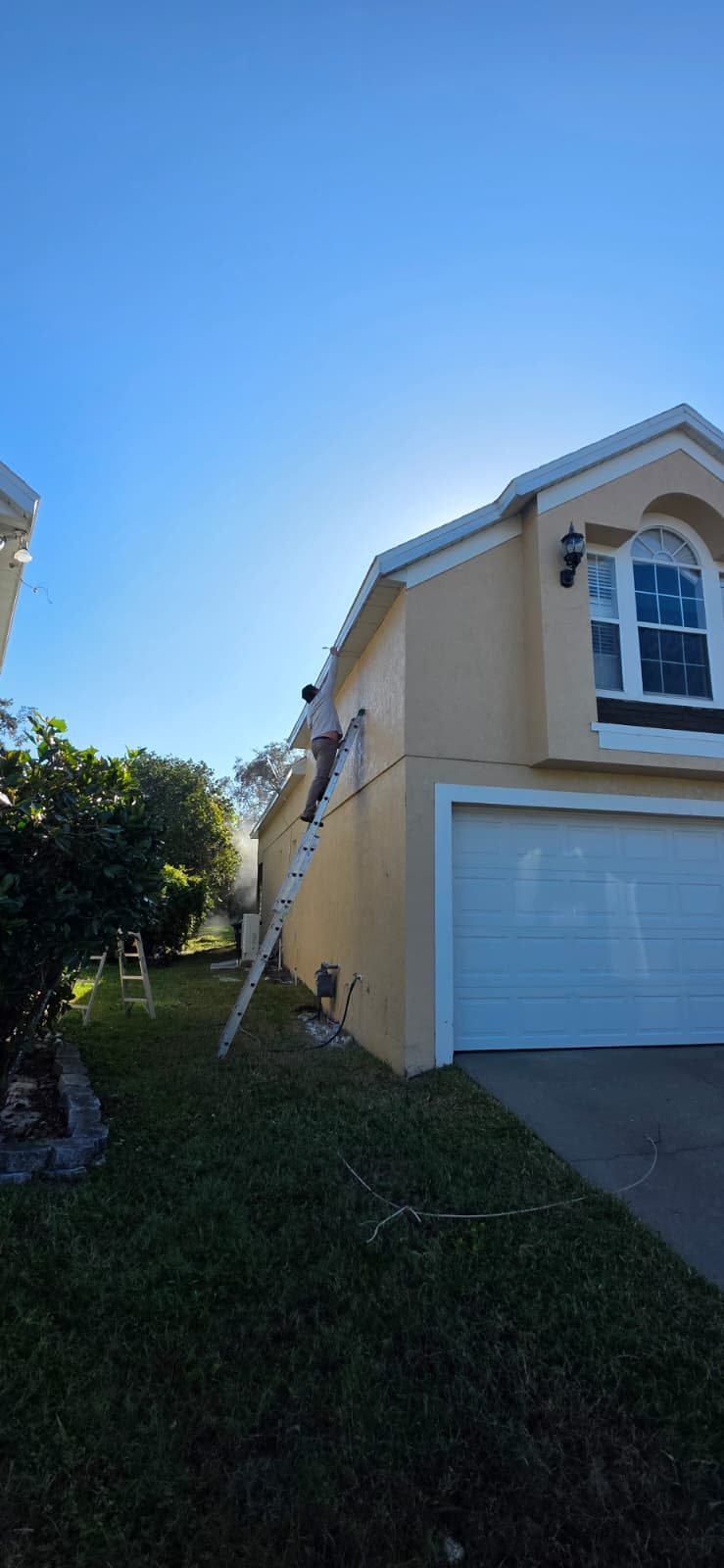
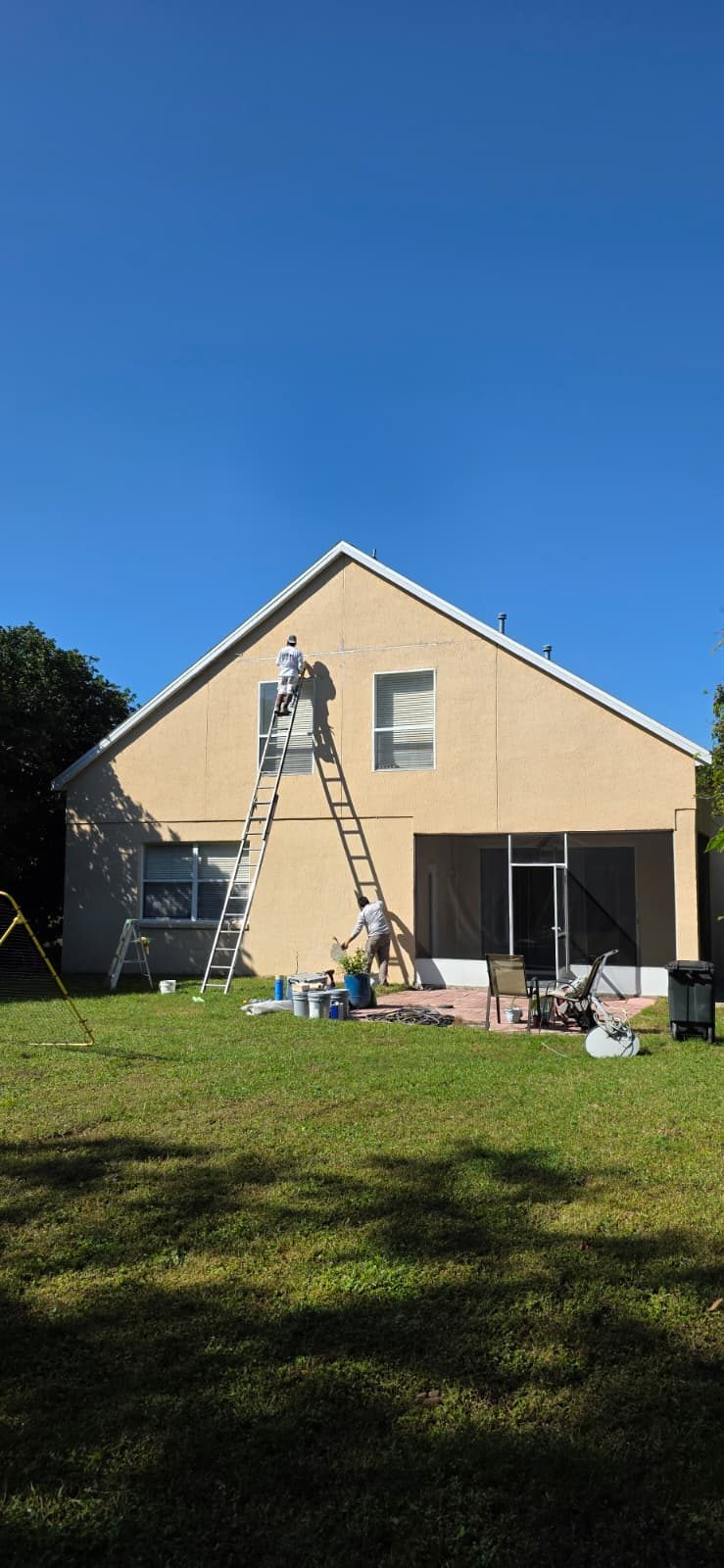
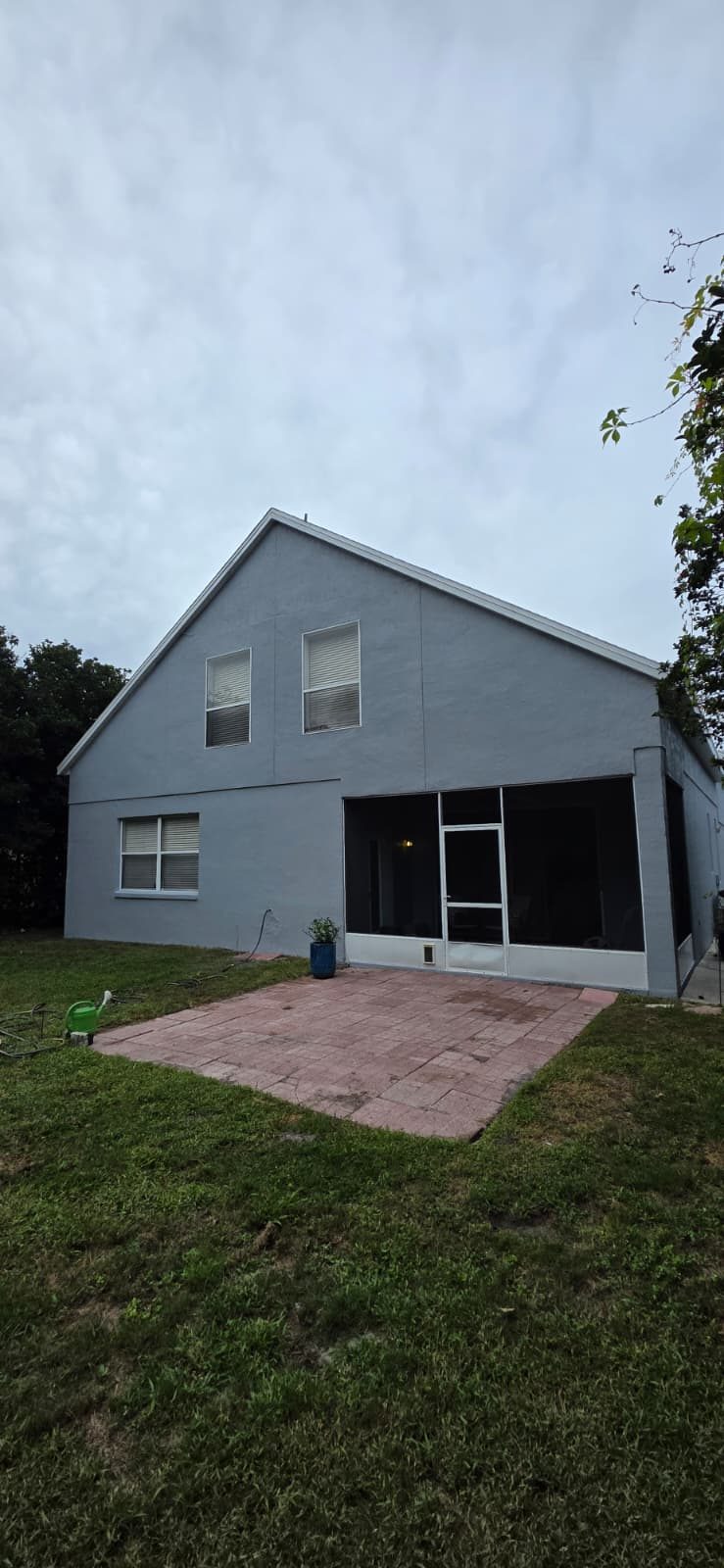
A colour change is a different job from a repaint, and this one went the hard direction: a light tan wall to a mid grey. Going darker means every thin spot shows. An inch missed at a window return, a coat stretched too far to finish an elevation, a patch that took the primer differently — none of it hides, because the old colour is lighter than the new one and it reads back as a pale line from the street. On top of that the walls were carrying the usual Central Florida load of chalk, mildew and pollen, which is a bond breaker: a coating put over that sticks to the dirt rather than to the wall, and it leaves with the dirt, usually in the second summer. And the house is two storeys with full gable ends, so most of the work happens off a ladder at the line where the wall meets the soffit — the line everyone sees from the street and nobody can reach comfortably. Four days of programme, with a wash and a dry-out inside them.
SOLUTION
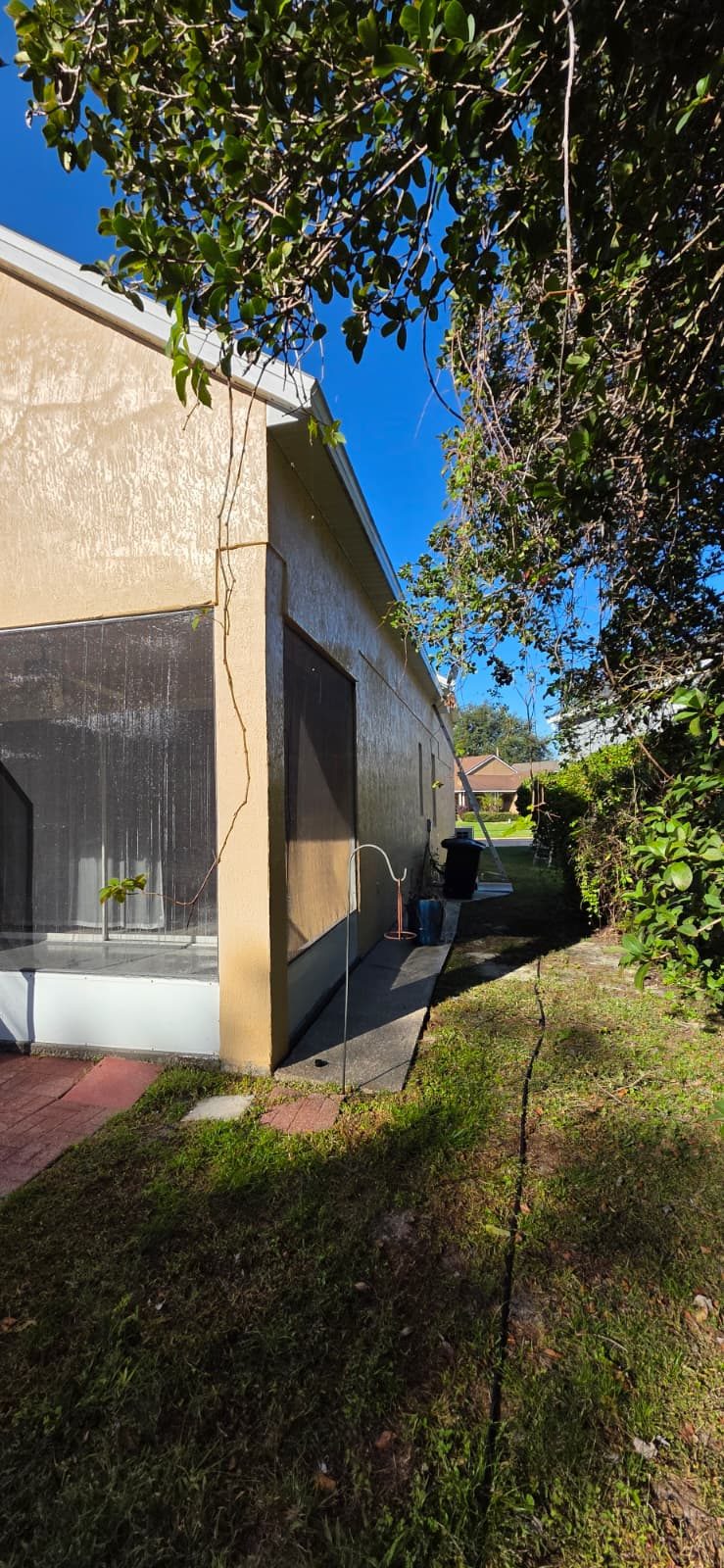
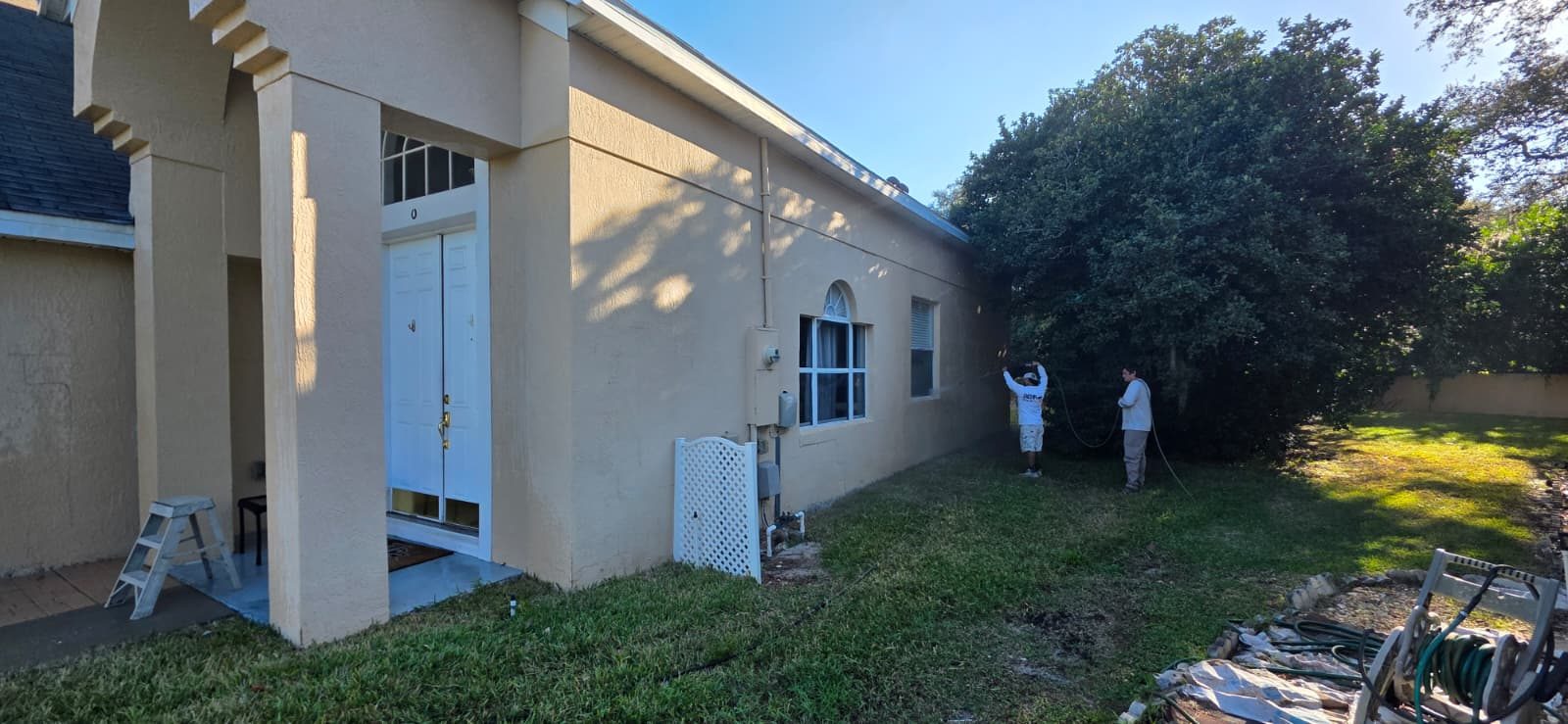
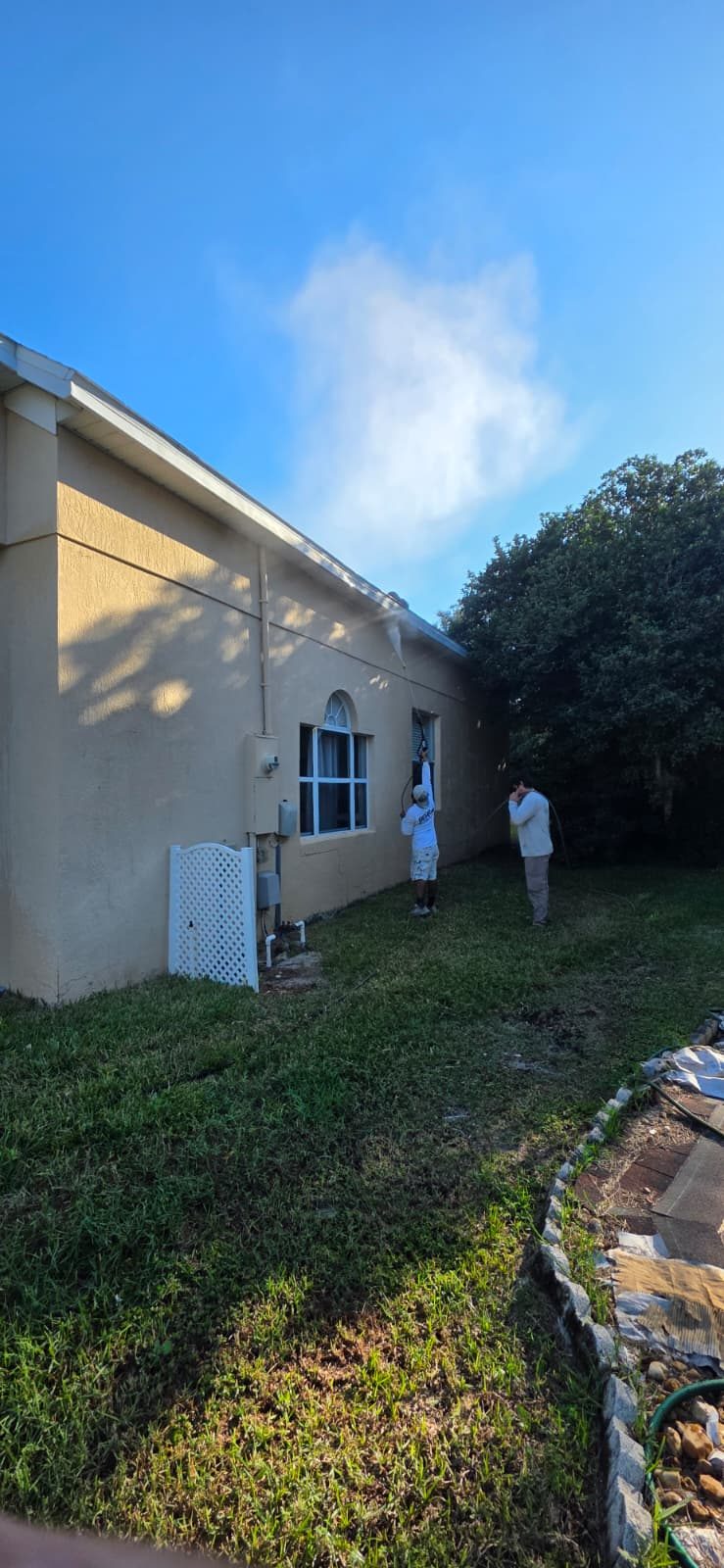
The wash comes first and then nothing happens for a while. Body, soffits, fascia and the lanai are pressure washed to take off chalk, mildew and pollen, and the house is then left to dry. Stucco holds water, and a wall still carrying it blisters weeks later, when nobody is on site to watch it start. In a four-day programme that dry-out is not slack in the schedule; it is the reason the other three days are worth doing.
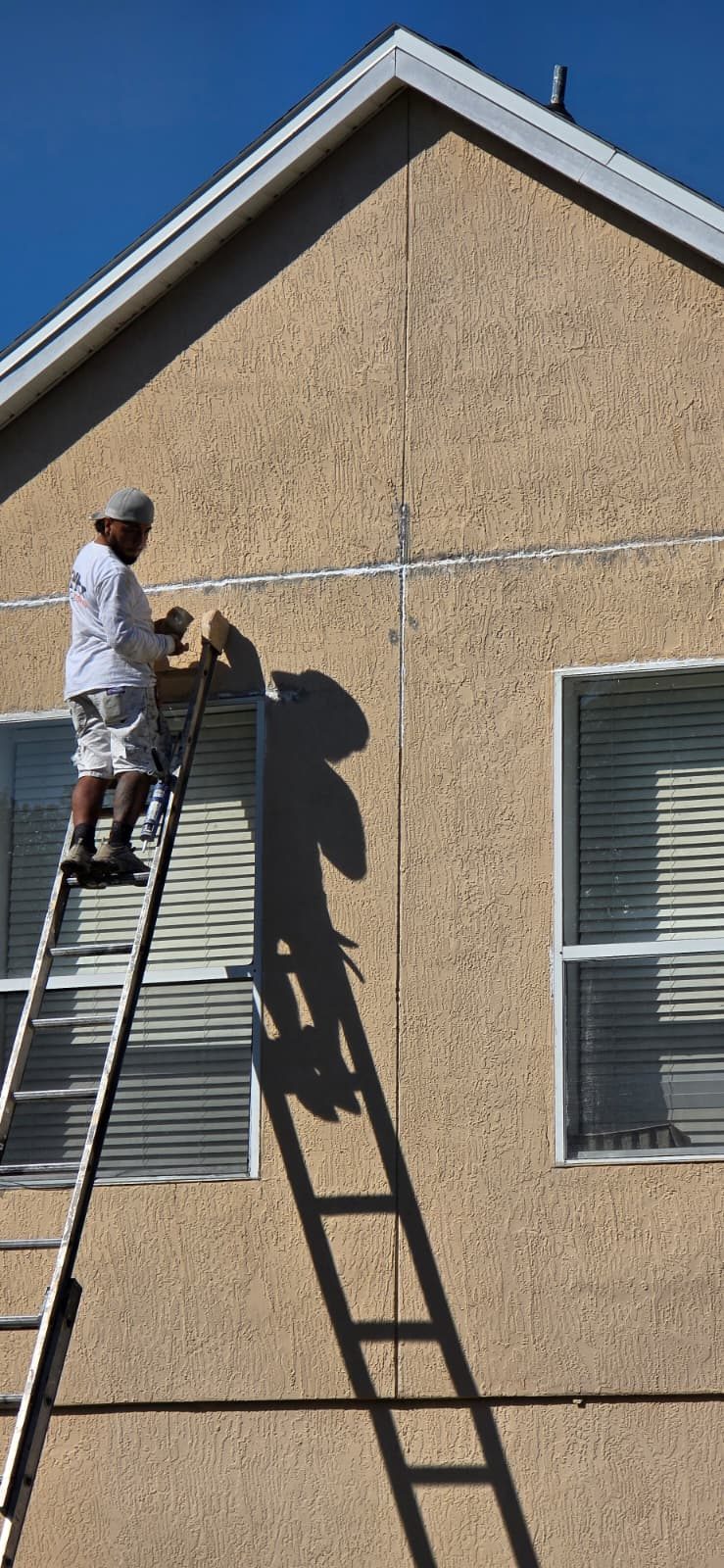
Then the surface is made ready rather than covered. Hairline and settlement cracks are opened, filled and textured back to the surrounding wall, windows and doors are caulked with an exterior-grade sealant before any coating goes on, and bare or patched stucco is spot primed. A repair left unprimed comes back through the topcoat as a different sheen even when the colour matches exactly, and it only shows once the wall is finished and the ladders are down.
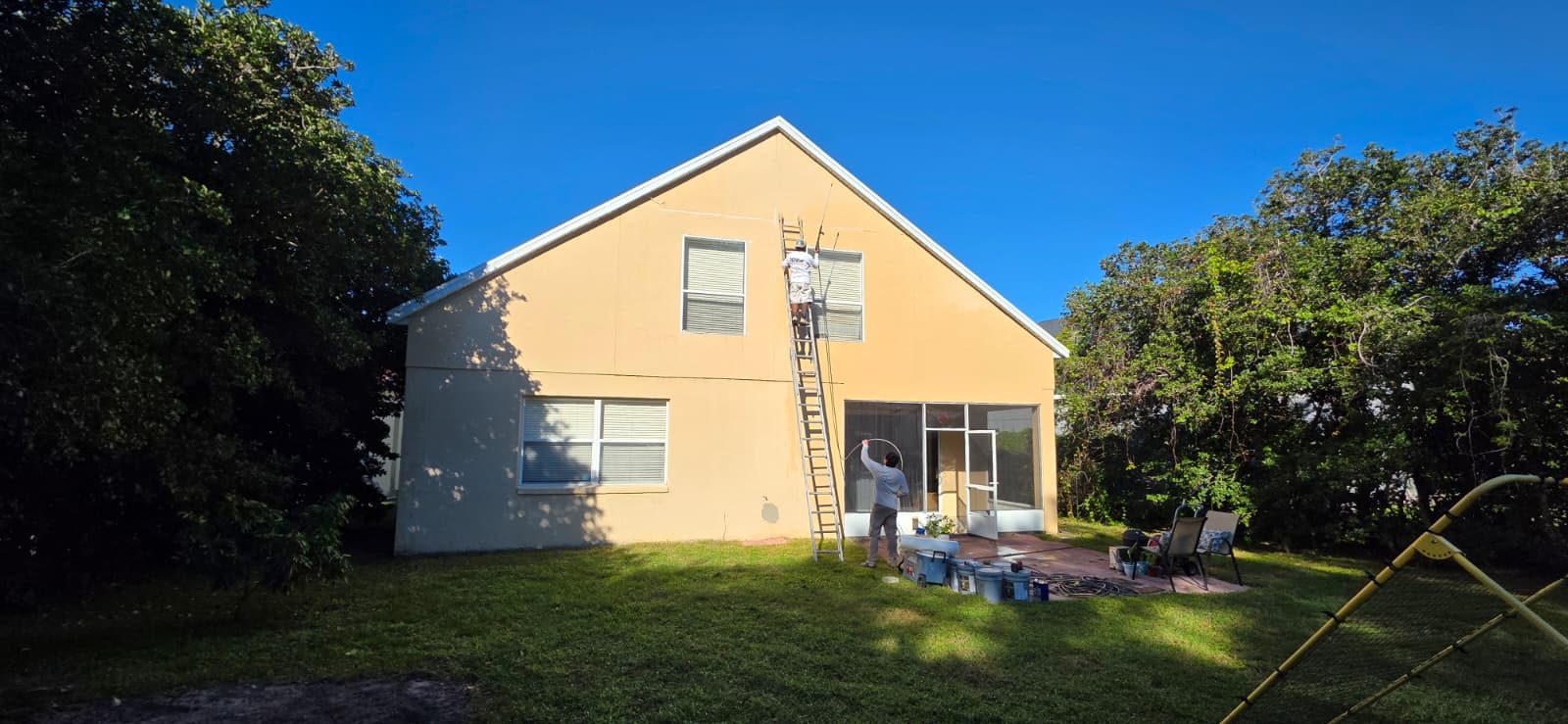
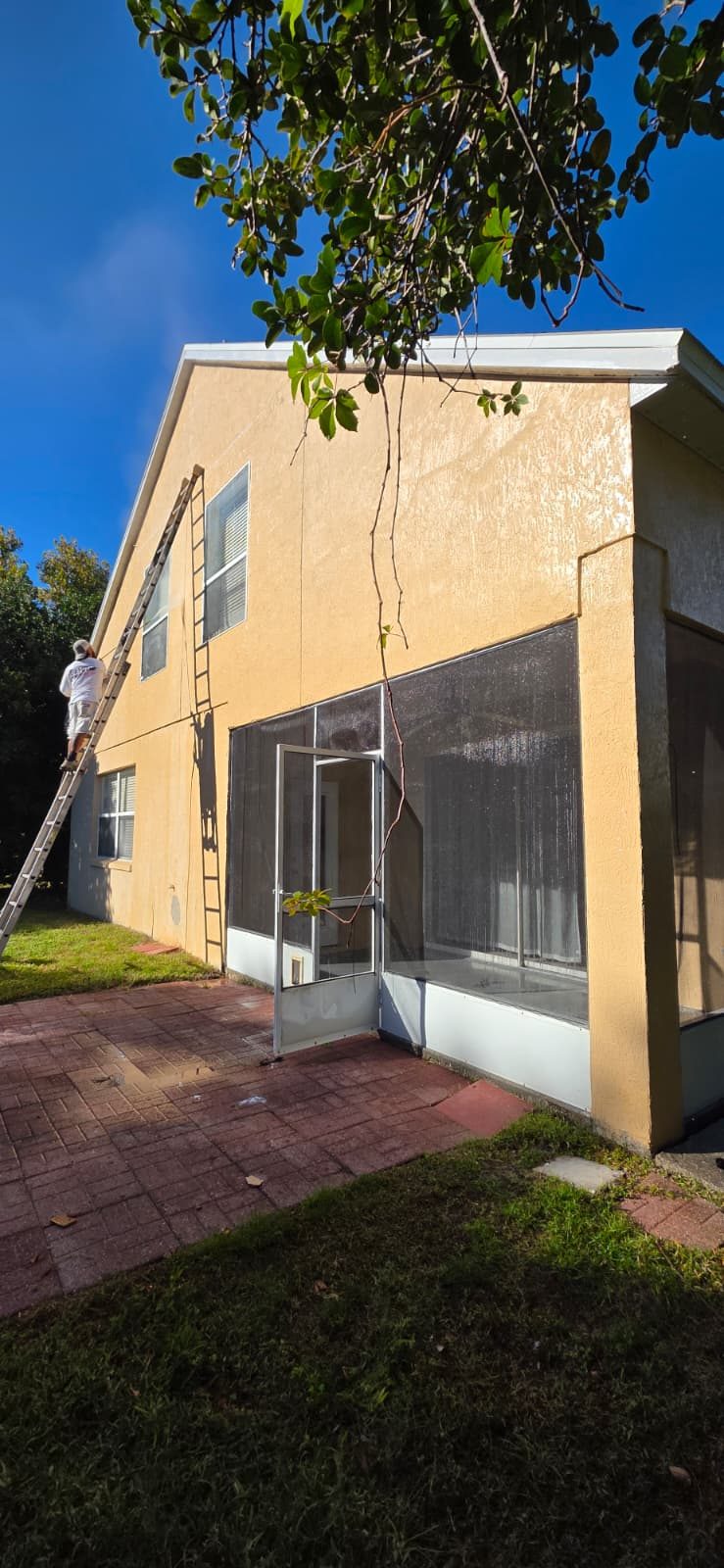
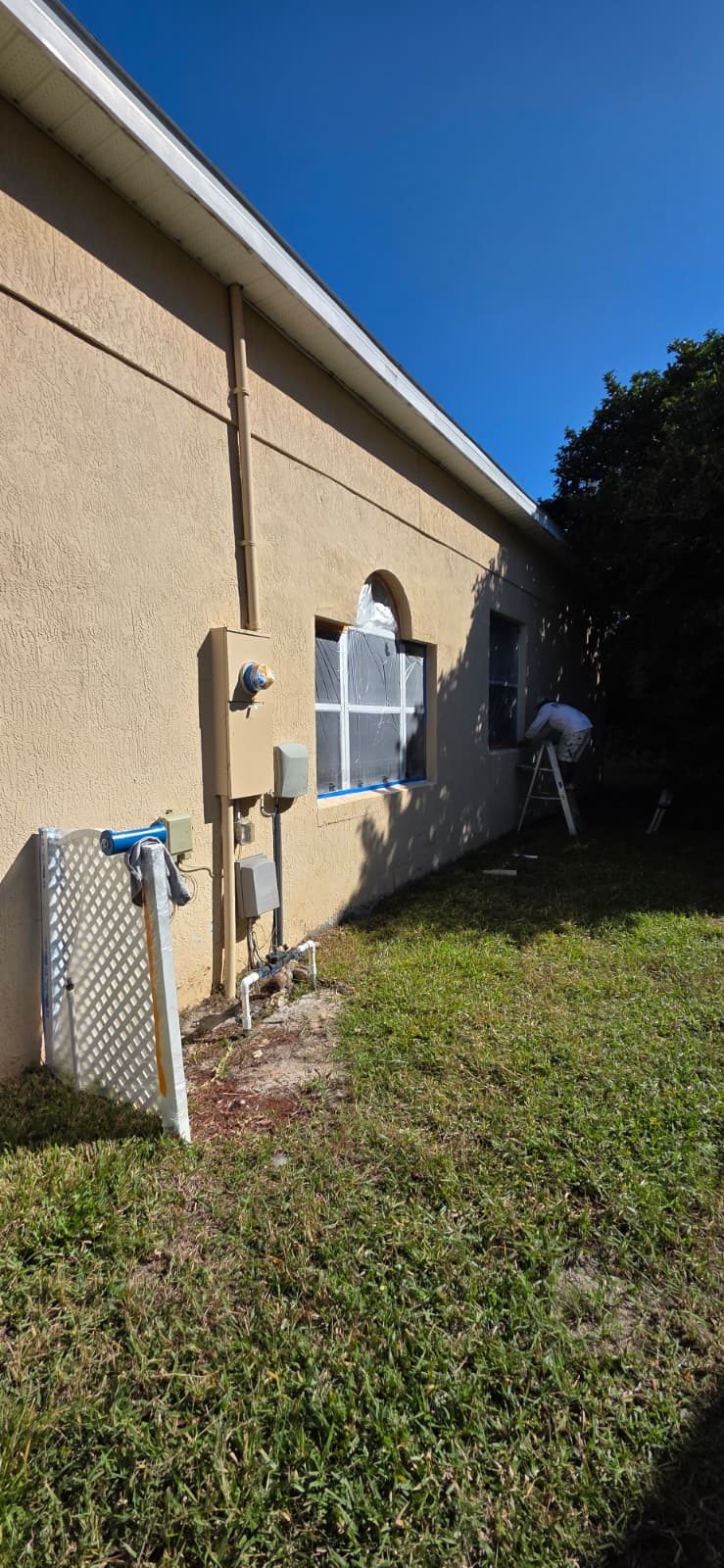
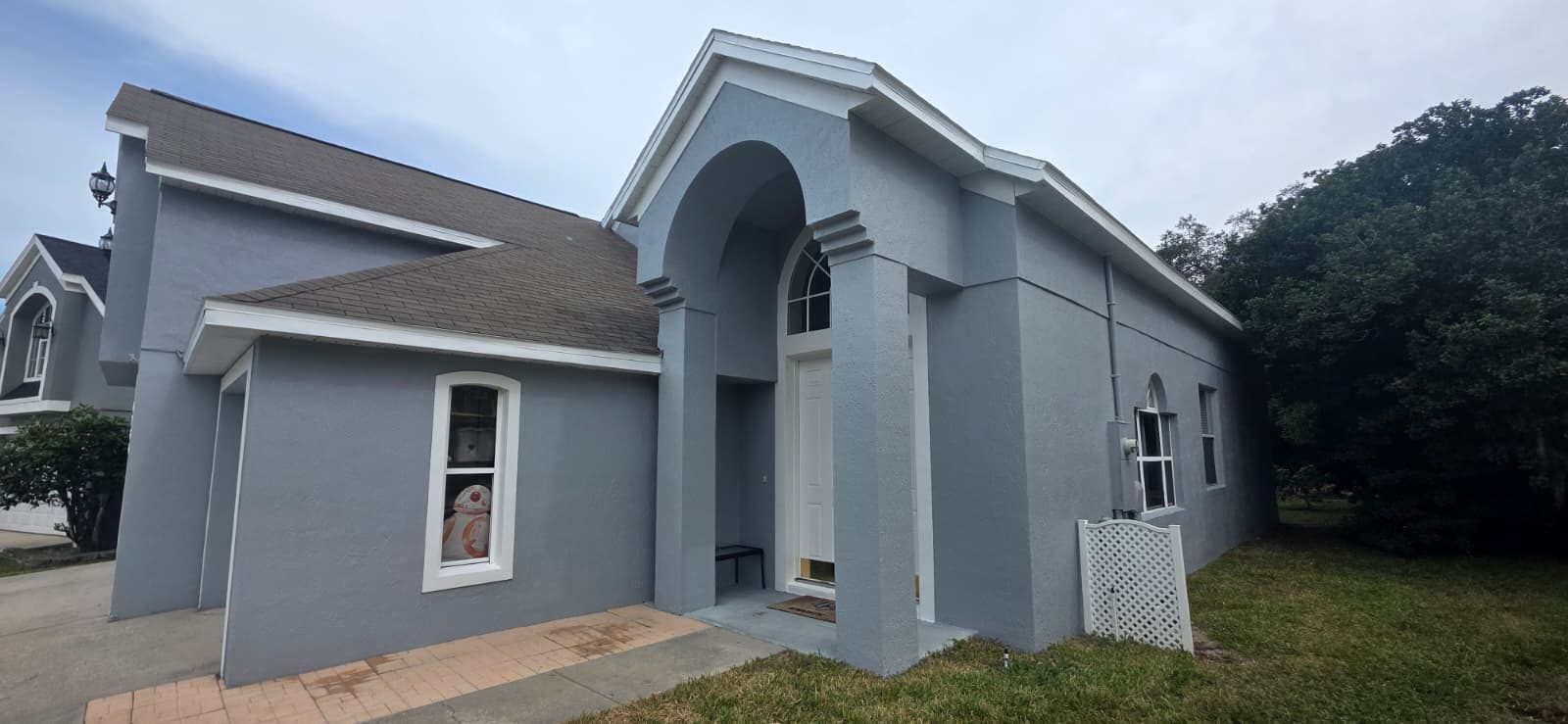
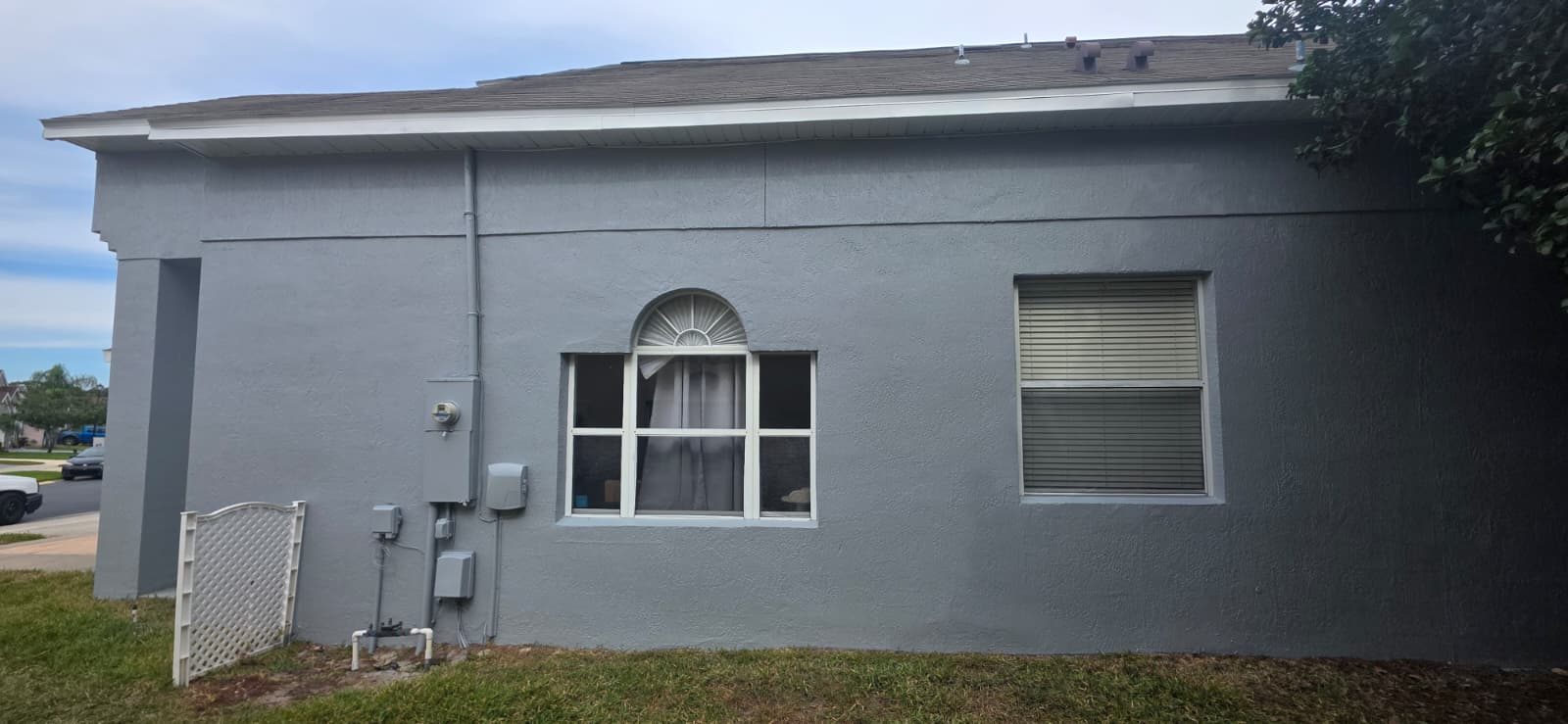
Masking is where a colour change is won or lost. Windows go under plastic and tape, and so do the meter, the panel, the hose bibs and the light fittings. The screened lanai is masked completely: screen mesh cannot be washed, so overspray on it is not a clean-up, it is a replacement. Walks, drives and pavers are covered rather than wiped afterwards, because a concrete paver takes a spatter of exterior paint permanently.
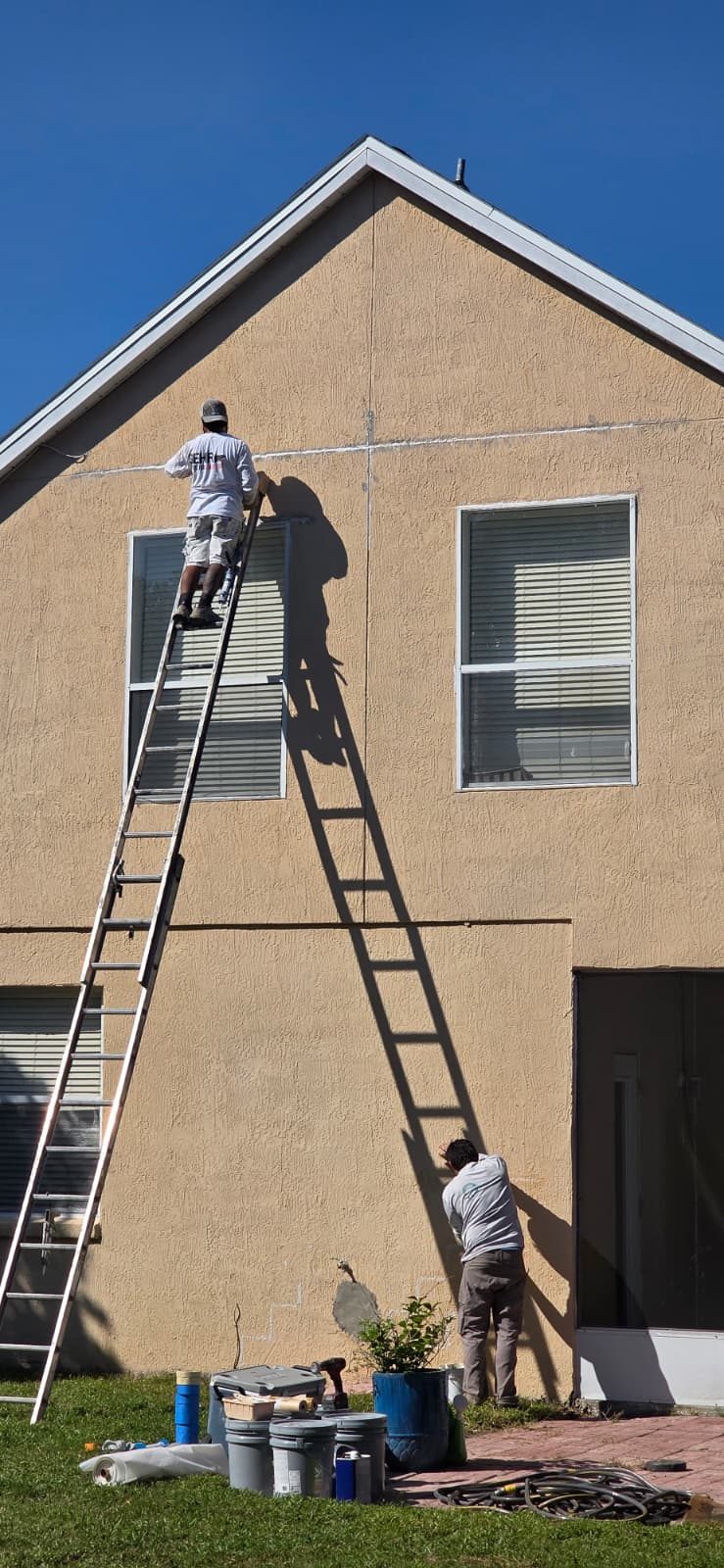
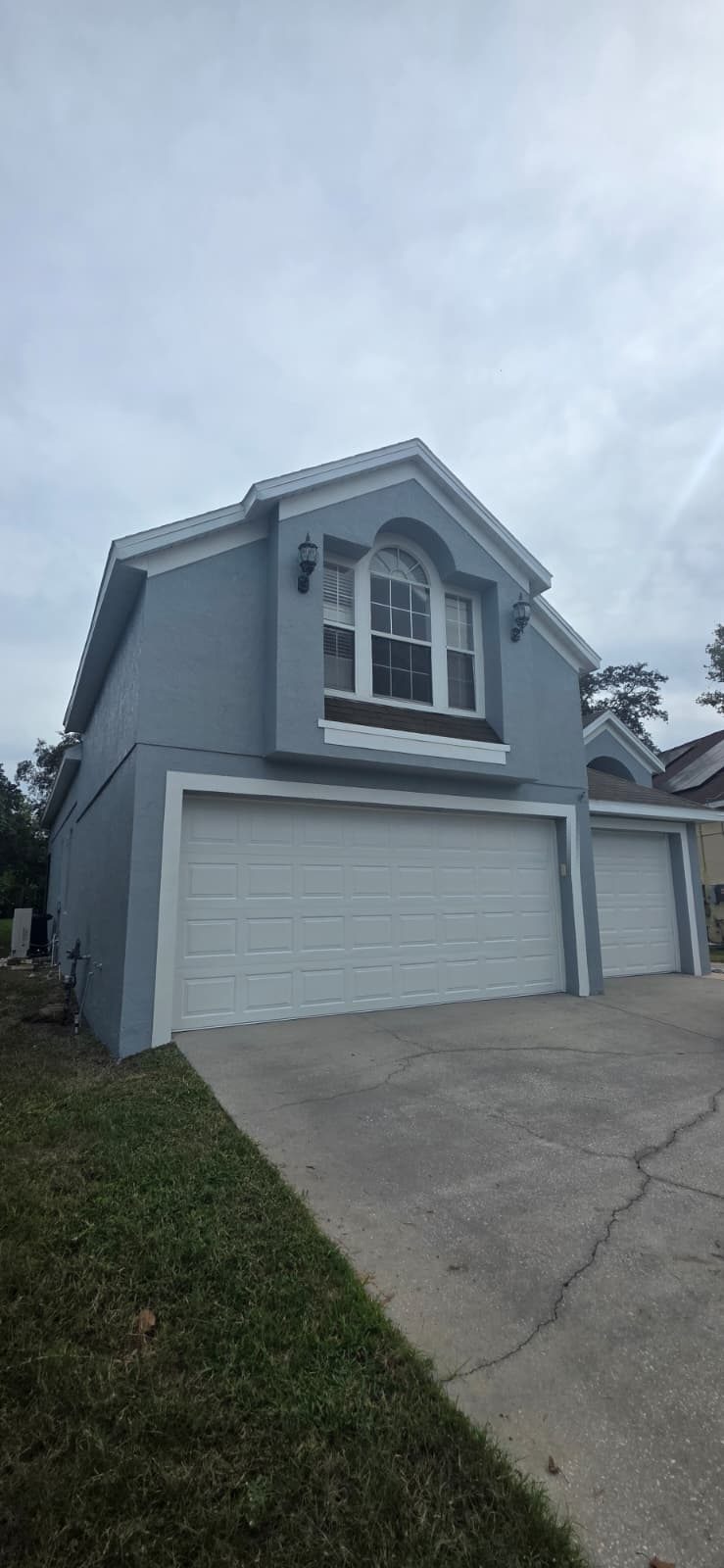
The colour goes on in two full coats of Sherwin-Williams exterior paint in a satin sheen, not one heavy one. Satin is the harder finish to get away with and the better one to live with: it sheds dirt and washes down instead of holding the mildew a flat wall grows here, but it also carries light along the wall, so a lap, a patch or a thin pass reads in the afternoon sun where a flat finish would have forgiven it. Choosing it is a decision about the preparation as much as about the paint. One coat of a darker grey over a light tan reads as a wash, not a finish: the substrate pulls it and the coverage goes uneven down the wall long before it goes uneven across it. Each elevation is worked as a single wet edge from top to bottom so there is no lap line at half height, and the cut at the soffit, at the window trims and along the gable rake is brushed from ladders rather than chased with a sprayer — the line against white trim is the one that gets looked at, and it is straight or it is obvious.
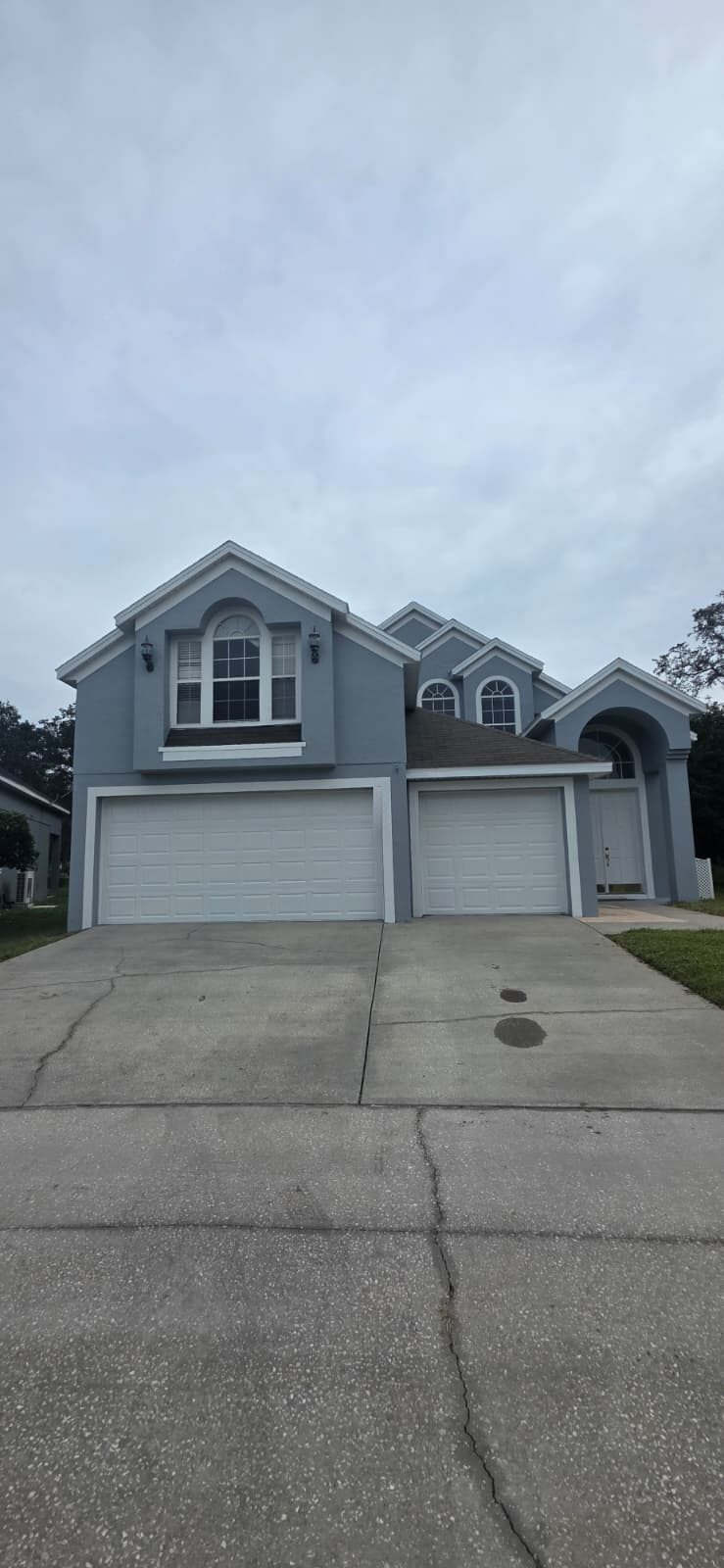
The trim, the fascia, the soffits and the garage doors stay light against the new body colour, and the front entry keeps its white. What was deliberately left out matters too: no roof work, no structural stucco, and nothing that turns out to be water intrusion or concealed damage behind the finish. Those are separate scopes with separate methods, and pricing them blind is how a four-day repaint becomes an argument on day two.
RESULT
A whole exterior on a 4,000-square-foot two-storey home taken from tan to grey in four working days, with zero accidents. Washed and dried out, cracked and bare stucco repaired, primed and caulked, then finished in two full coats of Sherwin-Williams exterior paint, satin, over every elevation, with the trim, soffits, fascia and garage doors left light against it.
The screened lanai came through without a mark on the mesh and the pavers came through without a spatter, which is the part of an exterior repaint that nobody photographs and everybody notices afterwards.
Projects