CHALLENGE
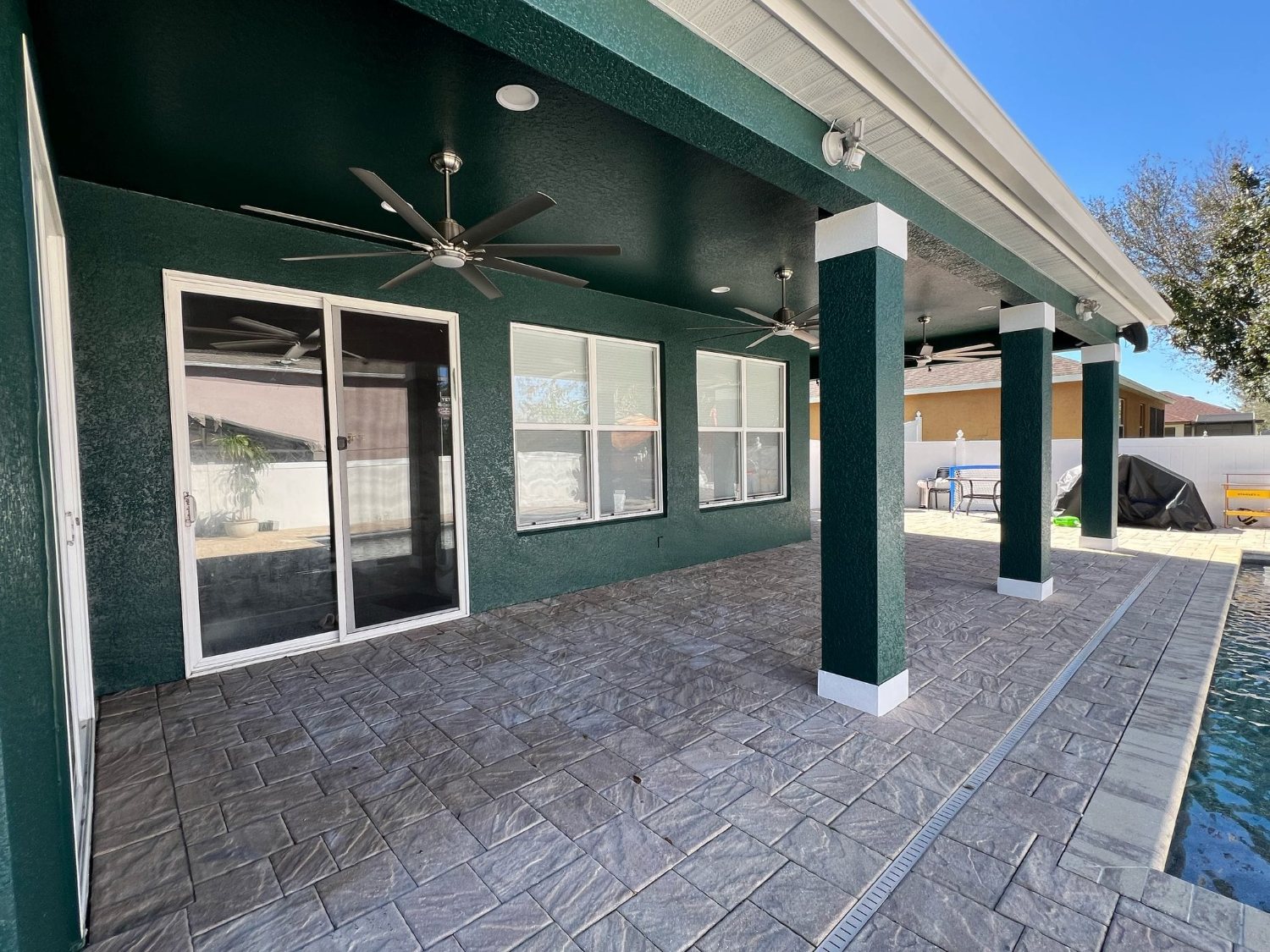
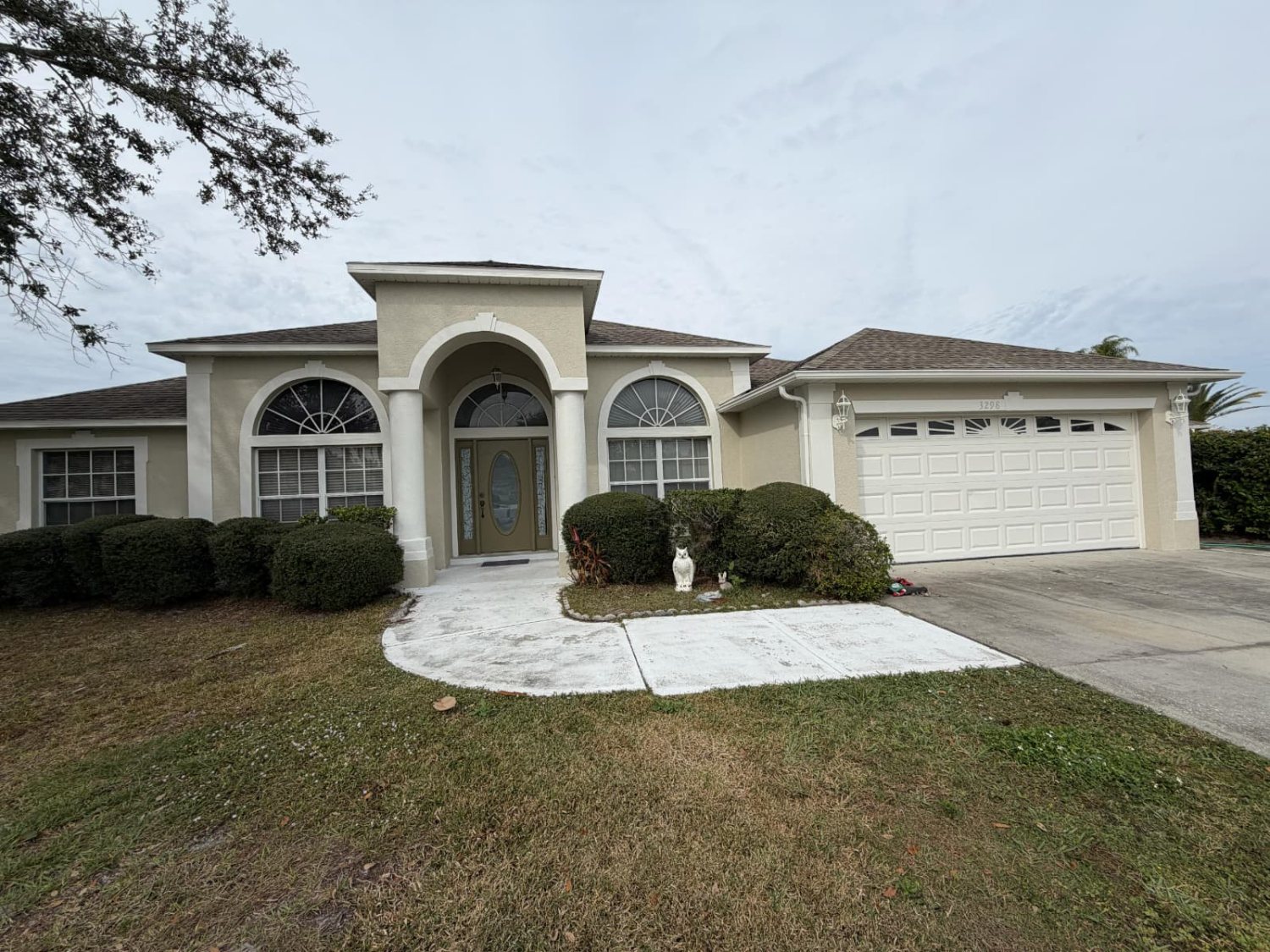
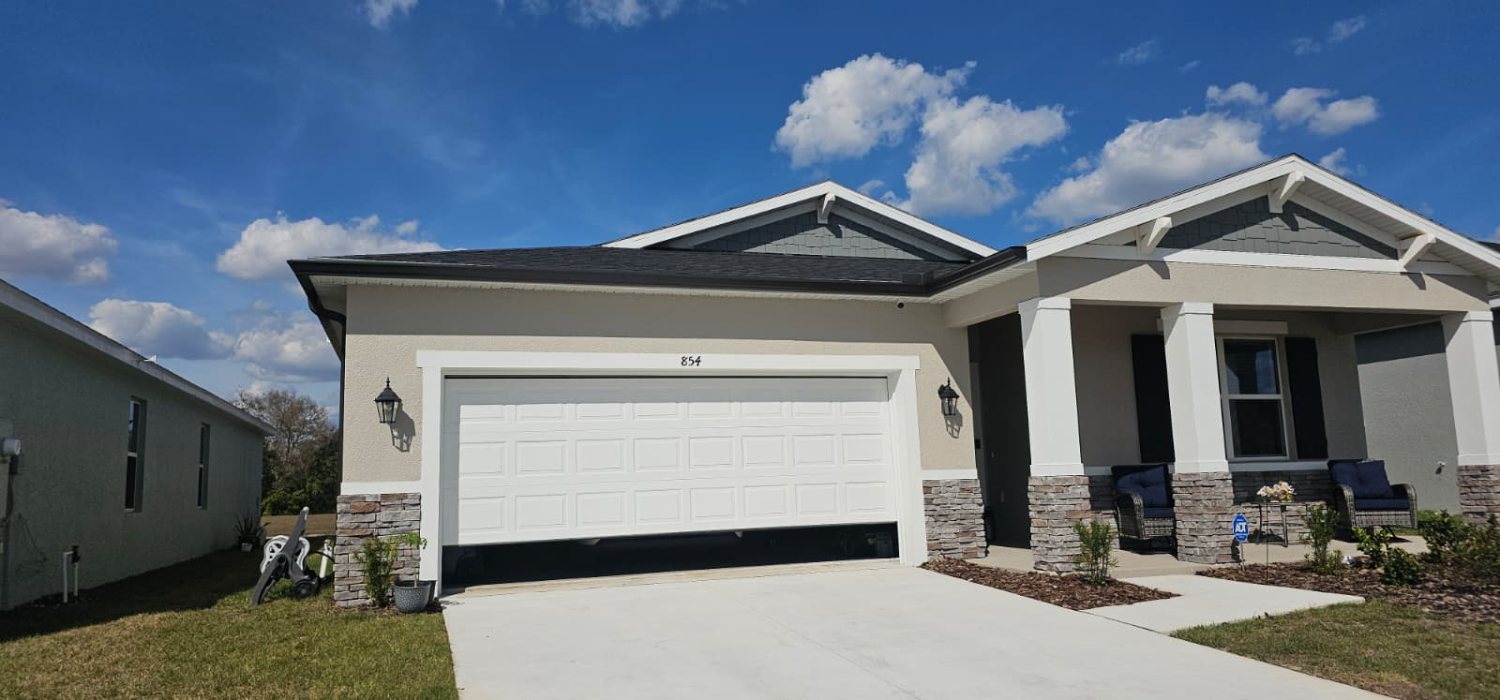
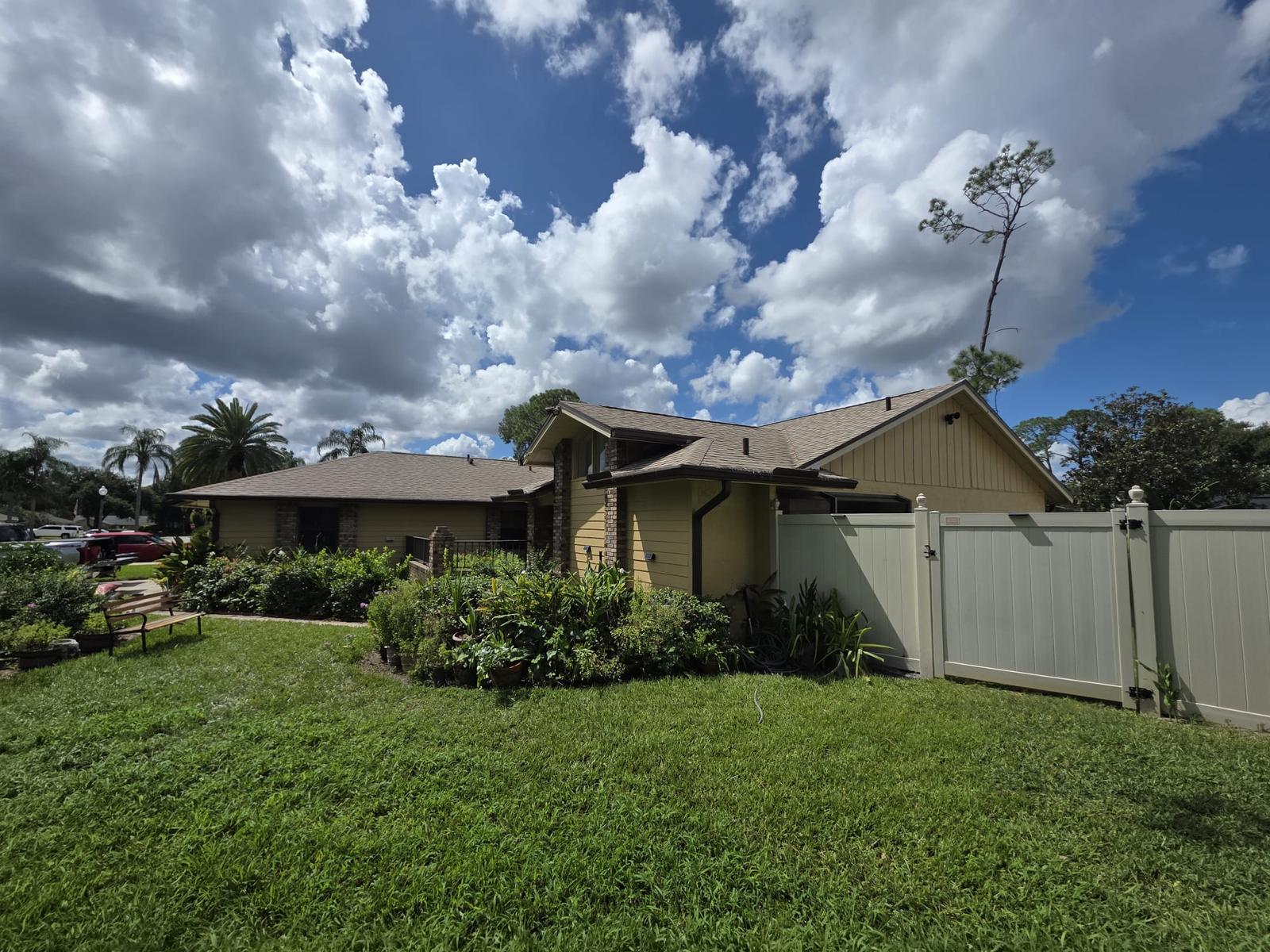
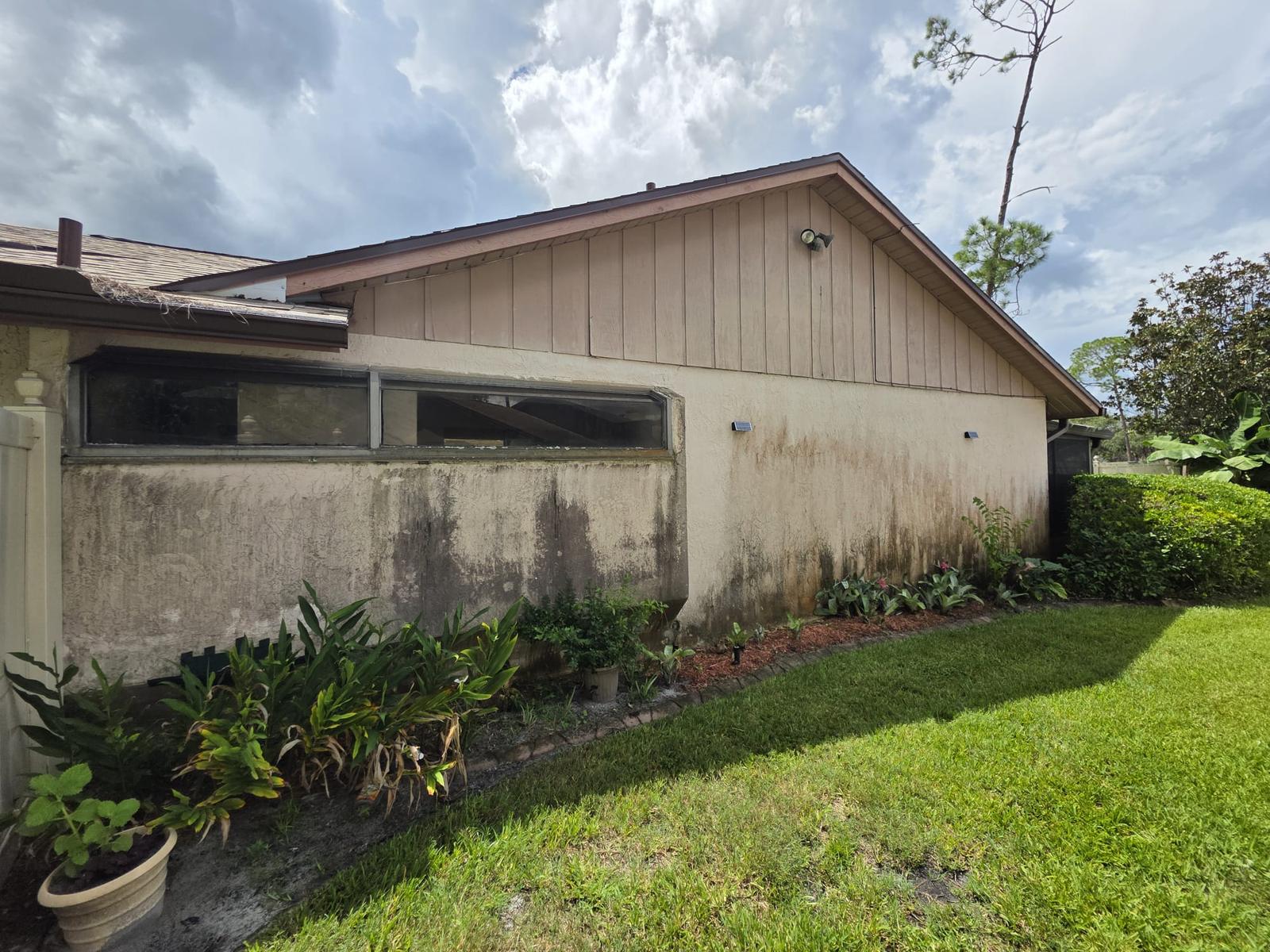
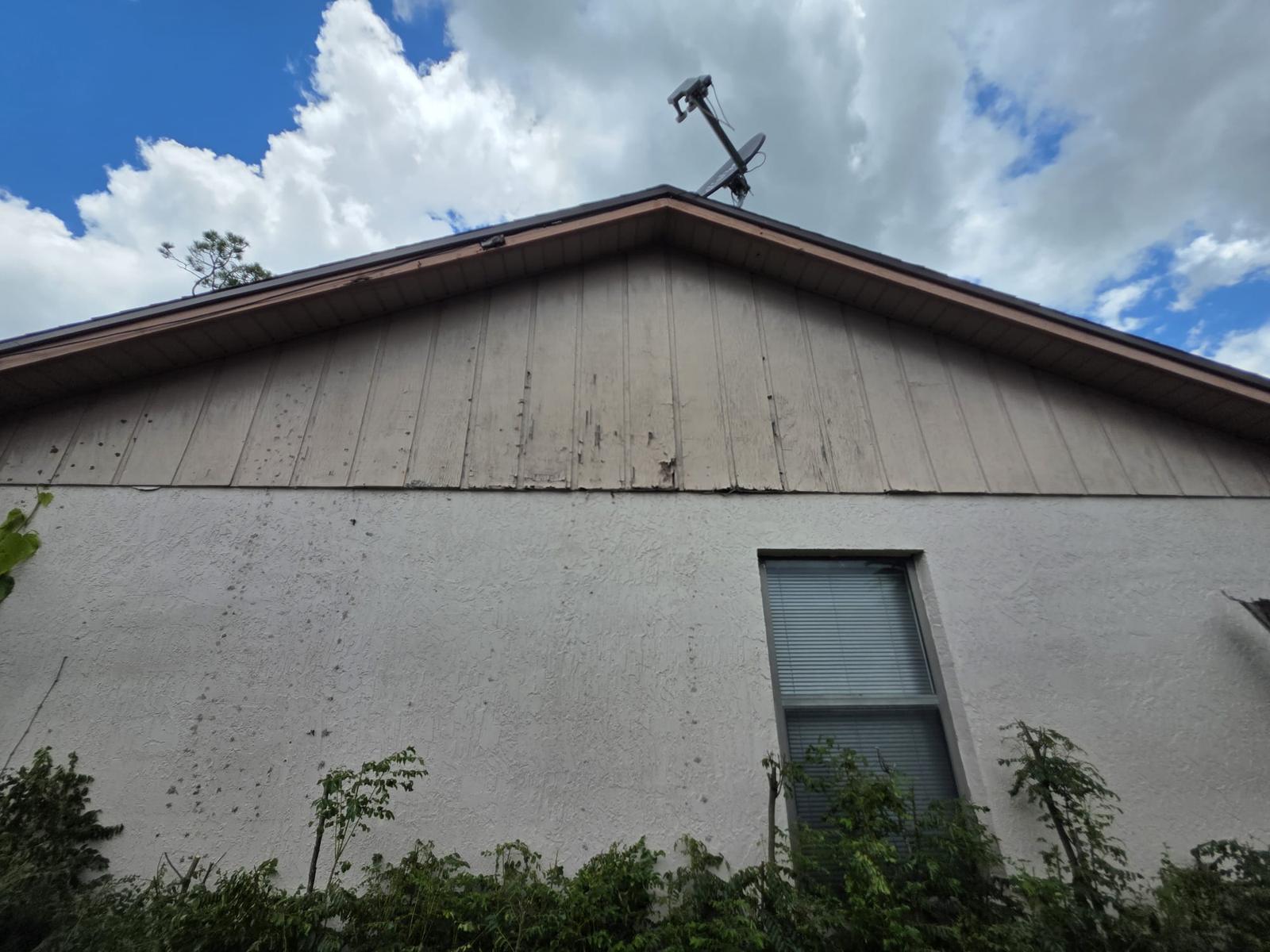
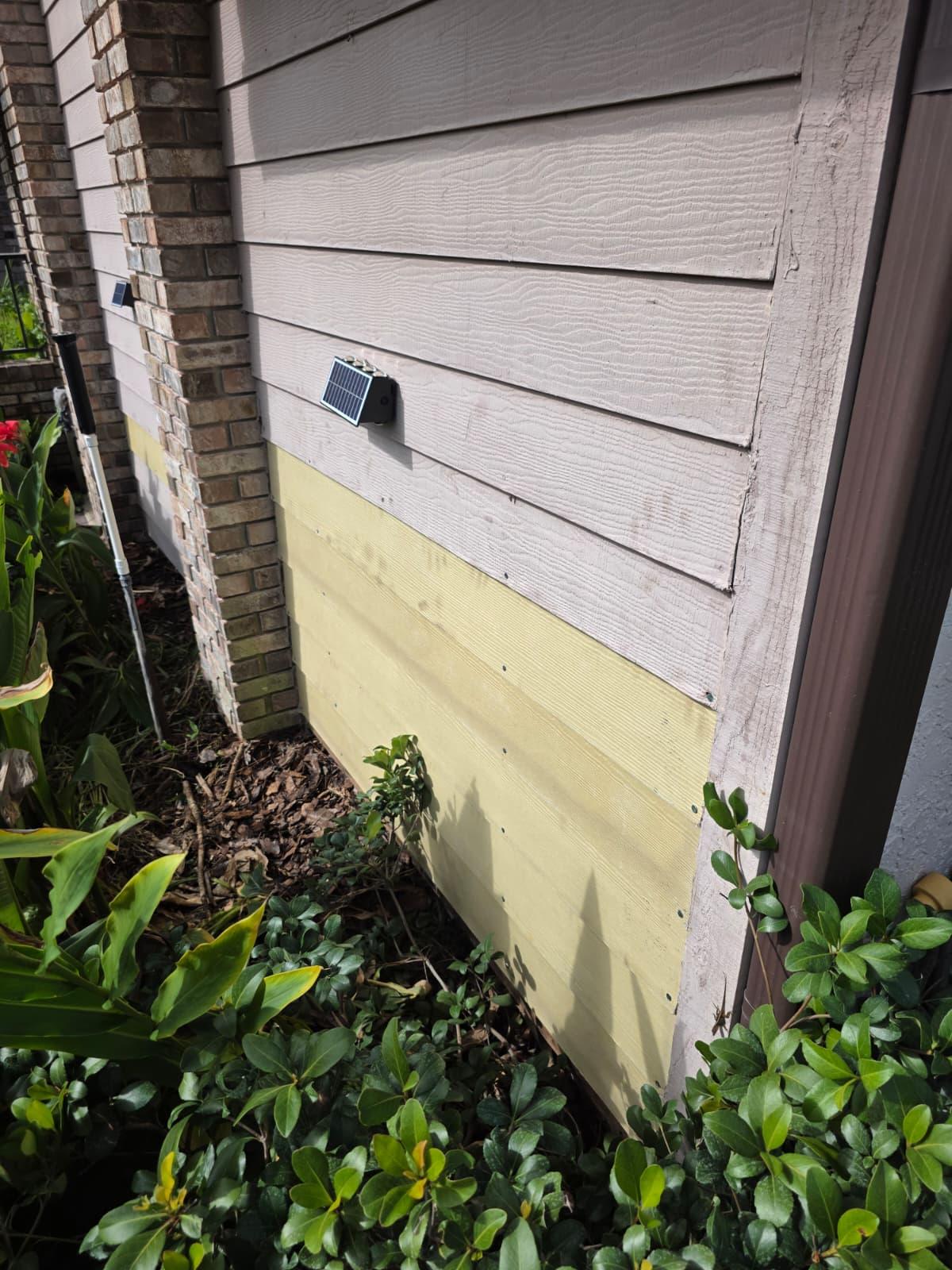
Three different problems on one elevation, and only one of them is paint. The stucco is carrying years of mildew and rust staining, and a coat put over that bonds to the dirt rather than to the wall — it comes off when the dirt does. Several runs of board-and-batten siding have gone soft and split, which no amount of paint fixes; a coating over failed wood hides the failure while it keeps spreading. And there are cracks, chips and spalled patches in the stucco that telegraph straight through a new finish if they are filled the afternoon before the sprayer arrives instead of prepared properly. On top of all of it, the colour scheme had to clear the association’s architectural review before a gallon could be ordered.
SOLUTION
Sequence and specification, both settled in writing before anything started.
The envelope is pressure washed first and then left to dry. Chalk, mildew and the pollen that coats everything here in spring are a bond breaker, and a wall still holding water blisters weeks later, when nobody is on site to see it begin. Damaged board-and-batten siding is cut out and removed in the five to seven areas identified on the walk, and replaced with exterior-grade siding matched to the existing profile — not filled, not coated over. Cracks, chips and localised deteriorated stucco are cut back, patched and textured to match the surrounding wall as closely as the existing finish allows, then primed and sealed on the repair itself. A repair left unprimed reads through the topcoat as a different sheen even when the colour matches exactly, and it only shows once the wall is finished. Windows and doors are caulked with exterior-grade sealant before any primer goes on.
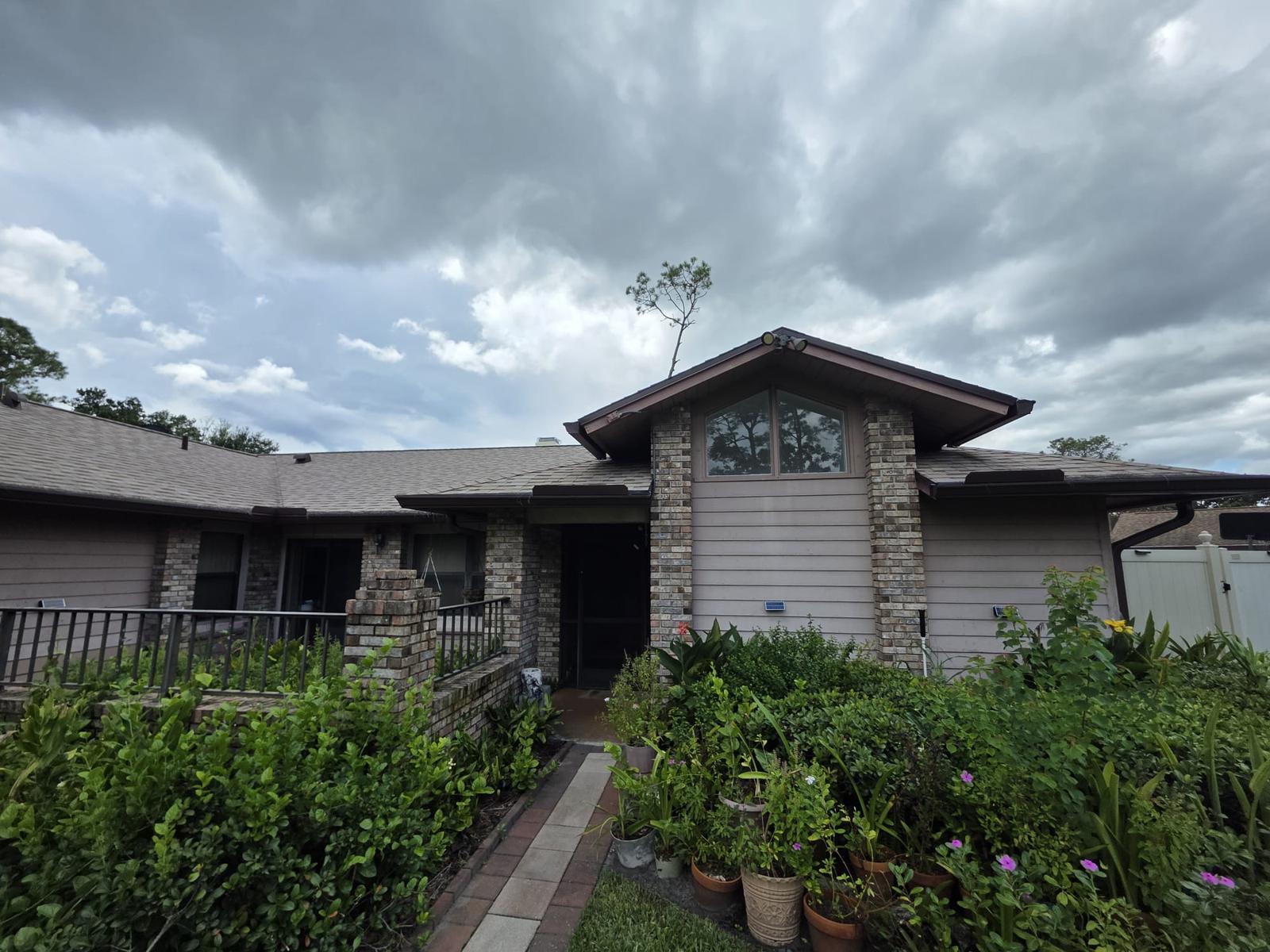
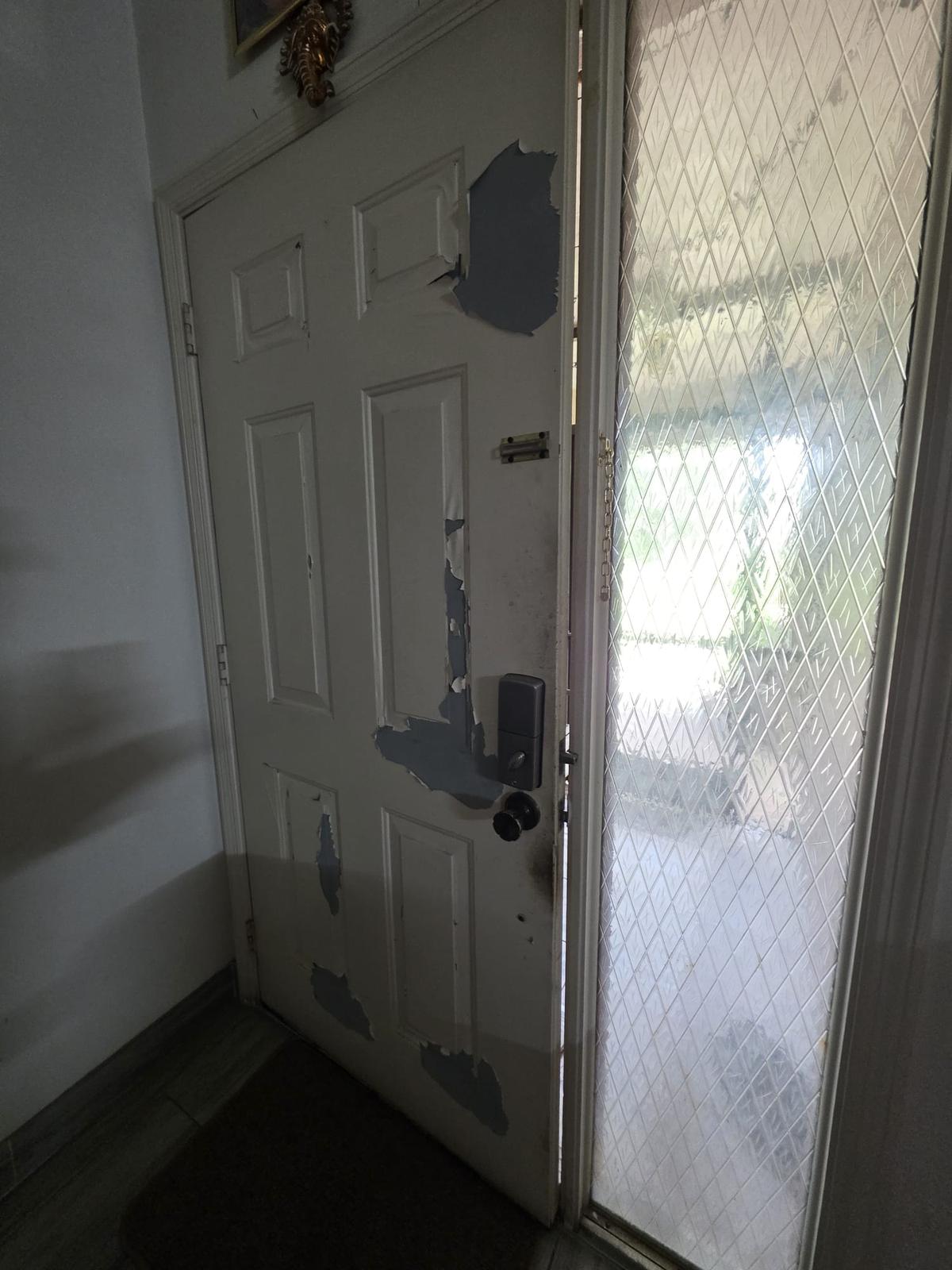
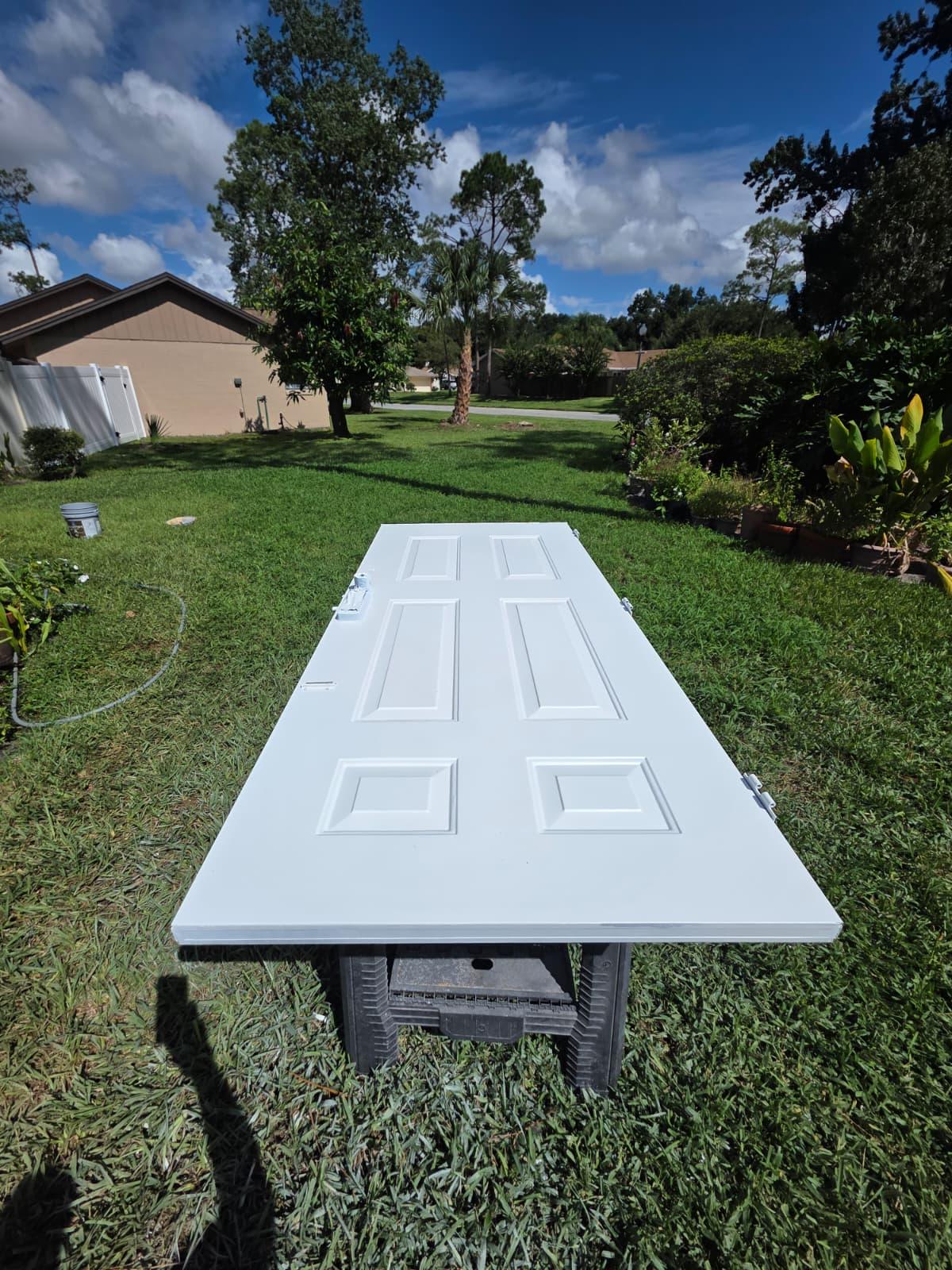
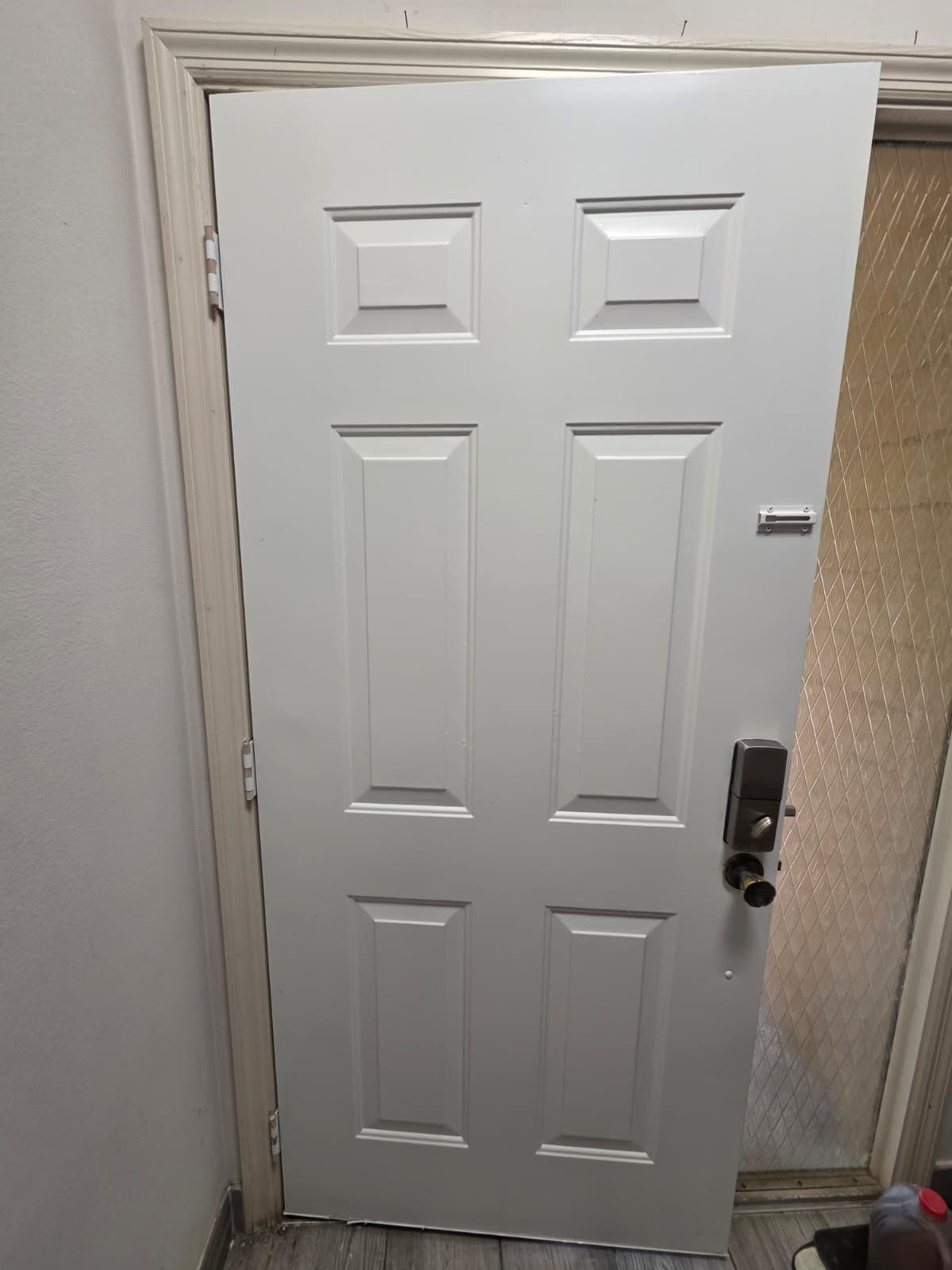
The specification is Sherwin-Williams SuperPaint exterior, primer where the substrate calls for it and two full coats over it. Stonebriar SW 7693 on the walls, the siding, the garage door, the chimney, the front entry door and the rear porch; Toasted Pine Nut SW 7696 on the fascia, the soffit and the exterior trim. The front metal railings are finished matte bronze. The existing stone veneer is sealed and not painted, because painting veneer is a decision that cannot be reversed later. And the back of the front entry door — the face nobody photographs — gets sealer and white paint, so the inside of the house does not end up wearing an exterior colour.
What was deliberately left out matters as much as what went in: no roof work, no structural stucco, and nothing that turns out to be water intrusion, mould or concealed damage behind the finish. Those are separate scopes with separate methods, and pricing them blind is how a repaint becomes an argument halfway through.
RESULT
A whole envelope on a 2,215-square-foot home in one scope: washed, repaired, re-sided where the wood had actually failed, caulked, primed and finished in two coats of Sherwin-Williams SuperPaint, with the colour scheme approved through the association’s architectural review before any material was ordered. The stone veneer sealed rather than painted, the front railings in matte bronze, and the inside face of the front door finished white so nothing about the new exterior turns up indoors.
Projects