Ask what the safety plan is on most jobs and the answer is a list of equipment: hard hats, glasses, gloves, boots, a harness for anyone going up. All of that is real and all of it is required. It is also the bottom of the list. The hierarchy of controls ranks five ways to deal with a hazard from most to least effective, and personal protective equipment is the fifth. It is the one everybody reaches for first because it is the cheapest to buy and the fastest to hand out — and it is the only one that does nothing until a person puts it on, keeps it on, and has the right size. What follows is the order, and what each level costs in a building that cannot close.
Looking for hazards is not an event
It is not the walk you do on day one and then file. The moments that matter are the ones where something changed: a new process or product, different equipment, a sequence that got resequenced, a subcontractor whose scope overlaps yours. Add to that the scheduled look — a regular walk, not an inspection nobody announced — and two triggers that are easy to skip. After an incident, obviously. And after a near miss, which is the one that gets skipped, because nothing happened and everyone is relieved. The fifth trigger is a worker saying something feels wrong. That one is worth more than the other four combined, and it only keeps arriving if raising it never costs anybody anything.
Risk is two questions, not one
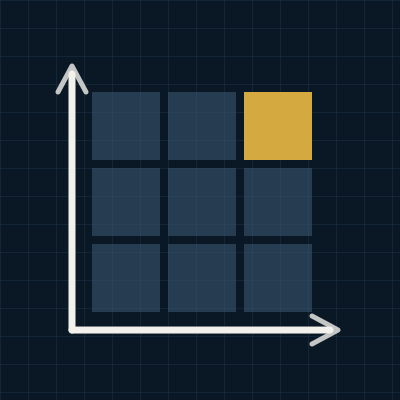
How likely is it, and how bad if it happens. Ranking by likelihood alone is how a site ends up well protected against the things that happen weekly and wide open to the one that happens once. The short list of activities that produce the worst outcomes is not a mystery and it barely changes: work at height and anything that can fall from it, contact with energised electrical, being struck by something moving, trenching and excavation, confined space entry, heavy equipment, cranes and rigging. When one of those is on the schedule and the control is missing or improvised, that is the day to stop and fix it — not because a rule says so, but because that specific combination is what the fatality reports are made of.
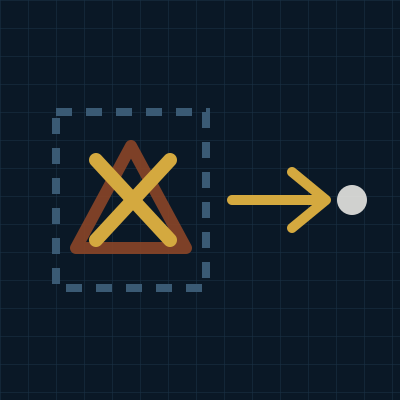
The top of the hierarchy is the level nobody uses
Elimination means the hazard is not there. Substitution means something less dangerous is there instead. Both sound theoretical until you notice they are usually scheduling and specification decisions, not safety decisions. Cutting a material outside instead of inside removes the exposure rather than filtering it. Ordering a product pre-cut to size removes the cut. Doing the demolition before the space is reoccupied removes everyone who would have been near it. None of that shows up on a safety form, which is exactly why it gets missed: it happens weeks earlier, in a conversation about sequence, and it is the cheapest safety anyone will ever buy.
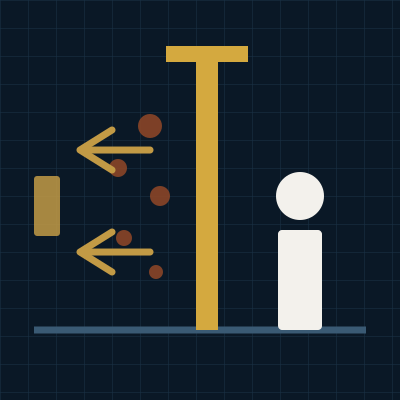
Engineering controls keep working when nobody is watching
These are the physical ones: a sealed barrier floor to deck, negative air with HEPA filtration, a guardrail, a machine guard, wet-cutting instead of dry, local exhaust at the tool. What makes them rank above the two below is not that they are stronger. It is that once they are installed they do not depend on anyone remembering. A barrier that is up is up at three in the afternoon when the crew is tired and the inspector has gone. That is the whole argument, and it is why the money spent here buys more than the same money spent anywhere lower.
The last two both depend on a person remembering
Administrative controls are the rules: working hours, access routes, rotation, permits to work, training, signage. Personal protective equipment is the gear. They rank fourth and fifth for the same reason — both fail quietly the moment someone is in a hurry. That is not an argument for skipping them; on an occupied job they are often the difference between a phased schedule that works and one that does not. It is an argument against reaching for them first. If the answer to a hazard is a sign and a respirator, the question of whether the hazard had to exist at all has usually not been asked.
The near miss is the only free information you get
Something fell and hit nothing. A cut went through a conduit that happened to be dead. The difference between that and a serious injury is often nothing but where somebody was standing. Investigating it costs an afternoon and teaches the same lesson the injury would have. The method is not complicated: secure and photograph the scene before anything moves, collect what the records say, then keep asking why until the answer stops being a person and starts being a condition — a procedure that was out of date, training that never happened, a schedule that made the shortcut rational. An investigation that ends at "he should have been more careful" has found a name, not a cause, and the same event is still available to happen to somebody else.
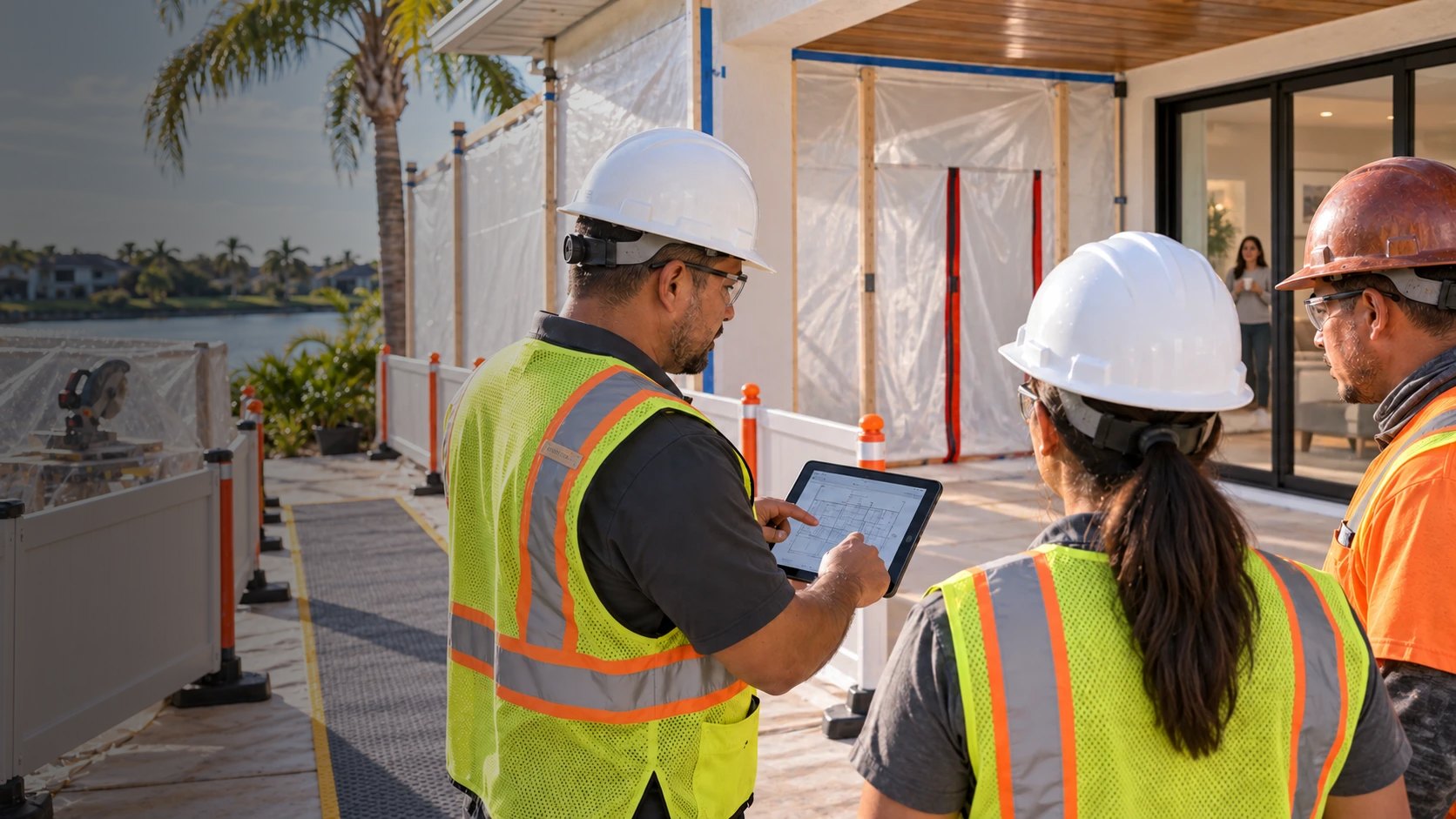
On a site where the building stays open — a clinic seeing patients, a store trading, a corridor people still walk down — the hierarchy tightens. Elimination and substitution get decided in preconstruction or not at all, because by the time the crew is on site the sequence is set. Engineering controls have to go in before the first cut rather than after the first complaint. And the people the controls protect are not only the crew: they are staff and visitors who never agreed to be on a construction site. That is the reason a job hazard analysis is worth writing down task by task before the work starts, and the reason we would rather move a scope to a night than hand out one more respirator.
OFFICIAL SOURCES
NOTE
This article is general information about a widely published safety framework. It is not a substitute for a site-specific safety and health program, for OSHA training, or for the requirements that apply to a particular job. For a specific scope, the controls are decided on the site, in writing, before the work starts.
START HERE
One form, one business day.
Describe the scope and we answer within one business day. Drawings and photos by email; emergencies by phone, 24/7.
Related projects
Commercial, Retail & Healthcare Construction→