
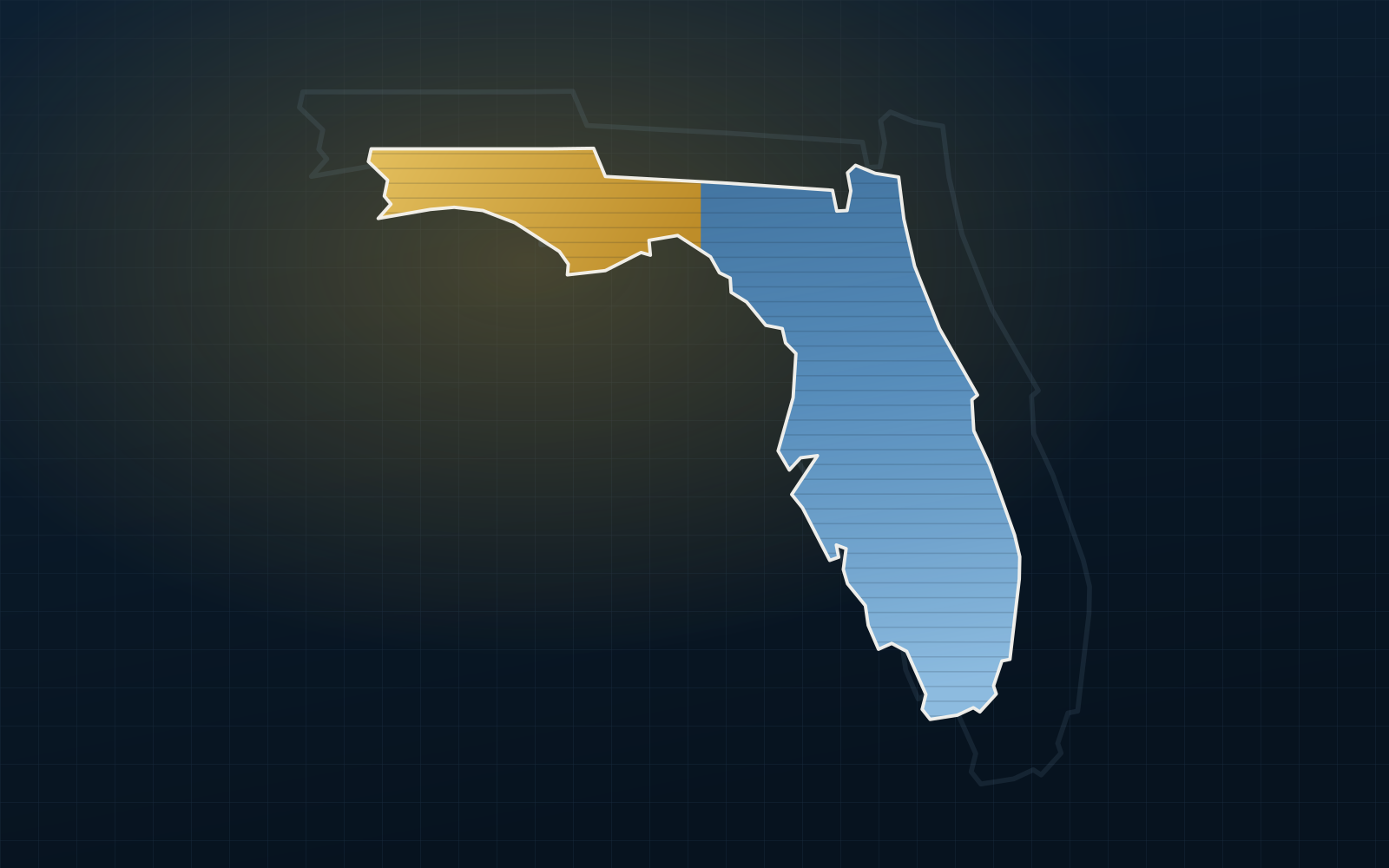
Builders pulled 51,444 permits for new homes in Florida through the second quarter of 2026 — about 7% fewer than the same stretch of 2025, and the second down year running after a roughly 4% slip the year before. The figures come from HBW’s permit database and were reported by Florida Realtors in July. Central Florida fell harder than the state did. None of that tells a homeowner or an association board much on its own, because a permit counts exactly one thing: a house somebody is about to start. Here is what the number says, what it does not, and which part of it actually lands on a building that is already standing.
What the number counts, and when it is counted
A building permit is pulled before anything is built. It records an intention that has cleared review and paid its fee, not work completed, so a permit count is a leading indicator of new construction and nothing else. That is why 51,444 through two quarters, against a 7% decline, is a statement about what builders decided to start this year. HBW was careful about the framing and so should anyone quoting it: two quarters is not a verdict. One down year is a slowdown; two in a row — about 4% in 2025 and 7% so far in 2026 — is a direction, and the gap between those two numbers is the part worth watching.

Florida is not one market, and the average hides that
The statewide figure is the least useful number in the report. Northwest Florida recorded 7,093 permits, an 11% increase — the one region with real growth. West Florida is still the largest by volume at 12,489, but it is down 14% year to date. Central Florida, which is where we work, came in at 7,039 and off about 17%: the sharpest decline of the three. So a single state average covers a region growing double digits and another contracting by nearly a fifth. If you read one number and skip the regional table, you will take away the opposite of what is happening where you live.
A permit is a start, not a house — and most work never pulls one
This is the part that gets lost. A new-home permit is issued for a new home. A repaint does not pull one. Flooring does not. Most interior finish work, a great deal of repair work, and plenty of fence and hardscape work sit below the threshold or fall outside the category entirely. So the permit count can drop by 17% in a region where the hours worked on existing houses did not move at all. The two numbers measure different things, and only one of them is published every quarter, which is why the published one gets treated as the whole picture.
The houses already standing do not go away when permits do
Everything built in Central Florida over the last twenty years is still there, and it keeps aging on Florida’s schedule rather than on the market’s: ultraviolet light on the south and west elevations, the afternoon storm, the sealant joint that is past its service life, the slab that has been under carpet since the house was finished. That clock does not slow down because fewer houses are being started. A year with less new construction is not a year with less construction — it is a year in which more of the work is on what is already up.
What it actually changes for you is the calendar
The practical effect of a slower new-build year is availability. Crews, subcontractors and suppliers that would otherwise be committed to new construction have room, and what a homeowner or an association board feels is scheduling: a walk-through this month instead of next quarter, a bid that comes back, a start date that is not three months out. Note what we are not saying: nothing here is about price. Every scope is still quoted against the real scope — drawings, site conditions and the schedule — and a quiet quarter is not a discount. It is access to the calendar, which on a seasonal scope is often the thing that was actually blocking you.

And what it does not change at all
The association review takes what it takes. An ARC submittal is a queue and a meeting date, and neither moves because statewide permits fell. The building department works at its own pace and the inspection sequence is the same one it was last year. Code requirements have not relaxed, and neither have the insurance questions that follow a Florida roof or opening. So if the project needs a submittal, a permit or an inspection, plan for exactly the same lead time you would have planned for in a busy year — and start it earlier, because the part you just gained is the construction window, not the approval.
Two quarters is not a trend, and the people who publish the data said so first. The useful reading of this report is not that Florida is down; it is that Florida is uneven — one region up eleven percent while the one next door is off seventeen. And for anybody with a house or a community in Central Florida, the statewide permit count is not the number that matters. The number that matters is whether the people who do the work can get to you this season, and that is the one thing a slower permit year genuinely moves.
← INSIGHTSSTART HERE
One form, one business day.
Describe the scope and we answer within one business day. Drawings and photos by email; emergencies by phone, 24/7.