
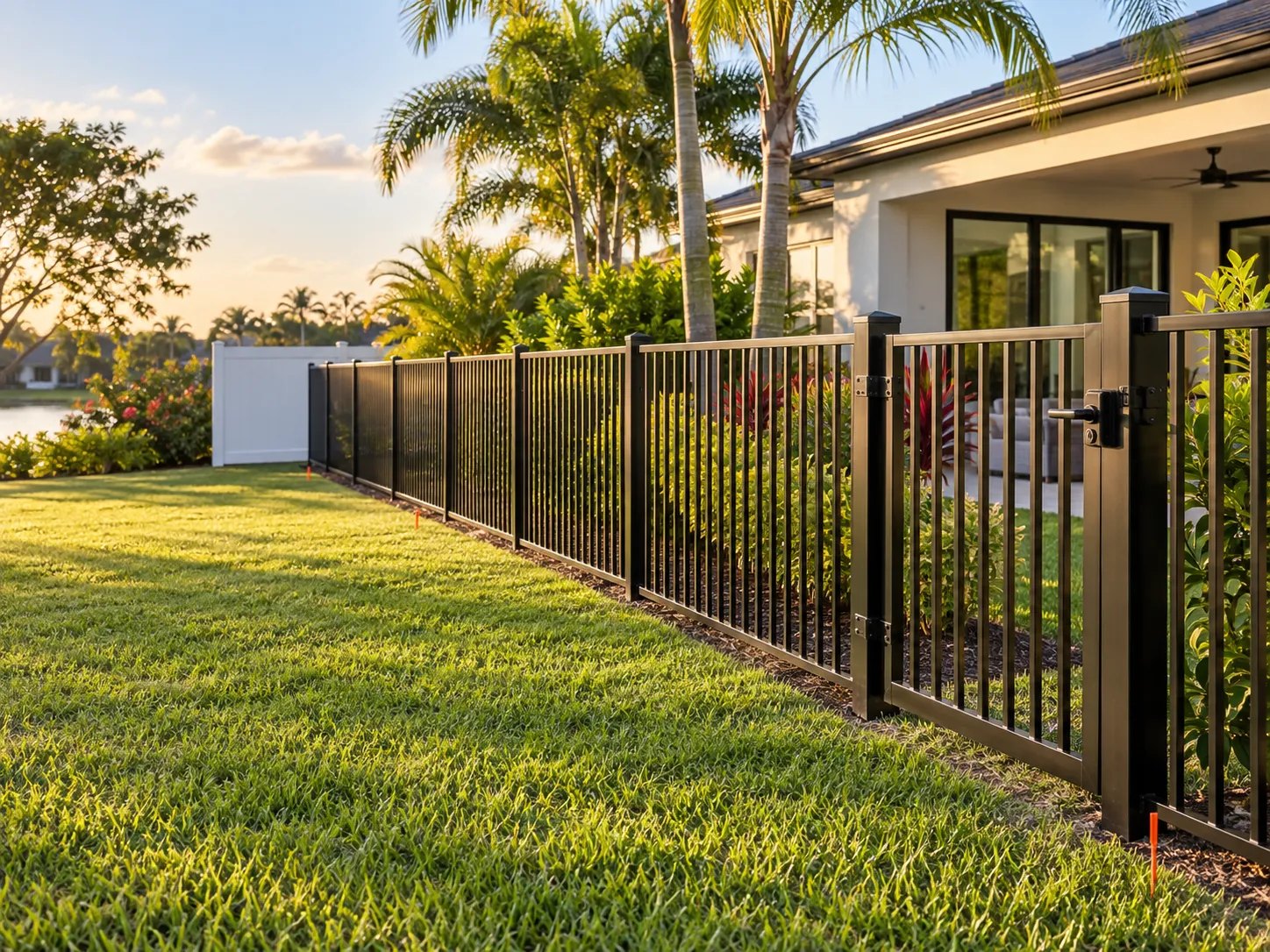
A fence is the one thing on a property that nobody measures and everybody sees. It runs two or three hundred feet in what has to read as a straight line, over ground that is not level, and every error in it accumulates: a post set an inch out of plumb reads as a lean by the fourth panel, and a line set to the sod instead of to a string follows every dip the lot has. What follows is ordinary trade sequence. None of it is difficult. It is just that four of the six steps happen before anybody digs a hole, and those are the ones a schedule tries to take back.
The association decides before the supplier does
In most of Central Florida the first gate is not the county, it is the homeowners association. Style, height, color and setback go to the architectural committee for approval before any material is ordered, because a fence that arrives before the approval does is material you own and cannot install. The county permit is a separate approval and most jurisdictions here require one: neither covers the other, and finding that out after delivery costs weeks. Submitting both at the same time is the whole trick — they run in parallel, and the longer of the two sets the start date.
The line comes off the survey, not off what is already there
A fence set to the edge of the sod, or parallel to the neighbor’s fence, inherits whoever else’s error is already in the ground. The line gets set from the property corners on the survey. This is not pedantry about an inch: a fence built over the line is a legal problem and not a construction one, and the remedy is to pull it out. Where the corners cannot be found, that is a surveyor’s half-day, which is cheaper than any version of moving it later.
Locate what is buried before the first hole
In Florida the free statewide call is Sunshine 811, and the statute asks for two full business days’ notice before digging. What comes back are the utility-owned lines. What does not come back is everything downstream of the meter: irrigation laterals, low-voltage lighting, a pool line, the cable run somebody trenched one weekend. Those are the homeowner’s, nobody marks them, and a fence line runs straight through exactly where they live. The orange flags along a fence run are that locate, and hand-digging the first foot where a mark crosses the line is the cheap half of the job.
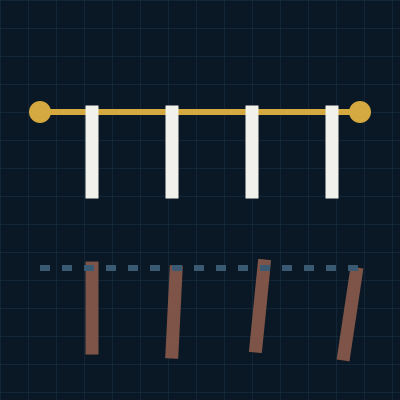
Every post center off one string, not off the post before it
Measuring post to post is how a run drifts. A quarter inch of error per bay is invisible at the second post and three inches by the twelfth, and the eye catches it instantly because the top rail stops being parallel to anything. A string pulled the full length of the run, with every center marked off that string, keeps the error from compounding: each post is wrong on its own or not at all, and never inherits the last one.
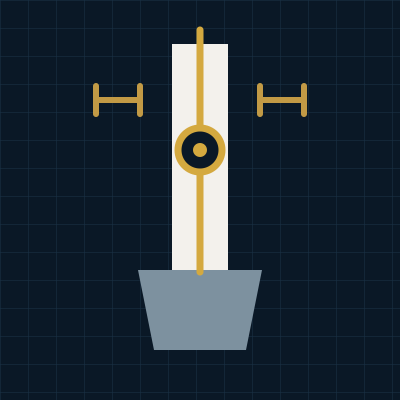
Plumb on two faces, cured before a panel hangs, racked to the grade
A post plumb in one plane can still lean in the other, so it gets checked on two faces before the concrete sets. Then it is left alone: a panel hung on green concrete pulls its post out of plumb, and nothing straightens it afterwards — this is the step a schedule asks for back, and it is the one that cannot be given. Where the ground falls away, panels rack to follow the slope so the top rail runs parallel to the ground instead of leaving a triangular gap under every section. Where a retaining wall makes racking impossible, the run steps at the wall and the opening gets closed.
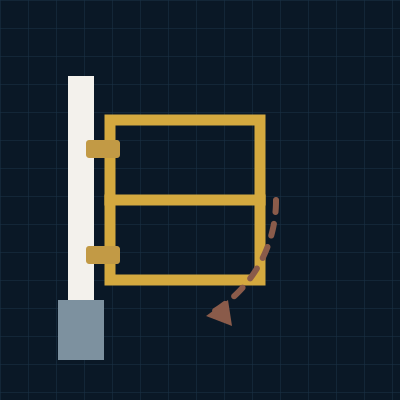
Gates are where a fence gets judged
Nobody runs a hand along a fence panel. Everybody opens the gate, and they do it every day. A gate leaf is a lever, and every swing loads its post in the direction that post least wants to go, so gate posts are the heaviest in the run and set the deepest. The leaf hangs on adjustable hinges, squared to an even reveal at the head and at the ground, with the latch aligned so it catches on the swing instead of needing to be lifted into place. And the gate gets run through a full open and close before anybody leaves — a gate that binds in October binds worse in August, when the posts have had a summer of wet ground.
Where the fence meets the house or an existing screen enclosure, it lands on a terminal post of its own rather than being fixed to the enclosure frame, which was never designed to carry a fence in wind. And the specification itself decides how the whole thing ages: aluminum does not rust, which is the failure that eventually finds a steel fence in Florida humidity and twice-daily irrigation, and a powder-coated finish is the entire maintenance — nothing to stain, nothing to seal, nothing to rot. The fence you stop thinking about is the one where the first four steps were done in order.
← INSIGHTSSTART HERE
One form, one business day.
Describe the scope and we answer within one business day. Drawings and photos by email; emergencies by phone, 24/7.