CHALLENGE
A fence line is the one thing on a property that nobody measures and everybody sees. It runs three hundred feet in what has to read as a straight line, over ground that is not level, and every error in it accumulates: a post set an inch out of plumb reads as a lean by the fourth panel, and a line set to the ground instead of to a string follows every dip the lot has. The two things that actually decide the job in Central Florida are not the fence at all. One is the association, which has to approve style, height, color and setback before anything is ordered. The other is what is already buried along the line a fence wants to follow — irrigation, cable, power and low-voltage lighting, none of it where anybody remembers putting it.
SOLUTION
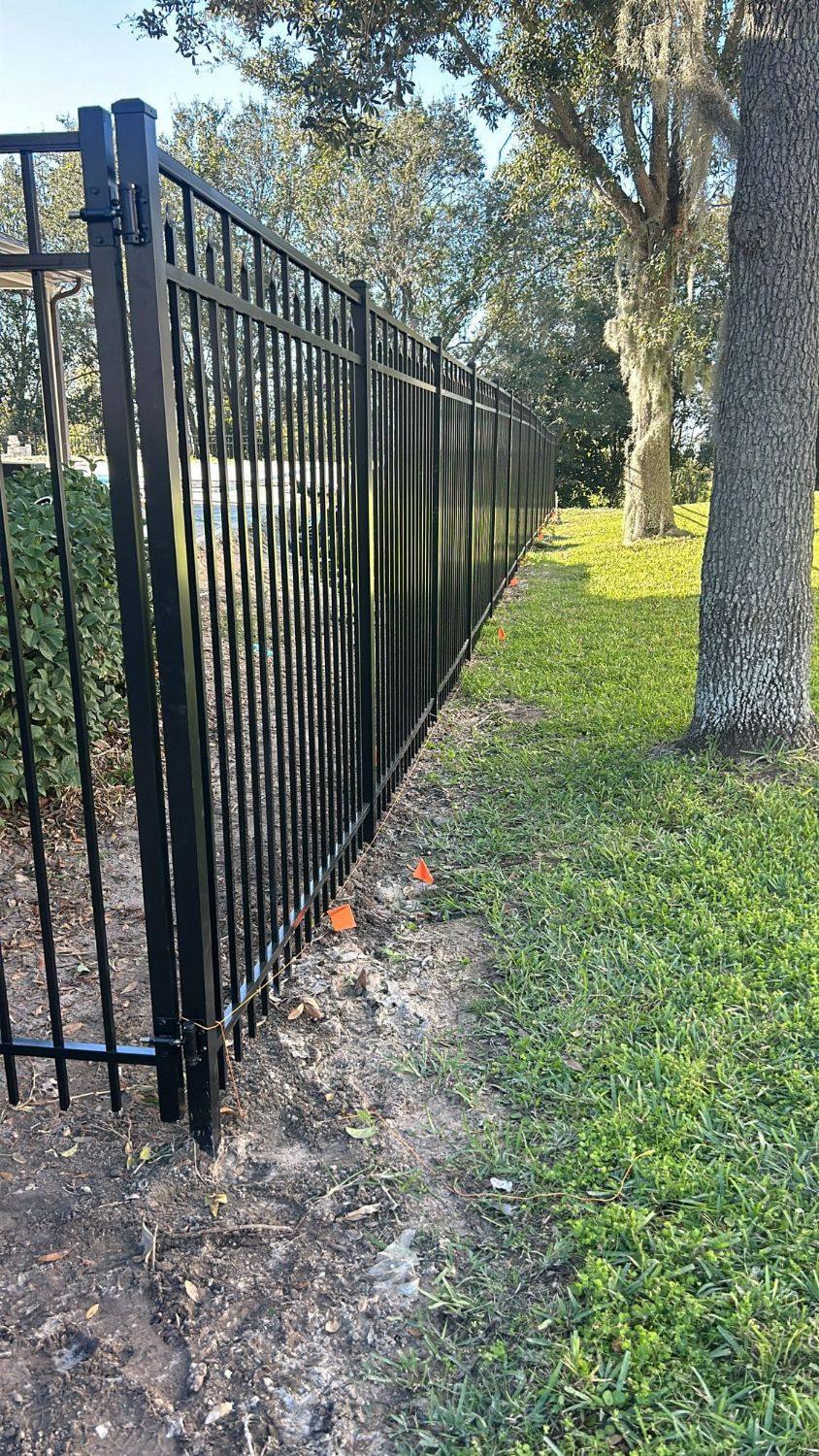
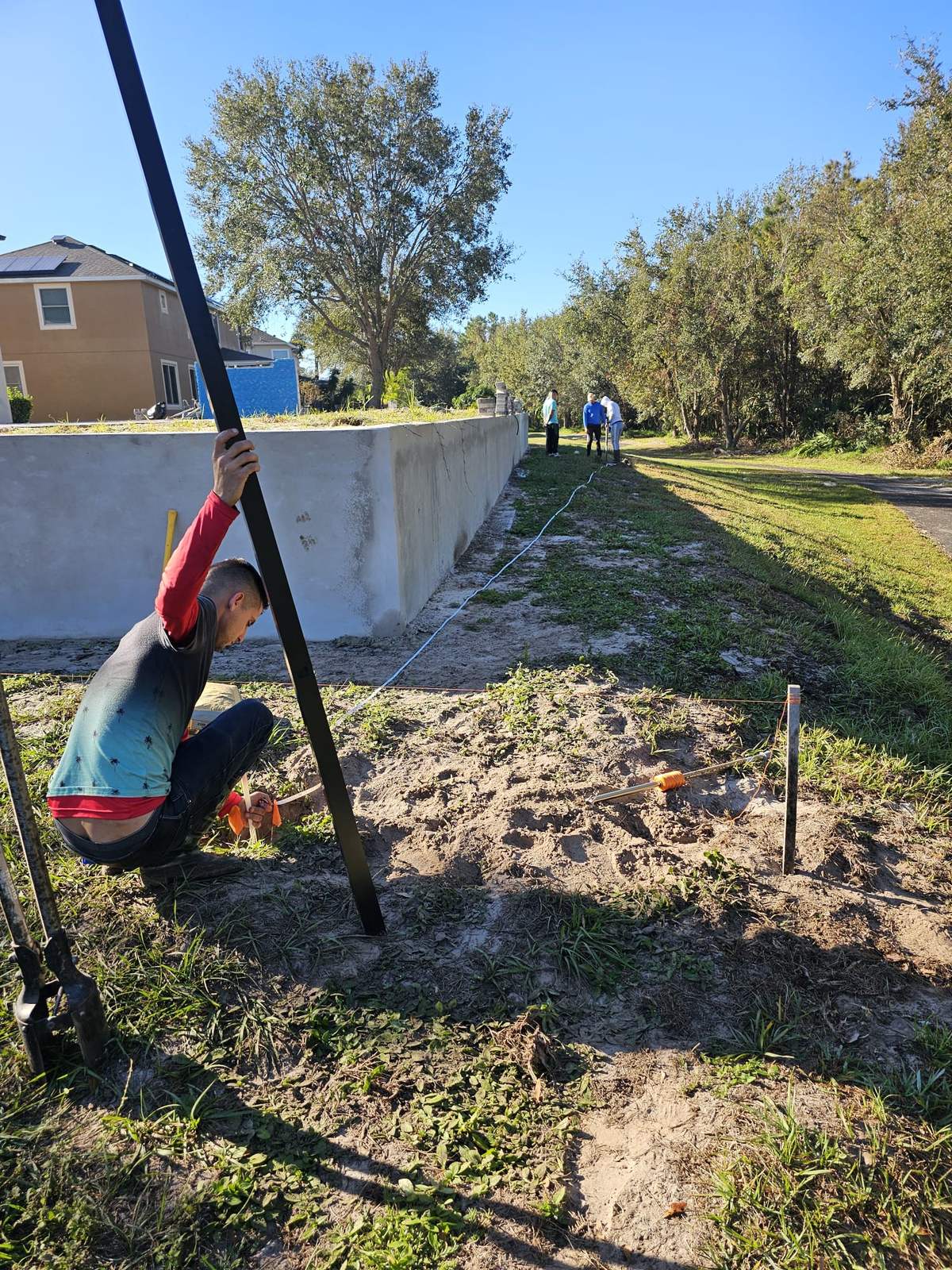
The approvals and the locate first, because they are what decides whether the fence is legal and whether the day ends with a cut service line. The line is set against the survey, not against the neighbor’s fence or the edge of the sod, and the layout goes to the association for approval of style, height, color and setback before any material is ordered. Underground utilities are located and marked before a single hole is dug — the orange flags in these photographs are that locate.
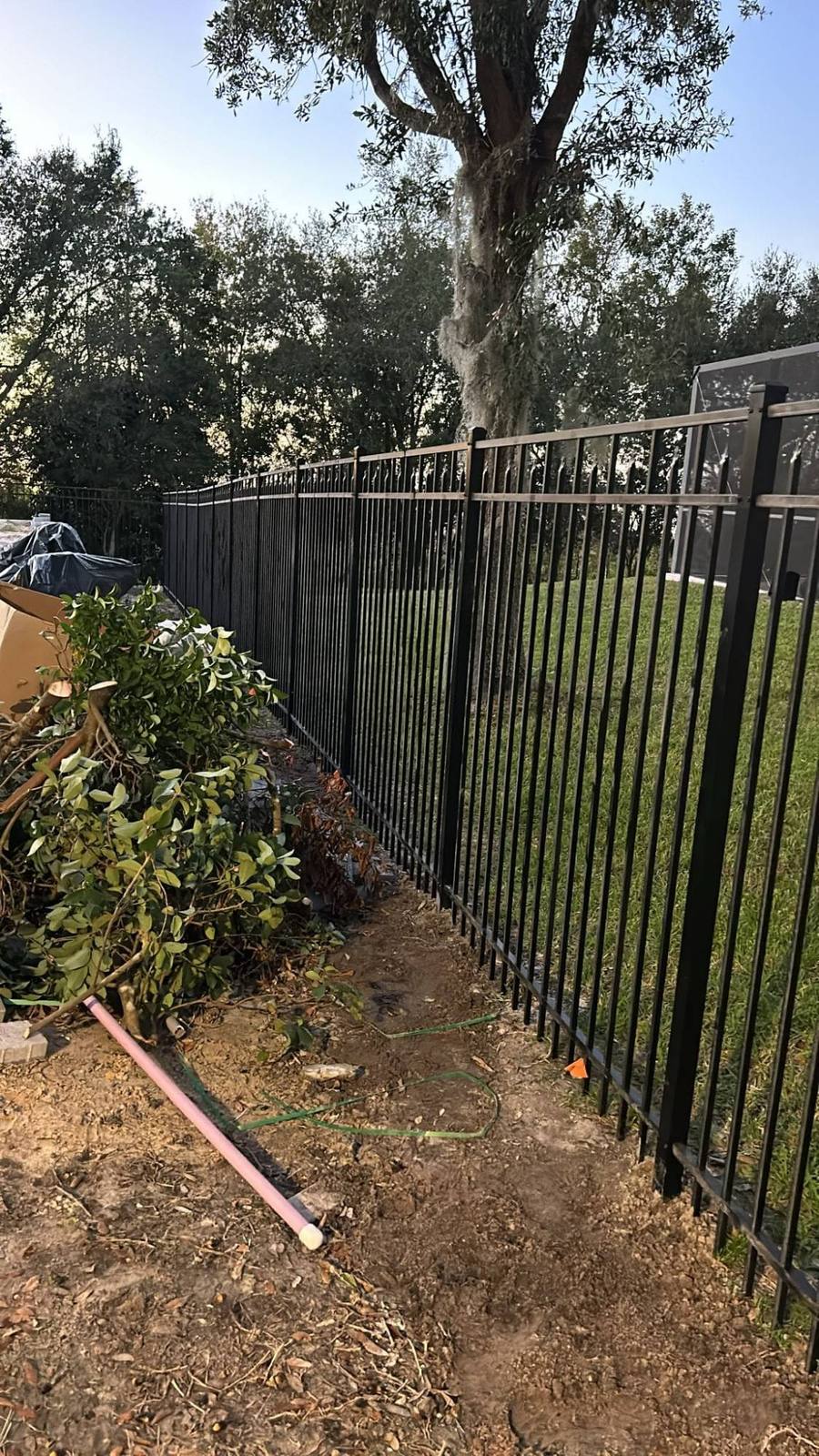
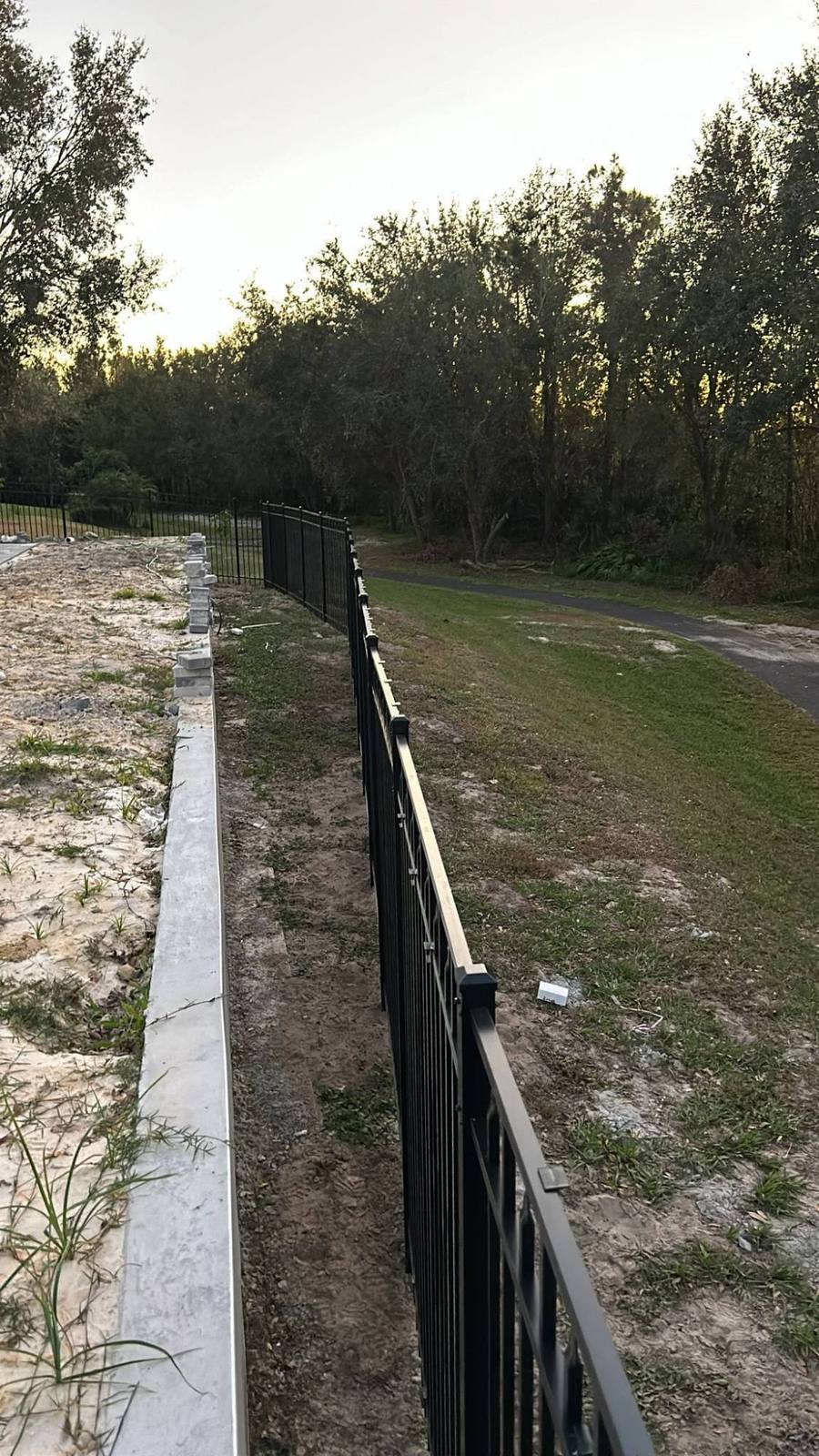
Then the line itself. A string run the full length and every post centre marked off that string, so the spacing is set by the line and not by the post before it, which is how a run drifts. Holes dug to the depth and diameter the post size and the soil call for, posts set in concrete, plumbed on two faces and left to cure before any panel is hung: a panel hung on green concrete pulls its post out of plumb and nothing straightens it afterwards. Where the ground falls away, the panels are racked to follow the grade so the top rail runs parallel to the ground instead of leaving a triangular gap under every section; where a retaining wall makes racking impossible, the run steps at the wall and the opening is closed. Where the fence meets what is already there — the house wall, the screen enclosure — it lands on a terminal post of its own rather than being fixed to the enclosure frame, which was never built to carry a fence in wind.
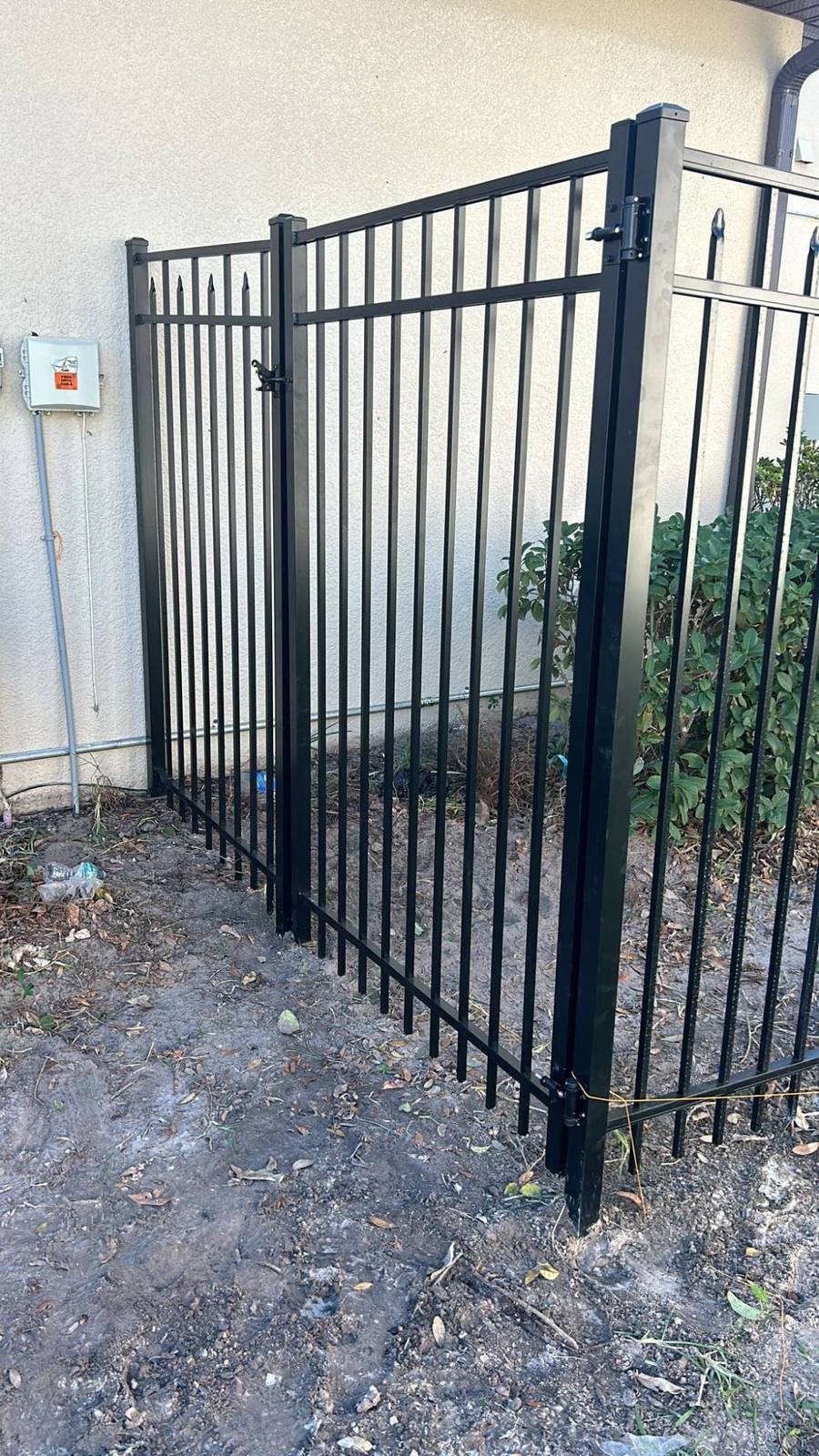
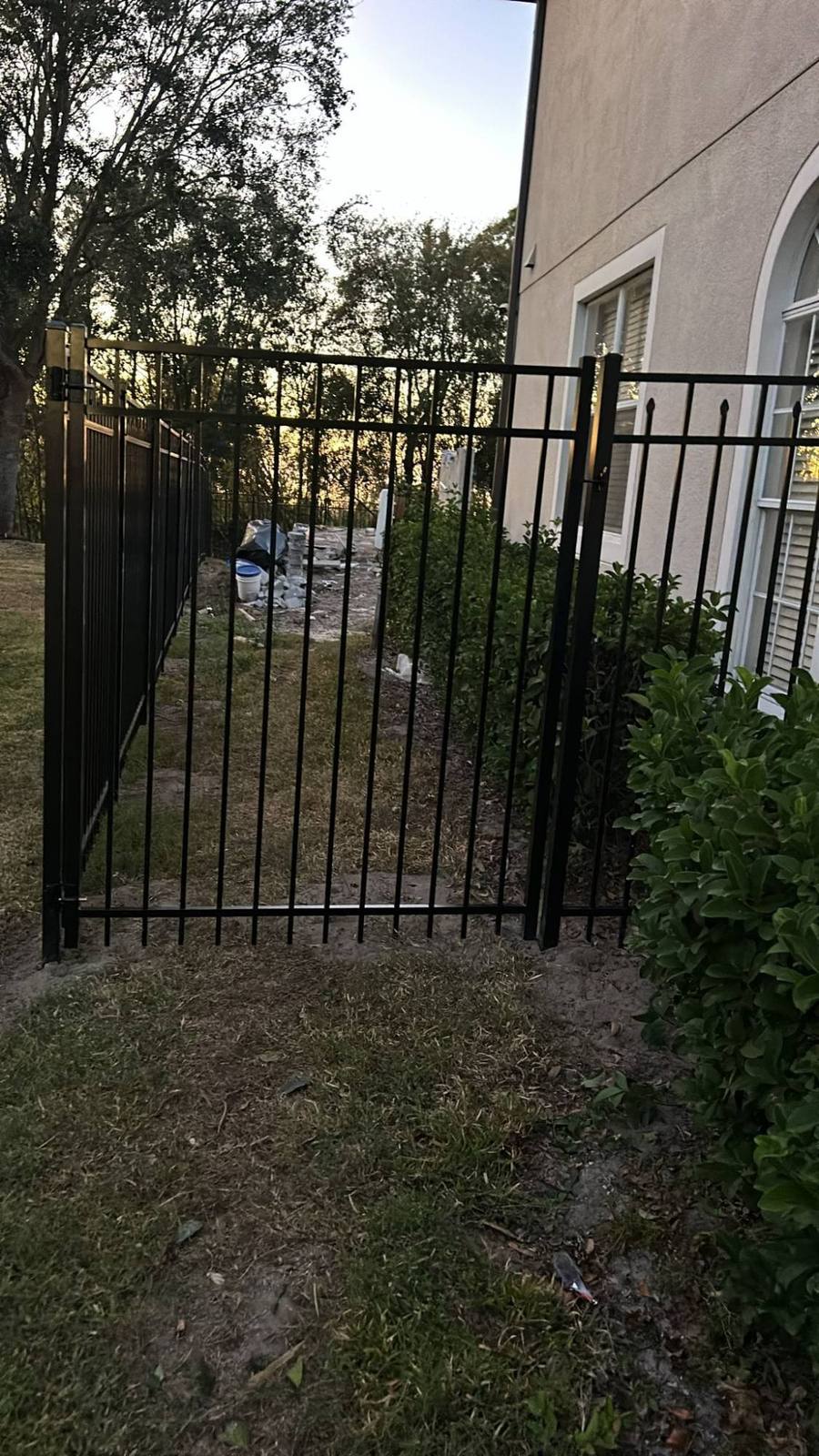
The gates last, because a fence is judged at its gates. Gate posts are the heaviest in the run and set deepest: a gate leaf is a lever, and every swing loads that post in the direction it least wants to go. Leaves hung on adjustable hinges, squared and set to an even reveal at the head and at the ground, the latch aligned so it catches on the swing instead of needing to be lifted into place, and both gates run through a full open and close before the crew leaves the site.
RESULT
Three hundred and five linear feet of six-foot aluminum fence and two gates, on a line that stays straight across ground that is not, tied into the house and the existing screen enclosure, and installed in about three days on site once the association approval was in hand. Aluminum is the part of that specification that decides how it ages: it does not rust, which is the failure that eventually finds a steel fence in Florida humidity and afternoon irrigation, and the powder-coated finish is the whole of the maintenance — nothing to stain, nothing to seal and nothing to rot.
Projects