CHALLENGE
A refinished tub fails in one of two ways, and both are the same mistake. The coating peels, because the surface under it was never properly profiled. Or it yellows and goes dull, because the wrong chemistry went onto a substrate it was never made for. Porcelain over cast iron, porcelain over steel, fiberglass and cultured marble each take a different preparation, and none of them holds a coating applied over body oil and soap film. And all of it happens in a windowless room a few feet across, which is what makes this a respirator job and not a paint job.
SOLUTION
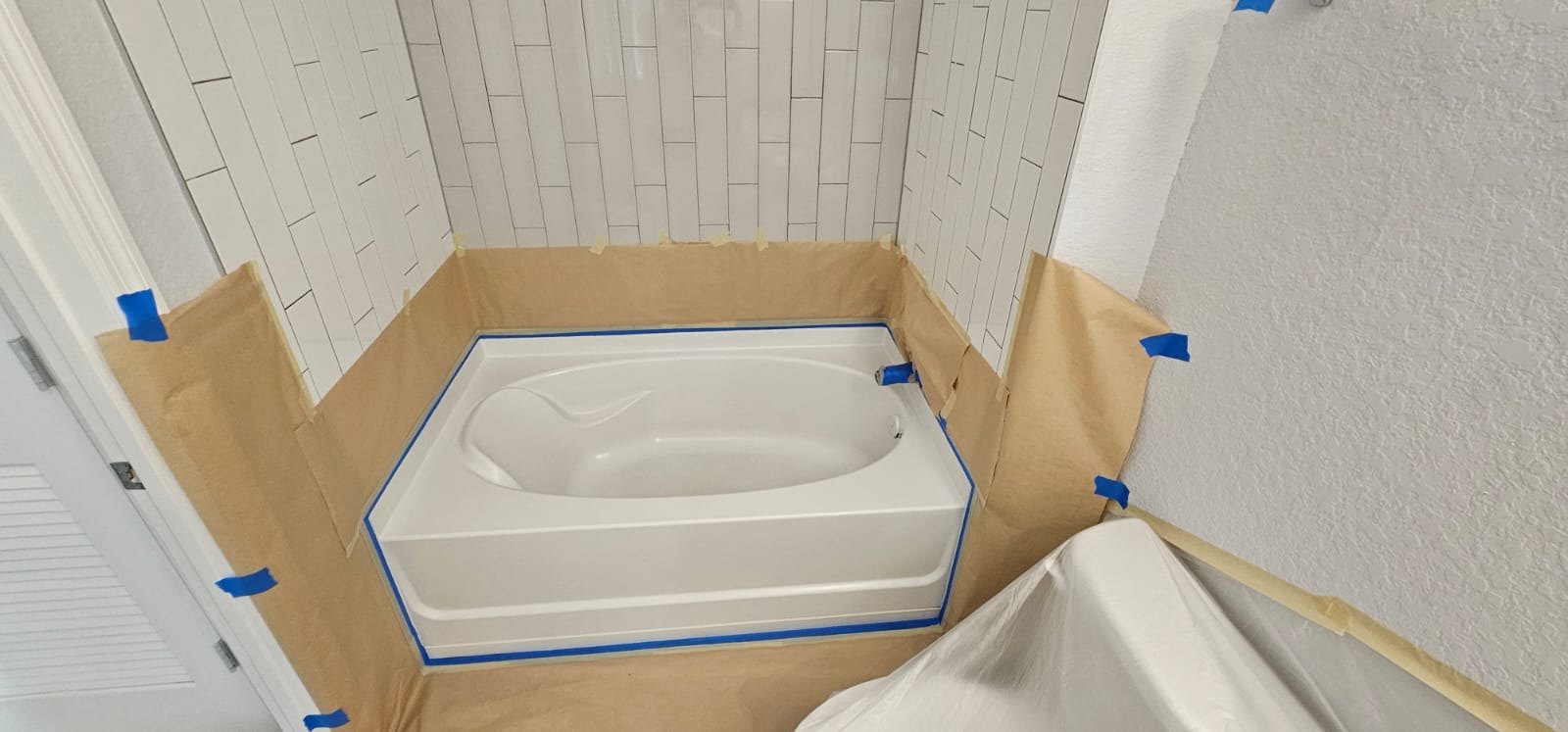
The substrate gets identified first, because it decides everything after it. Porcelain enamel takes an acid etch to open the glaze; fiberglass, acrylic and cultured marble get mechanically abraded instead, because acid does nothing to them. Either way the surface is degreased before and after — body oil and soap film are what most peeling coatings were applied over. Old caulk and silicone cut out completely, never coated over. Chips, cracks and crazing filled with a two-part polyester filler, sanded flush and feathered, because a coating is thin enough to telegraph anything left underneath it. Drain and overflow pulled or masked, everything else papered and taped, and the room put under mechanical exhaust before any chemistry is opened. Then the build. A bonding agent or adhesion promoter as specified for that substrate, an epoxy primer, and a two-component acrylic-polyurethane or epoxy topcoat sprayed in three to four thin passes with the manufacturer's flash time between them — never one heavy coat. Thin passes are what produces the gloss; a heavy coat runs, holds solvent and cures soft. Cure times are the part that decides whether the job lasts, and they are not negotiable against a schedule. Touch dry in one to three hours, depending on temperature and humidity. Twenty-four to forty-eight hours before the tub sees water or gets used, to the coating manufacturer's figure for that specific product. Around seven days for full chemical cure, and only after that does any abrasive or acid cleaner go near it. Re-caulked with 100 per cent silicone after the cure, never before. And the owner is told the two things that ruin a refinished tub: suction-cup bath mats, which lift the coating straight off, and abrasive powder cleaners.
RESULT
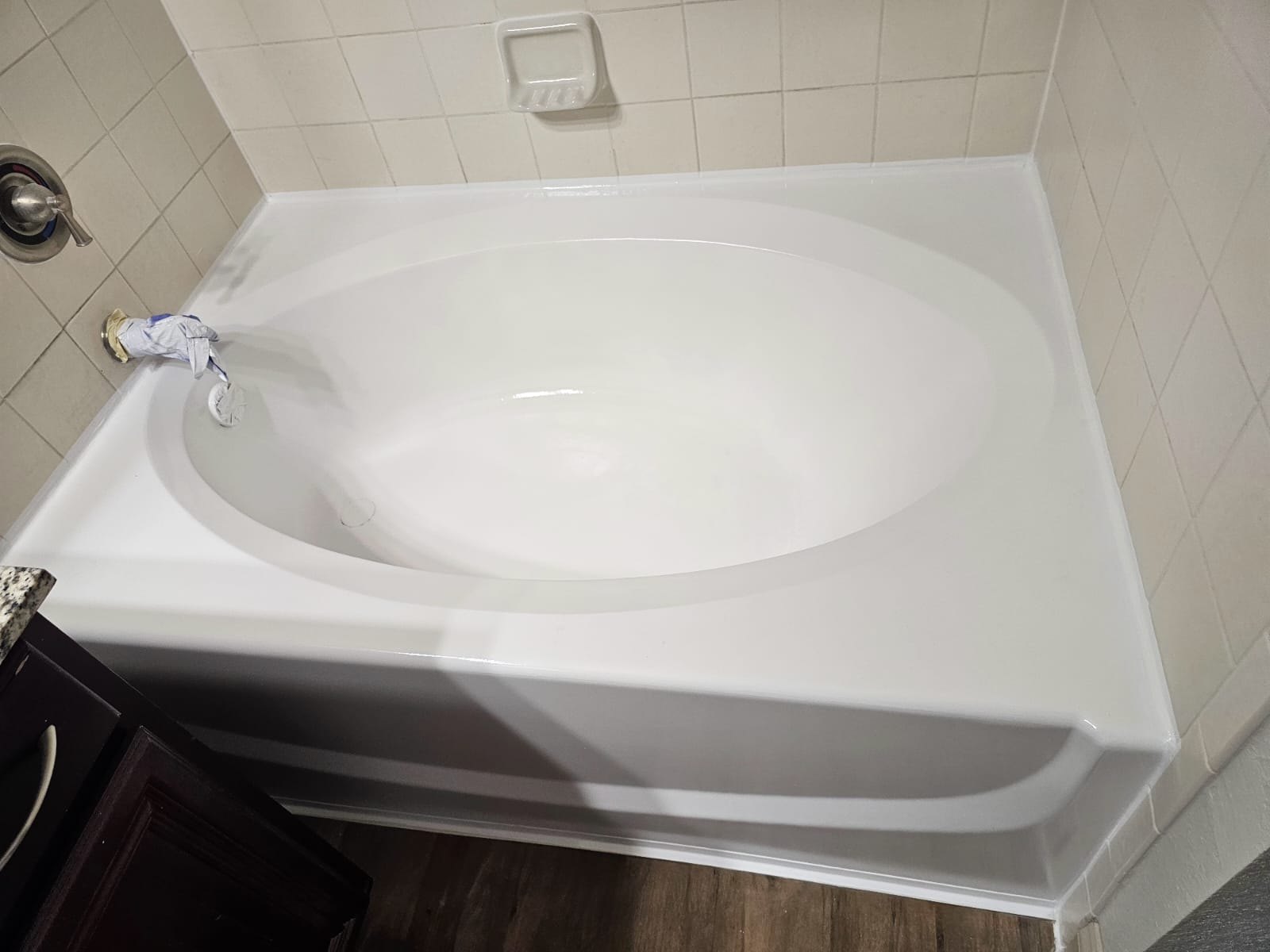
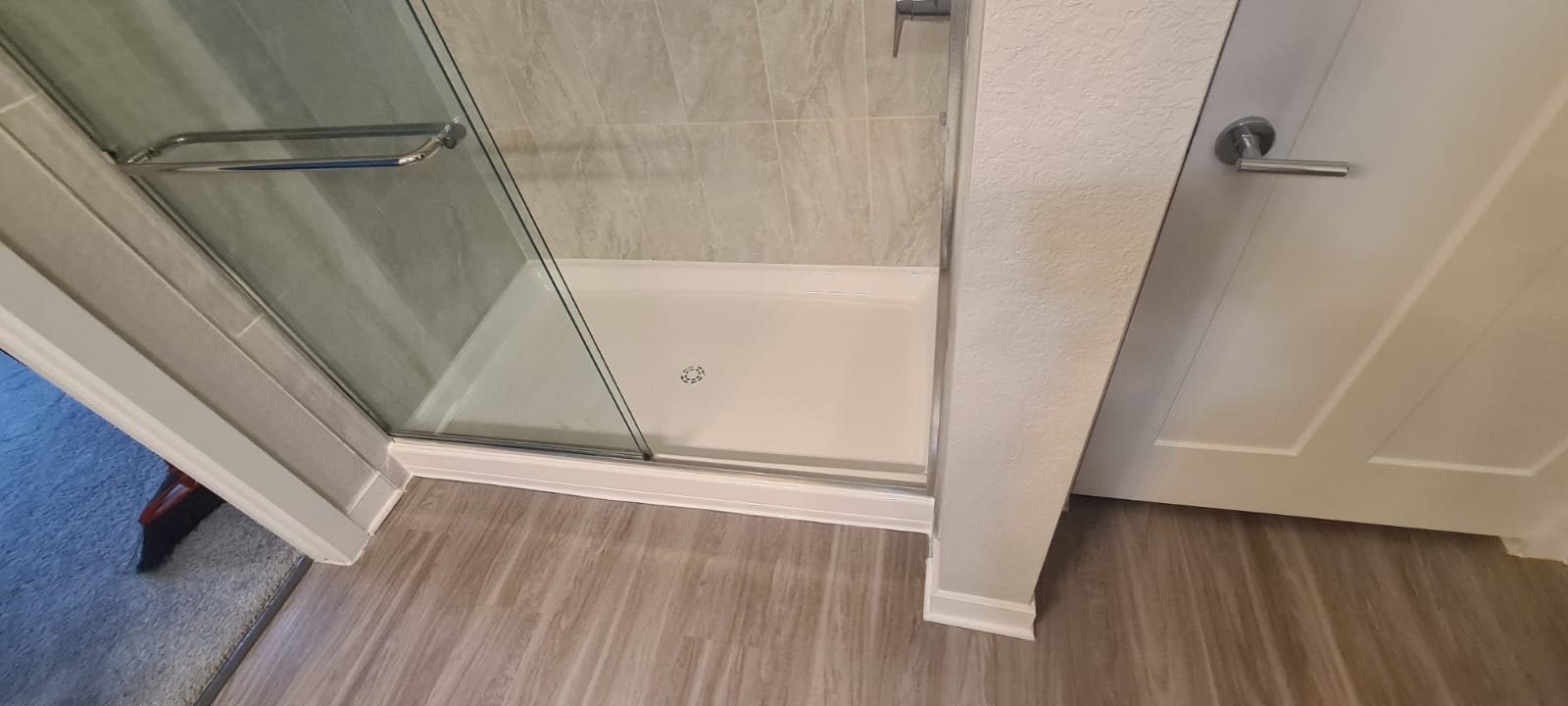
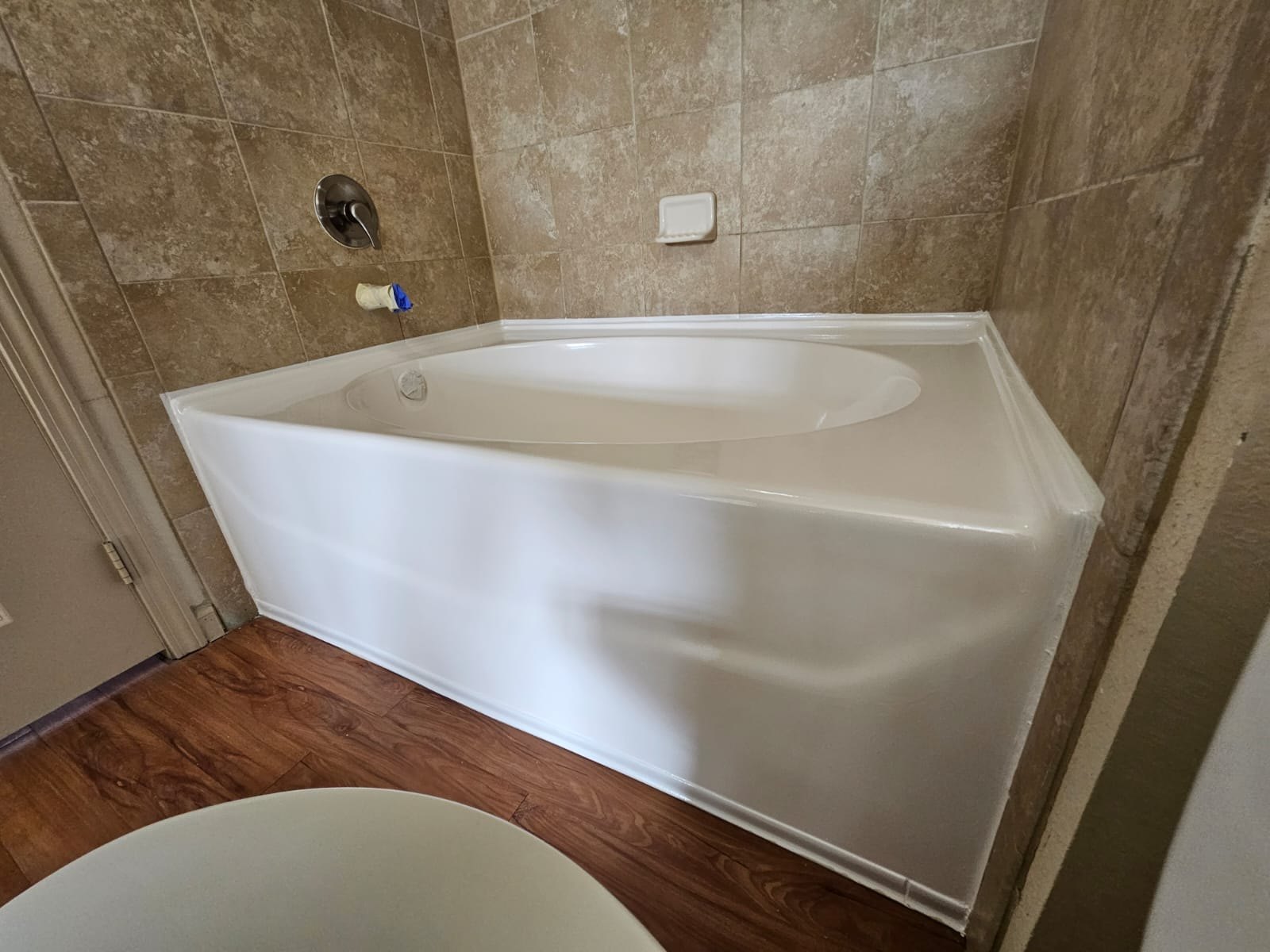
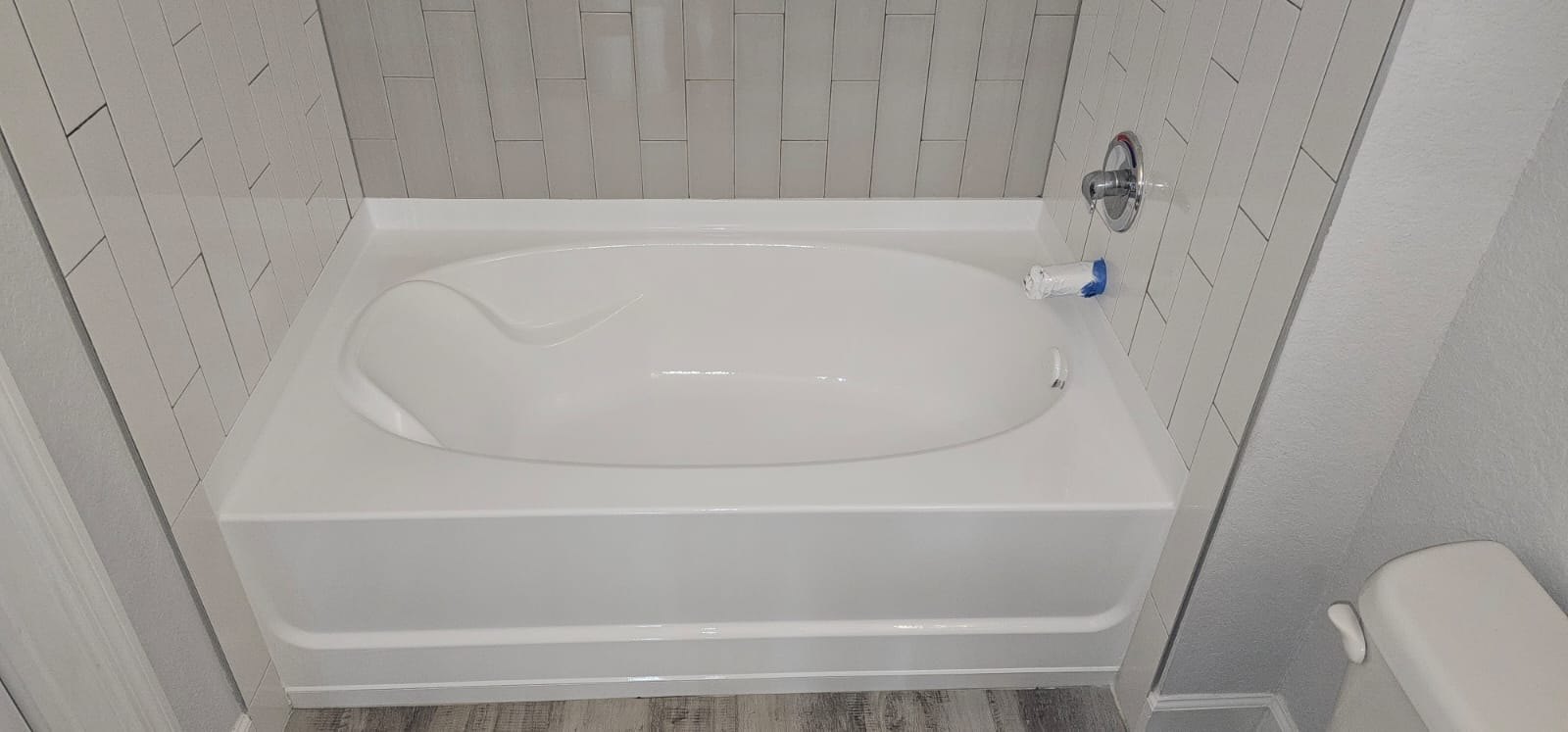
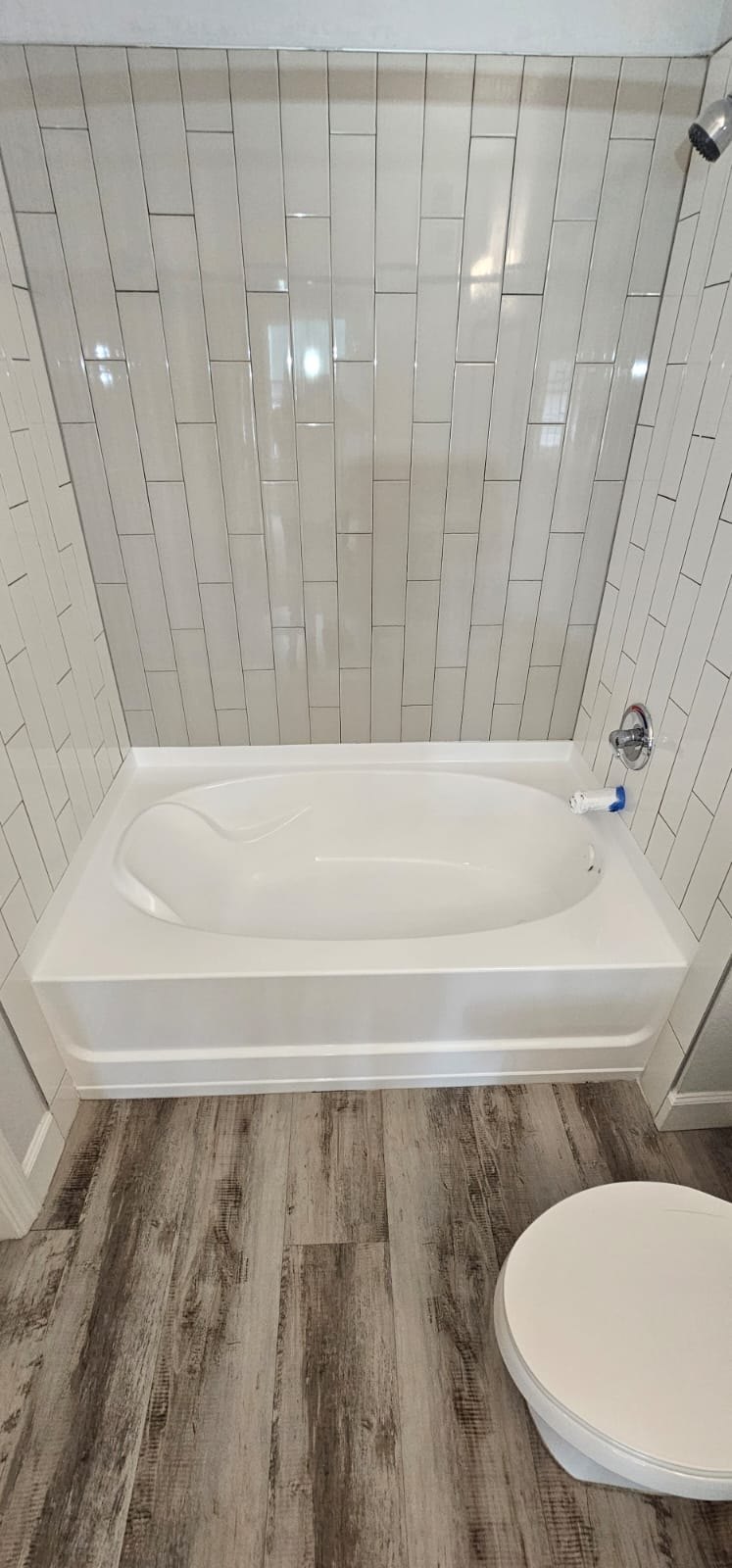
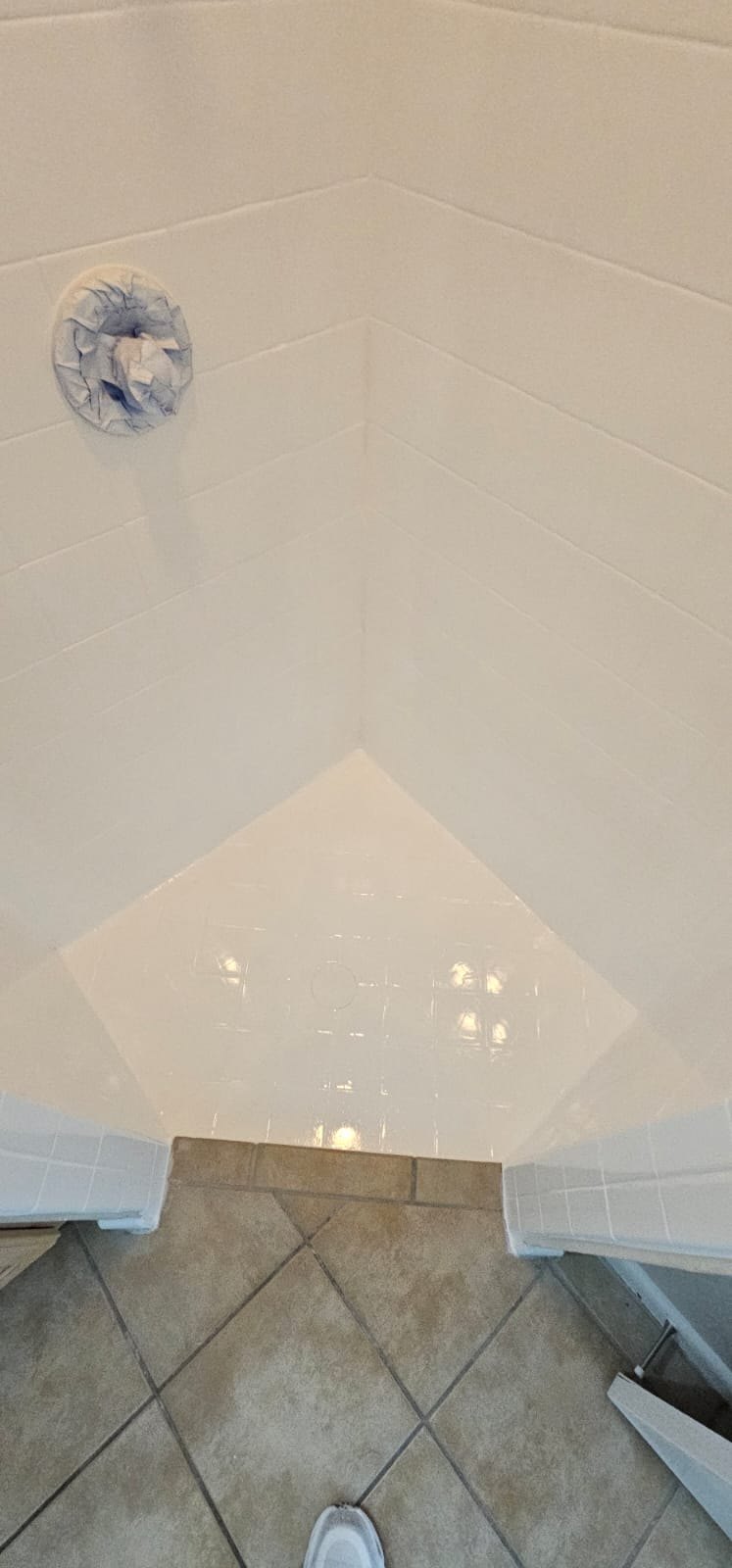
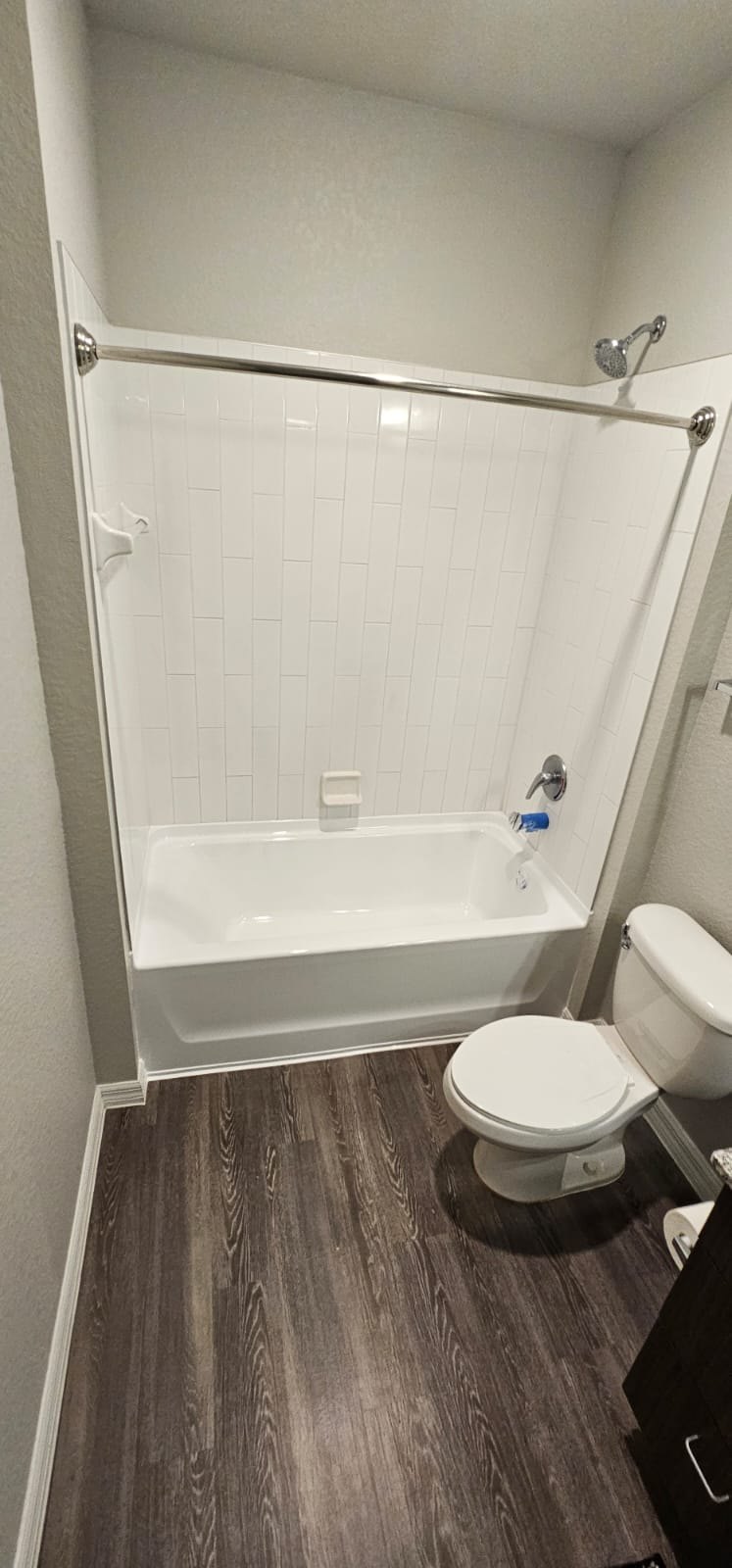
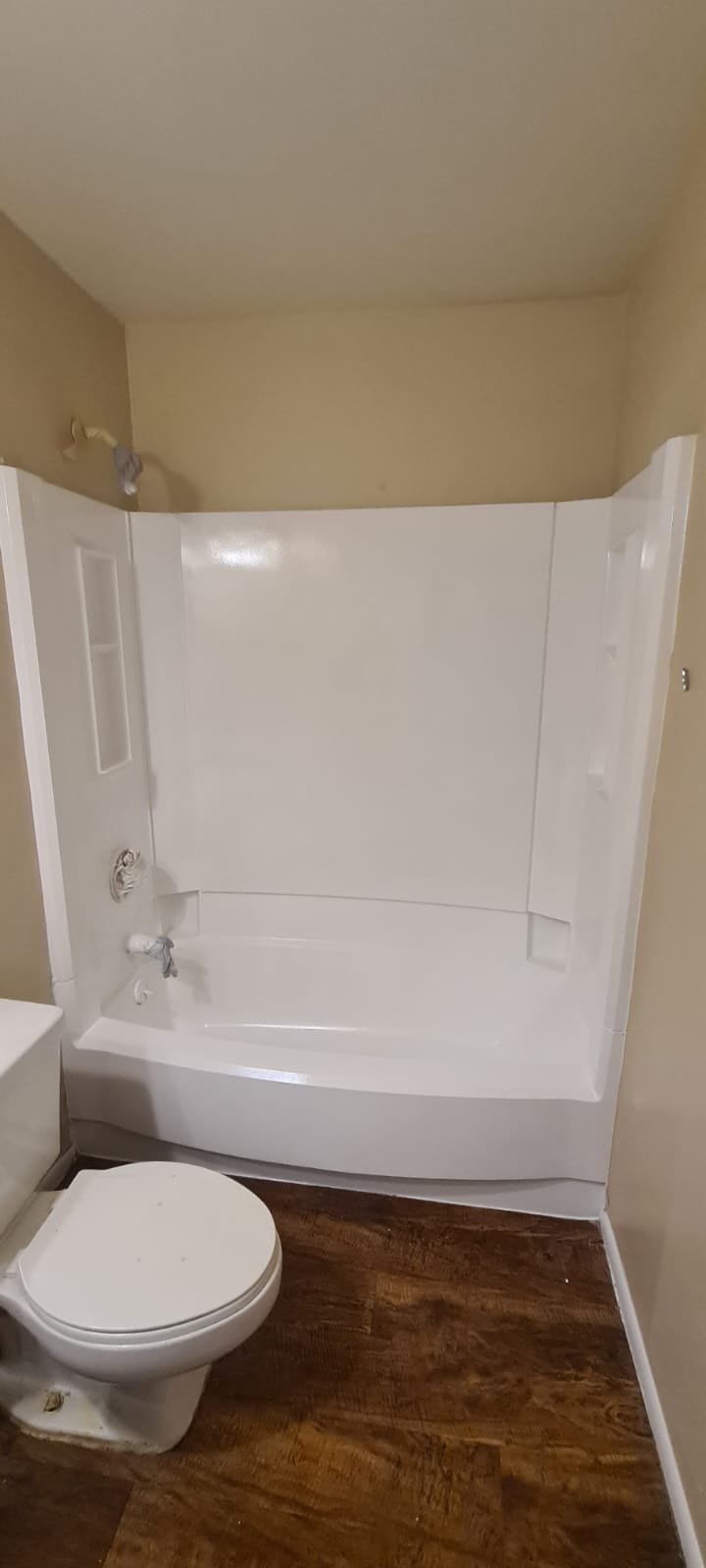
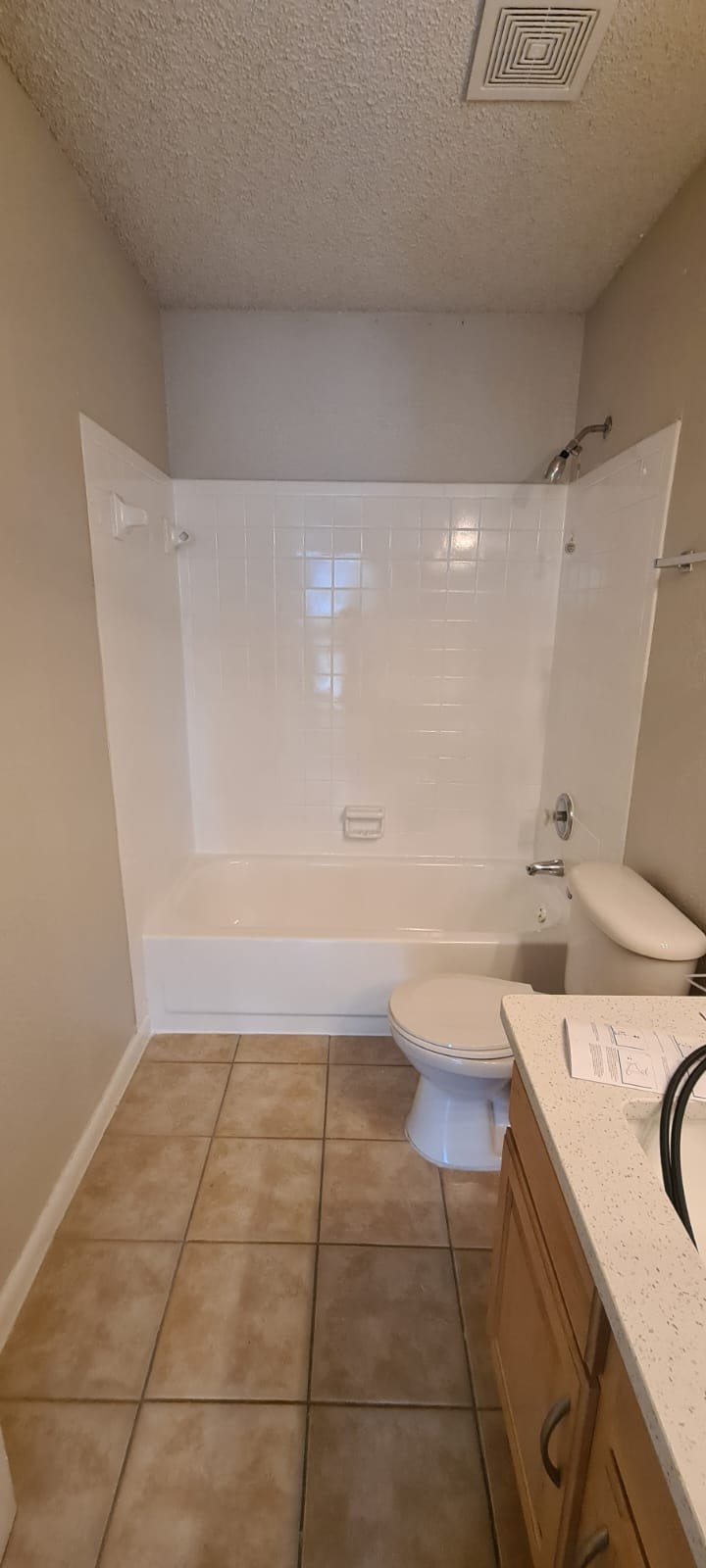
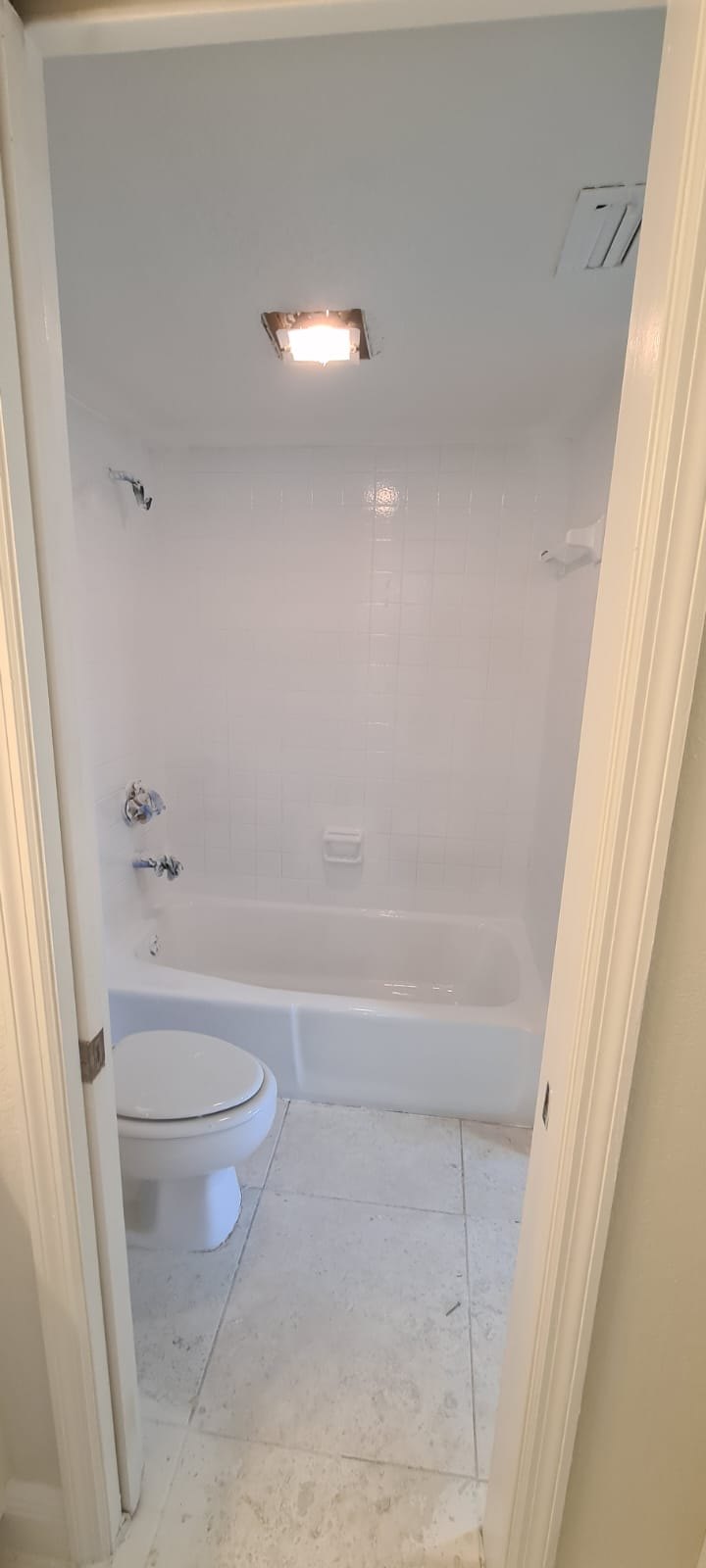
Tubs, shower bases and surrounds back to a hard gloss white without demolition, without a dumpster and without touching the tile around them. The same bathroom, usable again in a day or two instead of rebuilt in a week. That is the experience behind this work: more than 800 units resurfaced, built up over years in the trade rather than in one season. At roughly 35 square feet of coated surface on a standard 60 by 30 inch alcove tub — the floor, the four inner faces and the apron — that comes to something over 28,000 square feet refinished.
Projects