
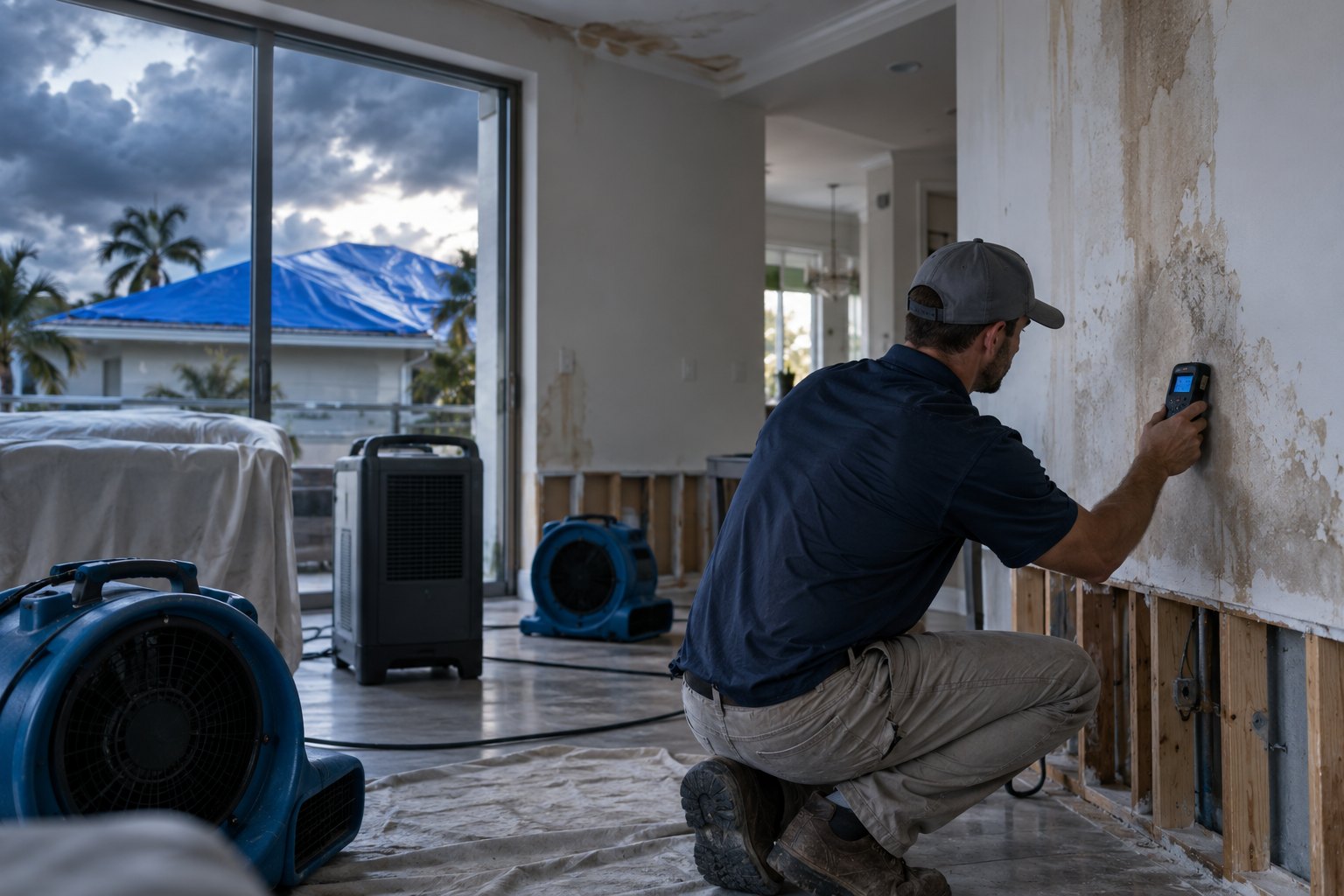
The water that comes through a roof in a September storm is clean when it arrives. Rain is sanitary at the moment it is released — it is not sewage, and on the first afternoon it is not a health problem. What it becomes is decided by how long it sits. That is the part that catches people out: almost nobody pays for the storm. They pay for the days between the storm and the phone call, because in that gap the water quietly changes what kind of job this is.
Stop the water before you measure anything
Temporary protection comes first — tarp the opening, board the broken glazing, divert the source. Every reading taken while water is still coming in is a reading of a moving target, and every hour of drying done under an open roof is an hour spent drying the weather. Tarping and boarding are not the repair. They are what buys the days the permanent fix needs, and they are usually the difference between replacing a ceiling and replacing a roof.
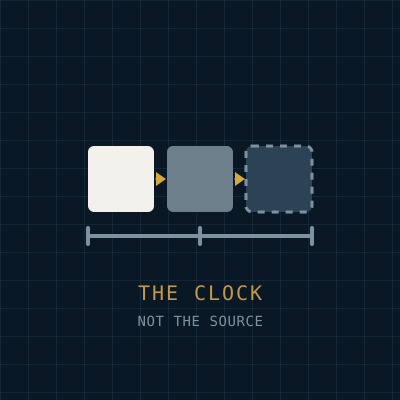
The category is set by the clock, not by the source
The restoration standard the industry works to, IICRC S500, sorts water into three categories: sanitary, significantly contaminated, and grossly contaminated. The part that surprises people is that a category is not permanent. The working rule applied on site is that sanitary water left in contact with building materials degrades to the second category within roughly 24 to 48 hours, and that untreated second-category water reaches the third at around 72. The water that came in did not change. The calendar did.
Forty-eight hours is the line between drying and removing
The EPA puts it plainly: if wet or damp materials are dried within 24 to 48 hours, in most cases mould will not grow. That window is the whole game. Inside it the work is air movers, dehumidification and patience. Outside it the work stops being drying and becomes removal — a different trade, a different cost and a different schedule. The EPA is careful to say growth can still happen inside the window and does not always happen outside it. But that is where the odds sit, and odds are what you are managing.
The cut line is not where the stain ends
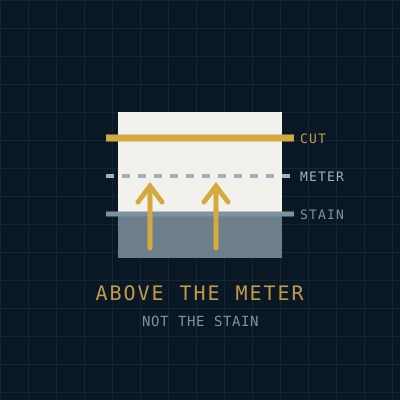
Wet drywall wicks. Water climbs the paper facing and the gypsum core well above the level it actually reached, so the visible line understates the damage every time. Accepted practice is to cut 12 to 24 inches above the highest confirmed moisture reading — the meter, not the stain. And the cut is not only removal: it opens the cavity so wet insulation comes out and the air movers reach the framing. A wall closed back over damp studs looks finished. It is not.

Photograph it before you touch it
Whoever walks in first is the only person who will ever see the building in the state the storm left it. The moment the wet drywall is out, that evidence is gone for good. Dated photographs of every affected room, moisture readings written down with the time they were taken, and a note of what came out and when — that record is what an insurer, an adjuster or an engineer will ask for weeks later, calmly, when nobody can go back and take it. It costs twenty minutes on the worst day of the year.

The permit did not disappear because it was an emergency
Temporary protective measures are treated as protection. The permanent repair is permitted work, and the code addresses the sequence directly. Florida Building Code Section 105.2.1: “Where equipment replacements and repairs must be performed in an emergency situation, the permit application shall be submitted within the next working business day to the building official.” What is exempt, and at what threshold, is set locally — Orange, Osceola, Seminole, Polk and Volusia do not all publish the same list. The call to the building official belongs in the first day, not the second week.
The uncomfortable part of all this is that the highest-value decisions are the cheapest ones, and they happen before any contractor arrives. A tarp, a set of photographs and one phone call, all inside the first afternoon, decide most of what the repair will end up costing. Everything a builder adds after that — the drying, the demolition where it is genuinely needed, the permitted rebuild — is working within limits that were already set while the building sat wet. Which is why this is worth reading in September, and not in October.
← BLOGSTART HERE
One form, one business day.
Describe the scope and we answer within one business day. Drawings and photos by email; emergencies by phone, 24/7.